


NAIROBI, Kenya 5- There is a $130 billion annual investment gap hindering the world’s mission to achieve universal access to climate-resilient water and sanitation services by the year 2030, Sanitation and Water for All (SWA) reports. In Africa, the gap is estimated at no less than an additional $30 billion annually.
In October 2025, nearly 50 ministerial-level delegates worldwide gathered in Madrid at the 2025 Sector Ministers’ Meeting to discuss ways to better integrate water, sanitation, and climate action goals at a governmental level.
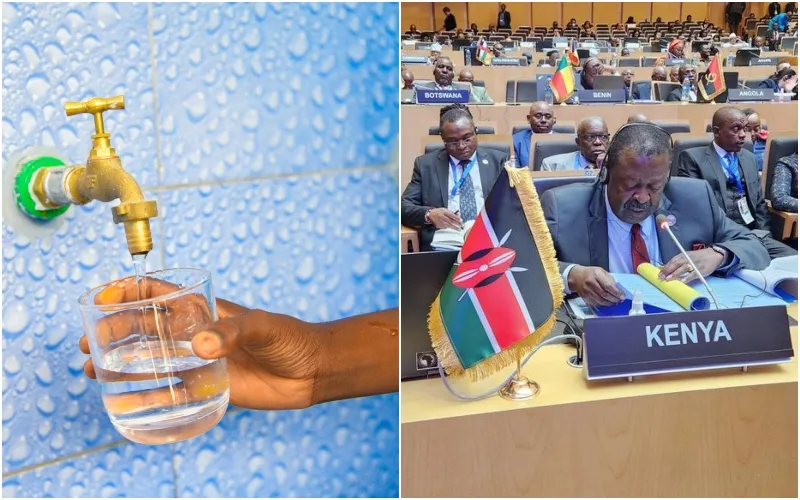
For participating African delegates, this was an opportunity to include African perspectives on the global stage ahead of COP30 and the UN 2026 Water Conference. It was also essential to help establish the globe’s five-pillar guidelines.
5 critical Water, Sanitation, Hygiene and Climate statistics in Africa calling for critical measures
As outlined in the ensuing “High-Level Leaders Compact – the Madrid Commitment to Action” by SWA, these five priorities from an African perspective are as follows:
Political and Institutional Integration
Priority #1: Embed water, sanitation, hygiene, and climate priorities into national adaptation plans, climate commitments, and development strategies.
In 2018, 71% of African countries were in the medium-low to very low categories of Integrated Water Resource Management (IWRM) implementation, according to a report by UNEP. Fast forward to 2024, and UNEP’s “Progress on implementation of Integrated Water Resources Management” report revealed that none of the African sub-regions are on track to achieve the aspirational global SDG 6.5 target of ‘Very High’ (91-100%) IWRM implementation by 2030.
There lies a critical gap in governance due to these stagnations that isolated sector projects cannot fix. It’s time for nations to move beyond fragmented management and operationalise political and institutional integration.
Ministers must work to embed water, sanitation, and hygiene mandates directly into central national adaptation plans and broader development strategies. Governments have the power to secure the political leverage and institutional coherence required to turn these IWRM metrics around, to accelerate progress and reach the SDG targets.
Inclusive, Rights-Based Services
Priority #2: Use data to identify and reach the most vulnerable populations – children, women, Indigenous peoples, persons with disabilities, and displaced communities – while promoting transparency and community participation.
Despite progress recorded in Sub-Saharan Africa since the 1990s, the latest Joint Monitoring Report from UNICEF and the World Health Organisation estimates that 1 in 4 people still lack safely managed drinking water and 2 out of 5 people lack safely managed sanitation.
As women, girls, and children remain the most vulnerable, these stats are concerning for Africa.
The failure to achieve universal access is a clear indication that broad, generalised interventions are not sufficient. To close this gap and prioritise those suffering most, governments must immediately implement inclusive and rights-based services.
The only way to move beyond these alarming statistics is to use high-quality, disaggregated data to accurately identify, locate, and track the concerned underserved communities and groups of people. This should ensure that future WASH investments are precisely targeted, transparent, and driven by the needs of the most vulnerable.
Resilient Systems and Risk Management
Priority #3: Incorporate climate and environmental risk assessments into planning, and promote nature-based solutions and ecosystem restoration.
A September 2025 publication by the Sudanese American Physicians Association (SAPA) underlined the direct link between climate change, water scarcity, and displacement on the continent.
The study asserts that 2 million people in East Africa have been displaced due to drought and conflicts, with migration into urban areas straining cities like Nairobi.
In 2024, Earth.org warned that climate change could displace up to 700 million people in Africa by 2030 due to increasing water scarcity and related shocks. With the figure currently standing at 400 million, the High-Level Leaders Compact’s priority for resilient systems and risk management is legitimately high on the agenda.
To build true resilience against these shocks, leaders must move beyond reactive measures and proactively incorporate climate and environmental risk assessments into all levels of urban planning. Investing in nature-based solutions and ecosystem restoration is essential to stabilising these vulnerable regions.
The approach is straightforward: Address the root environmental degradation driving these migration crises.
Sustainable and Innovative Financing
Priority #4: Mobilise domestic and international resources through green and blue bonds, results-based financing, and public-private partnerships.
According to the World Bank, public-private partnerships account for only 3% of total water sector investment in Africa, with state-owned enterprises and public entities providing the remaining 97% of investment. This is far below private participation in other infrastructure sectors, underscoring the need for stronger mechanisms to attract and sustain investment in water.
Unlocking greater resources will require improving incentives for investors, strengthening project pipelines, and deploying targeted de-risking instruments that reduce uncertainty while safeguarding public value. Ensuring coherence with the High-Level Leaders Compact on Water Security and Resilience will further help align public and private action.
With these conditions in place, tools such as green and blue bonds, results-based financing, and well-structured public-private partnerships can more effectively expand financing for water security and sanitation systems.
Political Leadership and Accountability
Priority #5: Ensure that water and sanitation remain at the top of global and national policy agendas, including through mutual accountability frameworks such as those facilitated by Sanitation and Water for All (SWA).
Sub-Saharan Africa loses an estimated 5% of its annual GDP due to poor sanitation, lack of water or its contamination. Highlighting the seriousness of the matter and the responsibility of ministers, a preamble statement from the High-Level Leaders Compact on Water Security & Resilience declares:
“We acknowledge that fragmented policies, weak coordination, and insufficient and inefficient financing continue to challenge progress. Addressing these barriers requires strengthened political leadership, inclusive whole-of-government collaboration, inclusive governance, and more predictable and efficient investments that meet the needs of all people, particularly the most vulnerable.”
In the aftermath of the Madrid Commitment on Water Security, Sanitation & Climate Resilience
Like the rest of the world, African ministers have pledged to “collaborate with the Sanitation and Water for All partnership to track progress through systematic monitoring, aligned with national systems and global frameworks like SDG 6 indicators, broad multi-stakeholder collaboration, and continual adaptive learning.”
The compact produced at the 2025 Sector Ministers’ Meeting has been endorsed by 29 states, more than half of which are African.
Indeed, Burundi, Eswatini, Ethiopia, Kenya, Liberia, Malawi, Mali, Niger, Nigeria, Sierra Leone, Somalia, South Sudan, Tanzania, Ghana, Uganda and The Gambia joined the African Civil Society Network on Water and Sanitation (ANEW), the Ghana Coalition of NGOs in the Water and Sanitation Sector (CONIWAS), UNICEF and 14 other organisations in endorsing and pushing for the implementation of the five global priorities identified in the High-Level Leaders Compact on Water Security & Resilience.
The door remains open for more governments to join this compact and express their serious intention to achieve sanitation and water security as well as resilience, which is needed for healthy populations, economic development, and environmental sustainability.










Discussion about this post