


COTU Secretary General Francis Atwoli has blamed the International Monetary Fund (IMF) for the weakening of the Kenya Shilling.
Speaking during a meeting with the Central Organisation of Trade Unions (COTU) affiliate unions, Atwoli asked the government to end further programmes with IMF and World Bank.
“We in the labor movement do not want to have any program with World Bank and IMF…If the government listens to IMF 100 percent, then we will go down to this.”
The COTU boss accused the IMF of imposing tough conditions on the Kenyan government to extend more funding to the country, contributing to the high cost of living and the depreciation of the Kenya shilling.
How has the Kenya shilling depreciated?
The value of the Kenya shilling has been dropping fast since the William Ruto administration took office, raising concerns in parliament and among Kenyans.
At the end of 2022, the shilling was trading at around Ksh 120 against one US dollar but currently, it is at around Ksh 160.
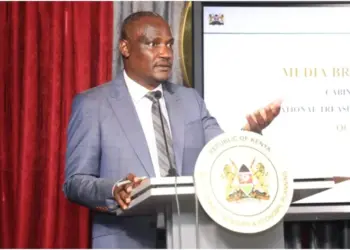
In November 2023, Treasury Cabinet Secretary Njuguna Ndung’u said the Kenya shilling was adjusting to its real value and that the depreciation against the dollar could not be controlled.
Ndung’u argued that the previous treasury administration managed the Kenya shilling exchange rate instead of allowing it to adjust itself naturally without any interference.
“The nominal exchange rate was not allowed to adjust, while domestic prices, especially in non-tradable sector were rising-fuelled by investments, especially the infrastructure projects. This is a grave policy mistake because the nominal exchange rate is the nation-wide relative prices that should be an automatic stabilizer.”
He also stated that,
“This means that the real exchange rate was increasingly misaligned, the economy and the production process was losing its competitiveness. The FDI was thus declining. This outcome implies that for the economy to return back to stability, the nominal exchange rate has to adjust, depreciate in this case rapidly.”
Ordinary Kenyans are already facing economic hardships following increased taxation, heightened fuel prices, and the increased cost of basic commodities, and the depreciation of currency value is never a good thing.











Discussion about this post