



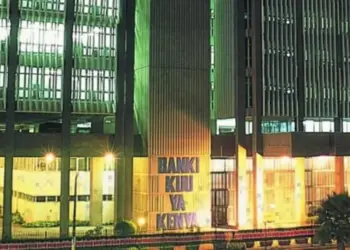
The Central Bank of Kenya (CBK) has lowered the Central Bank Rate (CBR) by 25 basis points to 9.25 percent, down from 9.50 percent, following a Monetary Policy Committee (MPC) meeting held on October 7, 2025.
In a statement released after the meeting, the MPC said the decision was driven by the need to stimulate private sector lending and economic activity, while keeping inflation expectations stable.
The Committee observed that global growth remained resilient in 2025, supported by strong consumer spending, front-loaded exports to the U.S., and improved financial conditions. However, it warned that global growth could slow in 2026 due to higher tariffs and rising geopolitical tensions, particularly in the Middle East and Eastern Europe.
Inflation in major economies has risen slightly due to food prices and tariff impacts, but is expected to decline gradually as energy prices fall and global demand cools. Oil prices have eased due to increased production, though volatility remains high.
Kenya’s overall inflation stood at 4.6 percent in September 2025, up slightly from 4.5 percent in August, but still below the midpoint of the CBK’s target range of 5±2.5 percent.
Core inflation dropped to 2.9 percent, driven by lower prices of processed foods, especially maize flour. However, non-core inflation rose to 9.6 percent due to seasonal increases in vegetable prices, notably tomatoes, carrots, onions and cabbages.
CBK expects overall inflation to remain stable in the short term, buoyed by steady energy prices and a stable exchange rate.
Recent GDP data shows Kenya’s economy grew 5.0 percent in the second quarter of 2025, up from 4.6 percent in the same quarter of 2024. Growth was supported by a rebound in industrial output, steady agriculture performance and strong service sectors including finance, transport, ICT and retail.
Economic growth is projected to reach 5.2 percent in 2025 and 5.5 percent in 2026, though global trade tensions and tariff uncertainties remain potential risks.
Surveys conducted in September including the CEOs and Market Perceptions Surveys showed continued optimism among business leaders for the next 12 months. Respondents cited favorable weather conditions, a stable macroeconomic environment, low inflation and strong performance in tourism and the digital economy as key drivers of confidence.
However, concerns lingered over subdued consumer demand, high business costs and external economic uncertainties.
Kenya’s current account deficit widened slightly to 2.1 percent of GDP in the 12 months to August 2025, compared to 1.6 percent a year earlier, largely due to higher imports of intermediate and capital goods.
Goods exports rose 3.6 percent, led by strong performance in horticulture, coffee, manufactured goods and apparel, while imports grew 9.2 percent. Services receipts increased 10.6 percent, and diaspora remittances were up 9.4 percent.
The deficit is expected to narrow to 1.7 percent of GDP in 2025 and 1.8 percent in 2026, fully financed by financial inflows, resulting in a balance of payments surplus.
CBK’s foreign exchange reserves stand at USD 10.76 billion, equivalent to 4.72 months of import cover, providing adequate protection against short-term shocks.
The banking sector remains stable and resilient, with improved liquidity and capital buffers. The non-performing loan (NPL) ratio fell to 17.1 percent in September 2025, down from 17.6 percent in June, mainly due to improved loan repayments in the construction, real estate, tourism and trade sectors.
Private sector credit growth improved to 5.0 percent in September 2025, up from 3.3 percent in August and a contraction of -2.9 percent in January. This growth has been supported by lower lending rates, which fell to 15.1 percent in September from 17.2 percent in late 2024.
CBK noted that the Risk-Based Credit Pricing (RBCP) model, set for full implementation by March 2026, will enhance transparency and improve the transmission of monetary policy to commercial lending rates.
The MPC said the decision to ease monetary policy further reflects confidence in Kenya’s economic fundamentals and aims to sustain momentum in credit growth while maintaining price stability.
“The reduction of the CBR by 25 basis points will augment previous policy actions aimed at stimulating lending to the private sector and supporting economic activity, while ensuring inflation expectations remain firmly anchored and the exchange rate stable,” the Committee stated.












Discussion about this post