


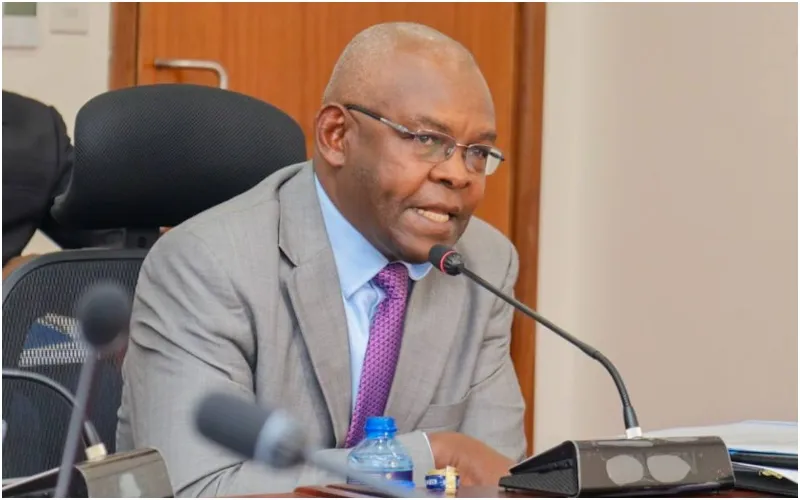
The Central Bank of Kenya (CBK) has announced plans to cap fees on person-to-person mobile money transfers, a move that could reshape the country’s financial landscape and significantly impact the revenues of service providers like Safaricom’s M-Pesa and Airtel Money.
The initiative is part of the Kenya National Financial Inclusion Strategy 2025–2028, which aims to lower the average cost of mobile money transactions from the current baseline of KSh23 in 2024 to KSh10 by 2028.
CBK Governor noted that despite mobile money’s role as Kenya’s most transformative financial innovation since its launch in 2007, the sector faces challenges.
“Most Kenyans continue to use mobile money for basic services such as person-to-person transfers, with limited uptake of advanced products like digital credit, insurance and savings,” CBK stated.
Currently, transaction charges on some transfers reach up to 6.9 percent of the transaction value, much higher than fees levied by commercial banks. According to CBK, these high costs, combined with limited interoperability, have slowed down mobile money’s growth and hindered deeper financial inclusion.
M-Pesa dominates the sector, handling over 90 percent of mobile money transactions in the country. Personal cash transfers account for nearly 40 percent of M-Pesa’s revenue, meaning the planned fee cap could put significant pressure on Safaricom and Airtel’s earnings.
CBK, however, argues that lowering costs is critical for financial equity.
“Mobile money remains the single most transformative tool for financial inclusion in Kenya. Making it more affordable will ensure even the most underserved populations have access to safe and reliable financial services,” the regulator emphasized.
The regulator also pointed to lessons from the COVID-19 pandemic when mobile money fees were temporarily waived for transfers below KSh1,000. The policy boosted active users by more than 6.2 million and tripled monthly transactions from 162 million to 440 million, with transaction values rising from KSh234 billion to KSh399 billion.
Today, Kenya has 47.7 million mobile money subscriptions, representing a penetration rate of 91 percent, according to the Communications Authority. Despite this widespread adoption, uptake of advanced services such as credit and savings remains low.
CBK says it will collaborate with telecom operators, banks, and Parliament to develop a transparent pricing model that balances affordability with sustainable business growth. “Our goal is to strike a balance between short-term commercial targets and long-term inclusive growth,” the bank said in a statement.
If successfully implemented, the fee caps will not only ease financial pressure on ordinary Kenyans but also accelerate progress toward bridging the gap between the banked and unbanked population.
The proposed reforms are expected to be tabled in Parliament later this year, with stakeholder consultations already underway.










Discussion about this post