


MURANG’A, Kenya – Kenya Revenue Authority (KRA) has urged farmers supplying agricultural produce to factories and other businesses to embrace the Electronic Tax Invoice Management System (eTIMS) reverse invoicing.
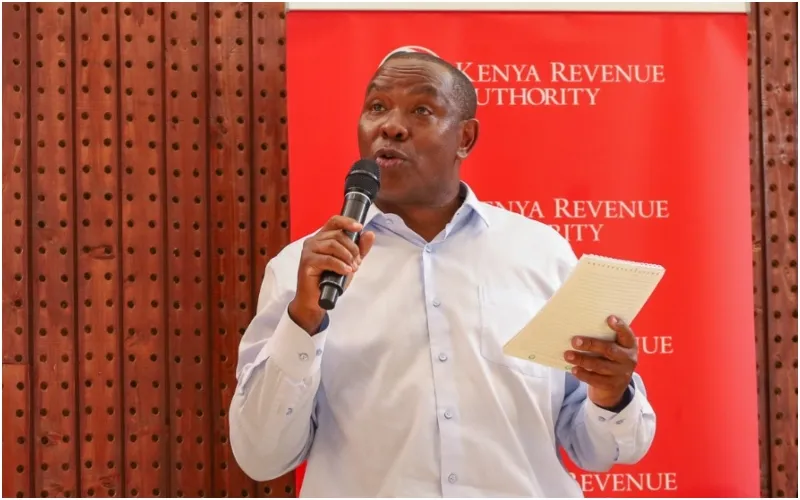
In a statement dated Tuesday, November 17, KRA noted that the move will enable buyers to generate invoices on behalf of suppliers who may not have the capacity to issue electronic invoices.
KRA Commissioner for Micro and Small Taxpayers, Mr George Obell, said that the initiative is aimed at simplifying tax compliance for farmers, particularly those supplying factories and other agricultural processors, while ensuring that transactions are properly documented.
“The reverse invoicing provides a practical solution for farmers who supply produce to factories but may not have the necessary systems or technical capacity to generate electronic tax invoices.
“Under the arrangement, a factory or other business purchasing agricultural produce can generate an invoice on behalf of the farmer, thereby documenting the transaction in eTIMS. This enables the purchasing business to support its expense claims with the requisite documentation,” said Obell during a town hall meeting dubbed KRA Citizen Assembly at Murang’a University.
Obell noted that the absence of proper documentation can create challenges for businesses seeking to claim legitimate expenses, underscoring the importance of reverse invoicing in facilitating compliance across agricultural supply chains.
The commissioner encouraged farmers experiencing difficulties with the process to seek assistance from KRA offices or through its formal communication channels.
The engagement also provided an opportunity for KRA to address concerns surrounding eTIMS integration with accounting platforms and other institutional systems.
The Authority acknowledged that some taxpayers have experienced inconsistencies in invoice reconciliation, particularly where transactions were processed before system integrations were completed.
KRA Board Chairman Hon Ndiritu Muriithi highlighted its commitment to improving taxpayer education, noting that taxation content has been integrated into the school curriculum from Grade One to Grade Nine in collaboration with the Kenya Institute of Curriculum Development.
“KRA is also promoting tax clubs and communities of excellence in universities, alongside initiatives targeting children, young people, start-ups and small businesses,” Muriithi revealed.











Discussion about this post