


MOMBASA, Kenya – Procurement officers must now publicly document every public asset in their custody, the government has directed.

Principal Secretary for Public Investments and Assets Management, Mr Cyrell Odede Wagunda, said the move aimed at ending a culture where public property sits idle, decays in yards or disappears from records.
PS Wagunda issued the directive in Mombasa on Monday, November 16, at the opening of the 5th KISM National Dialogue Conference on Procurement and Supply Chain Management at Sarova Whitesands Beach Resort and Spa.
“An asset on a register that does not produce a service is not wealth. It is a cost. A public investment is only as valuable as the service, the opportunity or the return it delivers to Kenyans,” Wagunda noted.
He said accountability for assets is accountability for outcomes, and called for one framework linking planning, budgeting, procurement, contract management and asset management.
The PS disclosed that the government’s portfolio of public investments and assets stood at about KSh 4.9 trillion as at June 30, 2025, most of it held through State corporations.
He cited Article 201 of the Constitution, which requires public money to be used prudently and responsibly, saying that duty does not end when money is spent but continues for as long as the asset remains in public hands.
Wagunda said Accounting Officers are accountable not only for what they buy, but also for what becomes of what they buy. Procurement officers, through stores, inventory and asset management, are custodians of that accountability.
“The stores ledger is as much an instrument of public value as the tender document,” he said.
He called for timely disposal of unserviceable and obsolete assets, transparently and lawfully, in line with the Public Procurement and Asset Disposal Act, 2015.
“An asset left to decay in a yard loses its value to the public every single day,” he added.
He said procurement must now be judged by results, not by paperwork alone – by completed projects, timely payment of suppliers and jobs created.
“The focus must move beyond what government purchases; it must move to what every procurement decision unlocks for the country,” he said.
The PS noted that government is harmonising the national assets register and has sealed loss of public resources through the electronic Government Procurement (e-GP) system.
“There will be no exceptions. We must ensure e-GP works,” he said.
The conference was convened by the Kenya Institute of Supplies Management (KISM) in partnership with the National Treasury and Economic Planning.
It runs until Friday, November 20, 2026, under the theme Advancing National Value, Public Trust and Economic Competitiveness.
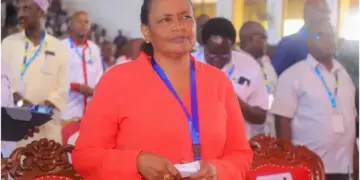
KISM Chairperson Jeniffer Cirindi Njiru said compliance is the foundation of public trust, but compliance is not the destination.
“Compliance is not the destination. Delivery is. We challenge our members to adhere to established standards of ethical practice.
“Let us ensure every officer undertaking procurement services is registered and operates within standards. We are going into a political season. Who will protect us?” she posed.
KISM regulates more than 29,300 registered supply practitioners. Ms Cirindi said public confidence depends on competence, integrity and accountability in every procurement decision.
KISM Chief Executive Officer Kenneth Matiba welcomed more than 600 delegates drawn from government, Parliament, oversight institutions, industry, development partners and the profession.




Discussion about this post