

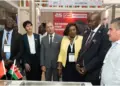
KAMPALA, Uganda – A group of African election observers, including the African Union (AU), the Common Market for Eastern and Southern Africa (COMESA) and the Inter-Governmental Authority on Development (IGAD), has arrived in Uganda ahead of the highly anticipated January 15, 2026, polls.
The Mission dubbed, AU-COMESA-IGAD-EOM, is in the East African nation at the invitation of the Government of Uganda and the Electoral Commission of Uganda.

The AU_COMESA-IGAD-EOM is led by former Nigerian President Goodluck Jonathan and assisted by Amb. Shemsudin Ahmed Roble, a member of the COMESA Committee of Elders, and Commander Abebe Muluneh Beyene from IGAD.
The Mission comprises 84 short-term observers (STOs) drawn from ambassadors accredited to the AU, officials of election management bodies, members of civil society organisations, election experts, human rights specialists, gender and media experts, and representatives of youth organisations.
The observers are drawn from Algeria, Botswana, Burundi, Cameroon, the Central African Republic, Chad, Cote d’Ivoire, Djibouti, Eswatini, Ethiopia, The Gambia, Ghana, kenya, Lesotho, Mauritius, Nigeria, Rwanda, Sahrawi Arab Democratic Republic, Seychelles, Sierra Leone, Somalia, south Africa, South Sudan, Sudan, Tanzania, Zambia and Zimbabwe.
The observers will be deployed across all regions of Uganda, where they will observe the election data procedures, including the opening of polls, voting, closing and the counting processes at the polling stations.
Already, the Government of Uganda has declared 15th and 16th January 2026 as public holidays to enable all citizens to fully participate in the Presidential and Parliamentary elections.
“In Exercise of the powers conferred upon the President by section 2 (2) of the Public Holidays Act, I declare January 15 and January 16, 2026, to be observed as public holidays throughout Uganda for the purpose of enabling citizens to participate in the Presidential and Parliamentary elections. Given under my hand and the Public Seal this 8th day of January 2026,” reads a Gazette Notice signed by President Yoweri Museveni, who is facing six other candidates for the country’s top seat.
They include one-time hitmaker Bobi Wine, whose real name is Robert Kyagulanyi, who is widely thought to be the strongest of the seven opposition candidates.
How will the AU-COMESA-IGAD-EOM base its legal framework?
The other candidates are Frank Bulira, Robert Kasibante, Joseph Mabirizi, Nandala Mafabi, Mugisha Muntu and Mubarak Munyagwa.
Meanwhile, the AU-COMESA-IGAD-EOM will base its assessment on the legal framework governing elections in Uganda and the OAU/AU Declaration on the Principles Governing Democratic Elections, the standards and obligations stipulated in the African Charter on democracy, Elections and Governance (ACDEG), and the International Declaration of Principles (DoP) for International Election Observation, among others.
“The Mission shall interact with State authorities, including the Electoral Commission of Uganda, political parties, the media, civil society organisations and representatives of the international community based in Uganda and other election observation missions,” the Mission announced in a joint statement.
The mission is further expected to release a Preliminary statement of its overall findings and assessment of the conduct of the election on January 17, 2026, at a press conference in Kampala, Uganda. A final and comprehensive report will be released within one month of the announcement of the final election results and will be published.
What is the current political environment in Uganda?
The Mission’s Secretariat is located at the Protea Skyz Hotel, Kampala, Uganda.
According to a report from the United Nations Human Rights Office of the High Commissioner, the forthcoming elections in Uganda will take place in an environment marked by widespread repression and intimidation against the political opposition, human rights defenders, journalists and those with dissenting views.
The report highlights how the authorities have used a series of laws enacted or amended since the last election in 2021, entrenching repression and impunity, particularly against the opposition, and restricting the rights to freedom of expression, association and peaceful assembly ahead of the 15 January polls.
UN High Commissioner for Human Rights Volker Türk called on the Ugandan authorities to uphold the rights of all Ugandans to take part in the public affairs of their country.
“The Ugandan authorities must ensure all Ugandans can participate fully and safely in the election, as is their right under international law,” said Türk. “They must, among others, ensure that no unnecessary or disproportionate force, including lethal force, is used to disperse peaceful protests.”
Under international human rights law, firearms must only be used as a measure of last resort to prevent imminent death or serious injury.
How is Kampala silencing the dissenting voices?
The UN Human Rights Office report details how the Ugandan authorities have used legislation, including the Computer Misuse (Amendment) Act of 2022, the Non-Governmental Organisations (Amendment) Act of 2024 and the Uganda People’s Defence Forces (Amendment) Act of 2025, to silence those with dissenting views.
The laws have been used to arrest and detain opposition leaders and activists, raid the premises of political opposition parties and confiscate their property, as well as to suspend radio stations, arrest bloggers, and tighten control over NGOs.
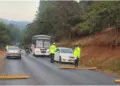
The report states that “undue restrictions have been imposed on opposition parties, particularly the National Unity Platform (NUP), through various means, including roadblocks, raids, seizure or blocking of access to party headquarters/offices, forced confinement at residences, and forced dispersal” of their gatherings.
Leading opposition figure Kizza Besigye has been in detention on questionable treason charges since he was abducted in neighbouring Kenya in November 2024. He and his associate Obeid Lutale have been repeatedly denied bail on unclear grounds.
What are the latest concerning developments in Uganda?
The recent arrest of renowned human rights defender Sarah Bireete, as well as the Government’s recent directive imposing a blanket ban on live broadcasting of “riots” and “unlawful processions”, are the latest in a series of concerning developments.
The report says security forces, including police, the military and the Joint Anti-Terrorism Task Force, have unlawfully used firearms and live ammunition to disperse peaceful assemblies in the lead-up to the elections and to carry out arbitrary arrests and prolonged pre-trial detentions, particularly targeting the political opposition.
It says that security forces have often used unmarked vans – commonly known as “drones” – to abduct opposition party members and supporters and hold them in incommunicado detention at unauthorised sites known as “safe houses”.
“Such tactics – grounded in vague or obscure legal justifications – have also disproportionately restricted the freedom of movement of opposition party leaders and supporters, hindering their ability to travel across the country for political rallies and mobilisation efforts,” says the report.
The UN Human Rights Chief called for those responsible for election-related human rights violations, including unresolved violations from the 2021 elections, to be held to account through fair proceedings following effective, thorough, and impartial investigations.




Discussion about this post