


THARAKA NITHI, Kenya – It is now emerging that county governments are heavily investing in agriculture as a primary strategy to strengthen local economies and improve livelihoods, leveraging collaborations with financial institutions and development organisations.
One of these notable counties is Tharaka Nithi, which is banking on agriculture as a key driver of growth, with a myriad of interventions in the last year now paying off and giving most residents involved in farming money in their pockets.
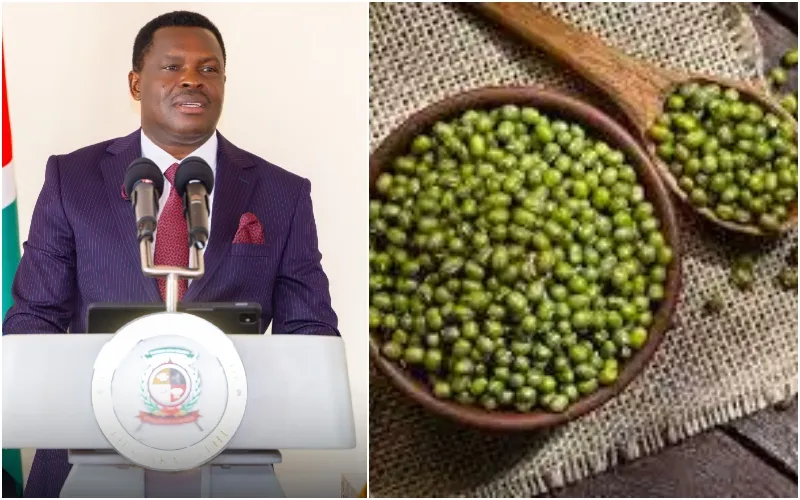
Area Governor Muthomi Njuki, while delivering this year’s state of the county address, revealed that agriculture has contributed immensely to the county’s gross domestic product, which has grown by approximately 6% in the last year.
“Holistic economic growth in the unpredictable global economy requires ensuring that agriculture supports livelihoods, public infrastructure which eases accessibility and communication and quality health remains attainable for our residents,” said Governor Njuki.
The county boss said that green gram production has doubled from 1.5 bags to 3 bags per acre, while maize production has increased from 6 bags to 10 bags per acre.
“Additionally, bean production has increased from 2.5 bags to 4 bags per acre. Overall, agricultural production in 2024 significantly improved in comparison to 2022. Maize production increased from 313,000 bags to 366,700 bags. Bean production increased from 36,500 bags to 65,800 bags, and green gram production increased from 69,000 bags to 191,000 bags within two years,” he explained.
Speaking in the county assembly, Governor Njuki committed to investing more in the agricultural sector, that is, both livestock and crop farming, noting that most investments made thus far, including on seed distribution, have bolstered farming and thus increased yields for the farmers.
“Livestock production offers enormous environmental benefits, including integrated money, biodiversity and byproducts that promote conservation. Our people derive unique socio-cultural benefits from livestock farming that will endure for a lifetime. We are integrating a county livestock initiative and de-risking inclusion and value enhancement of pastoral economies, popularly known as DRIVE,” he added.
What is the significance of the DRIVE project
According to the Governor, the DRIVE project is set to deliver extension services to local farmers. Already, the Governor disclosed that over 100,000 farmers have insured their livestock and obtained advance bonuses estimated at Sh100 million.
“The ongoing farmer registration will register more farmers, who will also benefit from this program and increase livestock productivity,” Governor Njuki explained further.
One of the key areas the county is now exploring is equipping farmers with the requisite training and tools for bettering livestock farming, with an eye on the Arab market, which the governor says has a serious demand that would empower most farmers.
“Our administration has also recruited 16 meat inspectors. As a county, we are prioritising meat hygiene and protecting our population from zoonotic diseases. In the past seven years, we have inspected more than 400,000 carcasses. In this context, my administration is committed to ensuring it takes advantage of the growing demand for meat in the Arab markets,” he explained.
To this end, the county chief said that his county is seeking key strategic partnerships to offer livestock insurance to support farmers and ensure better yields.
“We have put in place measures that have improved our county products to Sh87.9 billion in 2023 from Sh80.5 billion in 2022, indicating an increase of 11.5% in real numbers and steady improvement in the local economy,” added Governor Njuki.
How Tharaka Nithi is mobilising its revenue
Consequently, the County Government of Tharaka Nithi notes that about 80% of the residents are in agriculture and would thus be empowered more through key interventions that would benefit more farmers, including legislative interventions.
“Additionally, Tharaka Nithi County has continued to record a remarkable growth in mobilising all sorts of revenue, which remains a critical pillar in strengthening our fiscal capacity and supporting service delivery,” said the governor.
Over the years, Governor Njuki observed that the county has implemented strategic interventions to modernise revenue administration, enhance compliance and broaden the local revenue base.
“These efforts are reflected across all the financial years. Our revenue now contributes approximately 6% of the county’s total resources each year. This provides a reliable local stream that complements allocation from the National Treasury,” said the county boss.
Governor Njuki also announced that the county’s share of the revenue collected from health, especially from the facilities, is channelled into the Facility Improvement Fund (FIF), which enables the procurement of essential medicine, medical supplies and commodities, ensuring uninterrupted service delivery across our health facilities.






Discussion about this post