


MOMBASA, Kenya – The Micro Enterprises Support Programme Trust (MESPT) has unveiled a five-year climate resilience strategy targeting 500,000 farmers and value chain actors as it steps up efforts to protect agricultural investments, create green jobs and strengthen sustainable businesses.

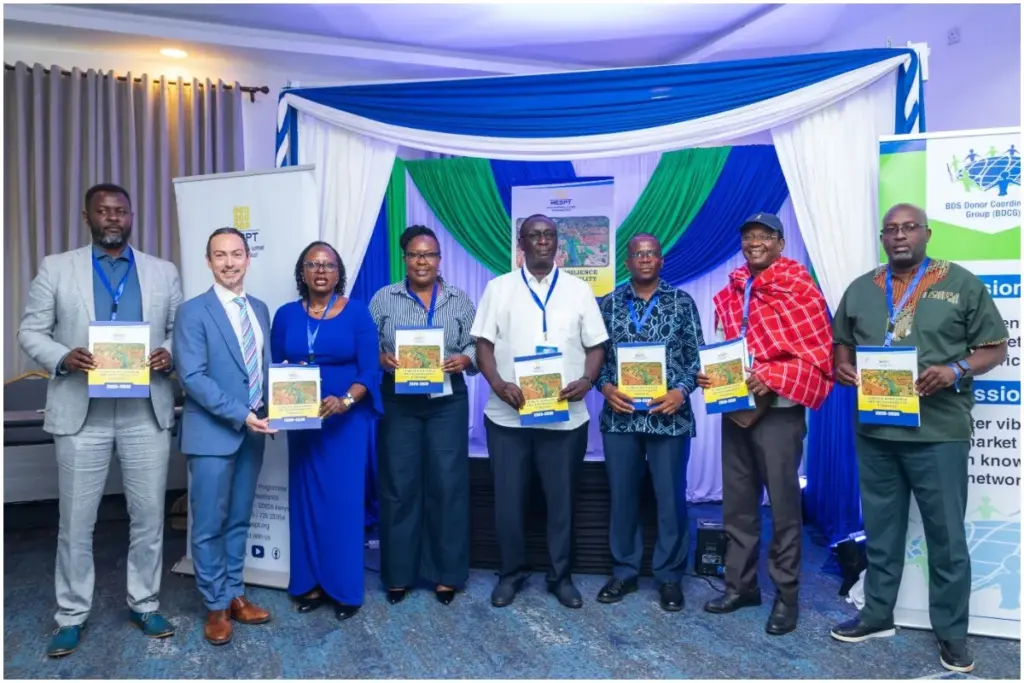
The Climate Resilience and Sustainability Strategy 2026–2030, launched in Mombasa on Wednesday, November 24, targets 350,000 farmers adopting climate-resilient practices and creating 20,000 green jobs by the end of the period.
Climate-smart agriculture
The plan seeks to expand climate-smart agriculture, support green enterprises, unlock climate financing and strengthen market systems, as businesses and farming communities face growing pressure from climate-related shocks.
Presenting the strategy during the BDS Donor Coordination Group (BDCG) Annual Conference, Dr Michael Okoti, Director of the Agricultural Research Fund and Coordinator of Donor Funded Programmes at the Kenya Agricultural and Livestock Research Organization (KALRO), said the success of the initiative would depend on translating its ambitions into practical interventions.
“A strategy gives you vision and direction, but real transformation requires action. MESPT’s new strategy brings together climate-smart agriculture, green enterprises, innovative finance and partnerships to turn climate challenges into opportunities for sustainable growth,” said Dr Okoti.
The strategy places emphasis on linking climate resilience with economic opportunities, particularly in agriculture and enterprises that depend on natural resources.
BDCG Network Council Chairperson and Kenya Climate Ventures Chief Executive Officer Victor Ndiege said stronger collaboration among government agencies, financial institutions, researchers and businesses was necessary to address challenges affecting farmers and enterprises.
“We have come together as institutions with the ability to influence how market systems operate. Our responsibility is to move beyond discussions, put knowledge into practice and build partnerships that deliver lasting solutions for farmers, enterprises and communities,” said Ndiege.
He said improving agricultural productivity alone would not be sufficient without investments in financing, value addition and access to markets.
Climate information
Officially opening the conference on behalf of the Director of the IGAD Climate Prediction and Applications Centre (ICPAC), Head of Data Management, Remote Sensing and Geospatial Technologies Eugene Kayijamahe said climate information should play a greater role in economic planning and investment decisions.
He called for stronger integration of climate data into agricultural production and market development, alongside expanded access to early warning systems and inclusive financial solutions.
“Africa’s economic transformation will depend not only on how much we produce, trade or invest, but also on how effectively we anticipate risks, protect productive assets and create sustainable opportunities for our people,” said Kayijamahe.
MESPT Chief Executive Officer Rebecca Amukhoye said the conference would provide a platform for development partners, investors and other stakeholders to establish partnerships aimed at making African markets more inclusive and competitive.
“The very ethos of this conference is to build networks that can facilitate inclusive and efficient market systems,” she said.
The three-day BDCG Annual Conference, running from November 25 to 27 at PrideInn Paradise Beach Resort and Spa in Mombasa, has brought together policymakers, development partners, financial institutions, researchers and private sector representatives.
Held under the theme Transforming African Market Systems: Innovating Local Solutions, Inclusive Finance, and Climate Resilience, the meeting is also expected to feature the Youth Enterprise Connect Forum, supported by the Mastercard Foundation, and the planned launch of the CASI-BIO Living Lab initiative in partnership with Pwani University.













Discussion about this post