


LUSAKA, Zambia – At Kasanka National Park, one of the world’s remarkable wildlife spectacles is unfolding every year. But beyond the breathtaking sight of millions of fruit bats lies a bigger story about biodiversity, community livelihoods and the future of sustainable tourism.
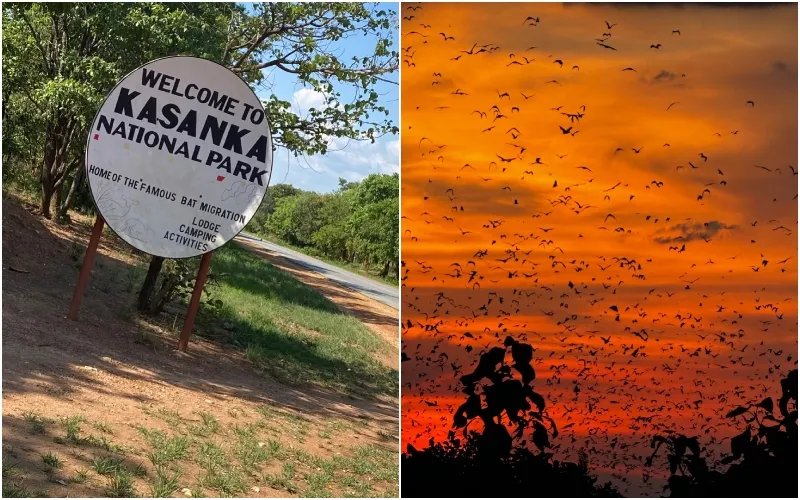
As daylight fades over Kasanka National Park in Zambia’s Central Province, the forest begins to stir.
At first, only a handful of dark silhouettes emerge from the trees. Then more follow, until the evening sky becomes a vast, moving spectacle of wings.
Within 10 to 15 minutes, the horizon is filled with millions of straw-coloured fruit bats setting off on their nightly search for food.
For James Farmer of Kasanka Trust, the experience never loses its magic.
“Within about 10 or 15 minutes, you could do a full 360 looking at the sky and in every direction you look, all you will see are bats. It is overwhelming, to be perfectly honest. It’s an incredible thing to see,” he says.
Even after watching the spectacle approximately 15 times in a few weeks, Farmer says every evening offers something different, depending on the sunlight, direction and altitude of the bats.
It is a natural phenomenon that has placed this relatively small protected area on the international wildlife tourism map.
But Kasanka’s significance extends far beyond the visual spectacle.
A forest that sustains millions
The bats are straw-coloured fruit bats, mammals that congregate in the park during their annual seasonal migration.
Senior Wildlife Police Officer Augustine Tembo says the bats begin emerging between 18:00 and 20:00 hours, travelling considerable distances in search of fruit before returning to the forest between 04:00 and 05:00 hours.
Some travel as far as Kasama, Mansa, Mkushi and even Kabwe in search of food.
Their dependence on fruit trees across a wide geographical area highlights the importance of protecting ecosystems beyond the boundaries of the national park.
For conservationists, the survival of the spectacle is therefore inseparable from the health of the surrounding landscape.
Tourism beyond the spectacle
Despite its international appeal, Kasanka remains relatively unfamiliar to many Zambians.
Farmer says international visitors currently account for the park’s primary tourism clientele, with resident and local visitors representing an opportunity for growth.
He believes more domestic visitors would help strengthen tourism business while supporting the park’s conservation and community programmes.
Kasanka Trust operates as a non-profit organisation, with tourism proceeds reinvested in maintaining the park and supporting surrounding communities.
Its initiatives include education and conservation awareness programmes through community structures and the Kasanka Trust School.
The connection between tourism and community development is particularly important in landscapes where local livelihoods and wildlife conservation must coexist.
Traditional leader Chief Chitambo says communities have established approximately seven or eight community forests around Kasanka, including Mperembe, Mdere, Mapepala, Ruben and Musangashi.
He believes collective protection of these forests is essential for safeguarding wildlife.
However, he also raises concerns about the distribution of benefits from natural resources, saying communities have not experienced the same level of benefits they received during the earlier years of Kasanka Trust’s operations.
He further questions the implementation of a five per cent benefit arrangement intended for traditional leadership.
His concerns highlight a central challenge facing conservation-based tourism: ensuring that communities living alongside protected areas are not merely expected to protect wildlife, but also share meaningfully in the benefits generated by it.
Protecting a natural heritage
The threats are real. Farmer identifies poaching as a growing concern, revealing that the park currently has approximately 20 wildlife scouts, with plans to increase the number to between 25 and 30.
Deforestation in surrounding areas also threatens the fruit trees that sustain the bats.
With the animals travelling considerable distances each night, the destruction of feeding habitats outside the park could undermine the ecological conditions that support their annual congregation.
Kasanka’s conservation future will therefore depend on effective wildlife protection, stronger community partnerships and sustained investment.
Bringing the world home
Zambia is increasingly looking to tourism as a source of economic diversification and employment.
Through the Holiday Yamu Loko campaign, the Zambia Tourism Agency is encouraging citizens to discover destinations within their own country.
Kasanka offers a compelling case for that ambition. It demonstrates that wildlife experiences capable of attracting international travellers are not necessarily found across distant borders. Some are within reach of the very communities and citizens who share responsibility for protecting them.
The challenge is to ensure that tourism does more than bring visitors to witness a spectacle. It must also help sustain the forests, protect wildlife and improve the lives of surrounding communities.
As millions of bats disappear into the darkness on their nightly feeding journeys, Kasanka leaves behind a powerful reminder: nature’s greatest spectacles are also among its most fragile treasures.











Discussion about this post