


ADDIS ABABA, Ethiopia – As deadlines for all nations in the Paris Agreement to submit their new national climate plans draw near, African governments are being urged to portray these plans as chances to accelerate economies and raise living standards throughout the continent.
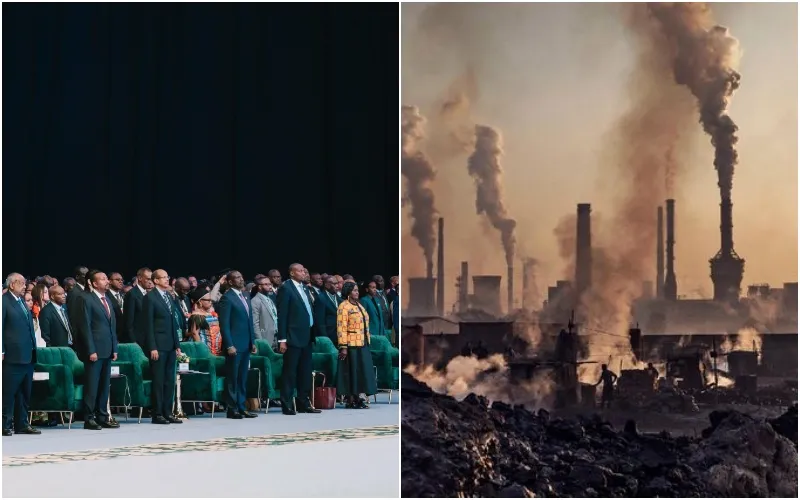
“All African countries may benefit from robust new national climate plans, which serve as blueprints for improved economies, increased employment, and growing living standards. As climate disasters impact African countries more severely every year, “strong plans open the door to new industries, large-scale investment, more affordable clean energy accessible to all, and more resilient infrastructure,” stated UN Climate Change Executive Secretary Simon Stiell.
In his own words, Stiell added: “Africa is not just on the frontlines of climate impacts; it is also at the forefront of solutions. Right across the continent, we are already seeing massive potential and innovations which cut planet-heating pollution and build more climate-resilient economies. Strong new national climate plans are the key to converting that potential into real-economy outcomes at scale, including the millions of new jobs they create.”
Ahead of significant events like the UN Secretary General’s September Climate Summit and the November COP30 in Brazil, the UN is urging all nations to submit their updated plans, officially known as Nationally Determined Contributions, or NDCs, as soon as possible.
Although September will mark a significant milestone, submissions will continue leading up to COP30, with each proposal contributing to protecting all peoples and keeping global warming to 1.5 degrees Celsius while simultaneously enabling growth, jobs, and economic benefits domestically.
Even though the biggest economies bear a disproportionate amount of responsibility because their decisions shape the global emissions trajectory, each country must present its most ambitious plan in order to support the global response and advance its own prosperity and security.
Examples from Across Africa
In South Africa, the NDC process is framed around a just transition that protects workers and communities while scaling renewables to strengthen energy security. International partnerships are signalling momentum, bringing together governments, public financiers, and private investors to support South Africa’s shift from coal to clean energy – growing from USD 8.5 to 11.6 billion.
Nigeria is advancing a whole-of-government and society approach, linking climate action to job creation, poverty reduction, and improved energy access. Over 85 million people still lack electricity, making decentralised renewables critical. Large-scale solar is expected to generate 33,905 direct green jobs by 2030. The micro-solar sector is already employing youth as “energy officers.”
The Great Green Wall has restored more than 5 million hectares, and the country’s extensive mangroves provide carbon storage and flood protection. With a population projected to surpass 400 million by 2050 and GDP already over USD 470 billion, Nigeria has unparalleled potential to be a powerful leader in Africa’s green transition.
Its upcoming climate plan is being designed as a national investment strategy to generate millions of green jobs by 2035 and secure a strong share of the Sh284 trillion ($2.2 trillion) global clean energy market. The transformation is already underway: over 170 solar mini-grids are already operational, bringing reliable electricity to nearly 6 million people, while young entrepreneurs are driving innovation in recycling, clean transport, and sustainable agriculture.
Morocco has emerged as a regional leader in renewable energy, with the Ouarzazate solar complex among the largest in the world. It stands as a positive example of how national ambition can deliver clean power at scale.
Recent milestone UN climate events, including Climate Week in Ethiopia and the Adaptation Expo in Zambia, have showcased innovative and practical new climate solutions emerging right across African nations, helping them to be scaled up and replicated across the continent and globally.
What did African leaders urge during the Africa Climate Summit
Following last week’s Africa Climate Summit in Addis Ababa, where leaders urged climate action to be viewed as a catalyst for investment and development, and the September 2023 Africa Climate Summit in Nairobi, where African leaders adopted the Nairobi Declaration, which emphasised the continent’s role as a catalyst for global solutions, momentum is growing for robust climate action by and for African countries.
Echoing Simon Stiell’s assertion that delivery is the key to achieving climate justice and economic opportunity, nations are being challenged to translate political signals into tangible strategies that benefit people and economies.
African countries may export green products and services, create robust regional supply chains, and promote cross-border shared prosperity through programs like the African Continental Free Trade Area.
Stronger climate efforts by developing and vulnerable nations are still made possible in large part by climate money. Climate finance is not charity; rather, it is an investment in shared prosperity that is necessary to turn climate goals into tangible economic results, fortify global supply chains that are vital to all economies, and guarantee that the enormous advantages are distributed more widely among all African and developing countries.
A new global agreement to increase climate money to Sh38 trillion ($300 billion) annually was secured during the COP29 UN Climate Conference in Azerbaijan in November 2024.
This needs to be completed, and growing climate finance to Sh167 trillion ($1.3 trillion) yearly by 2035 will depend on a new Finance Roadmap that is anticipated at COP30 in Brazil this November.











Discussion about this post