


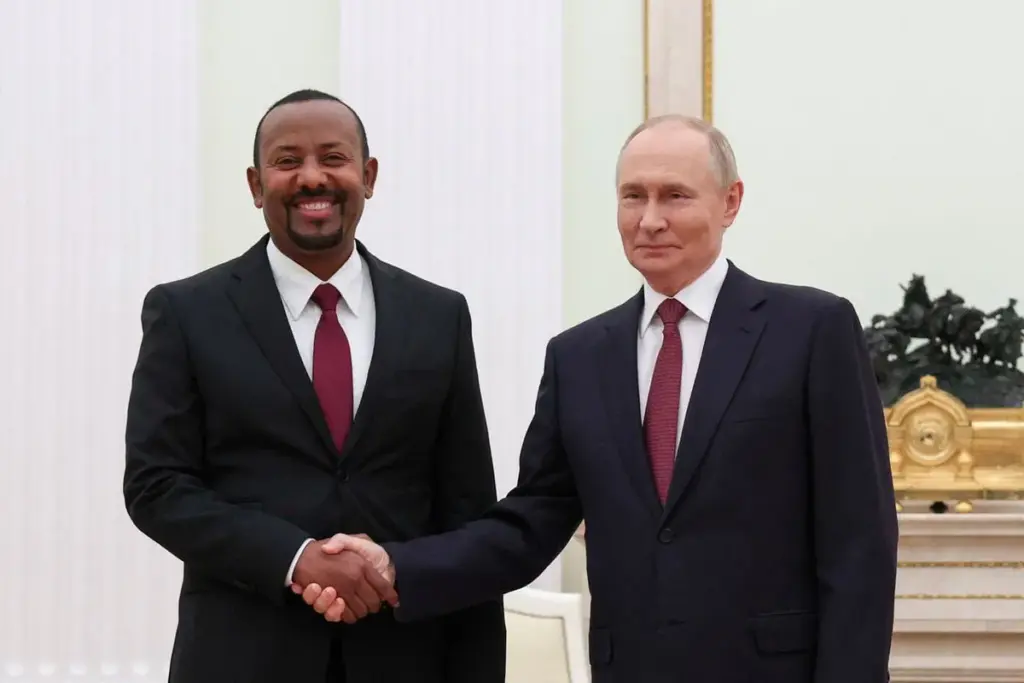
Ethiopia has signed a nuclear energy cooperation agreement with Russia in a move aimed at diversifying its power sources and addressing chronic electricity shortages.
The deal was concluded on Thursday in Moscow during Prime Minister Abiy Ahmed’s meeting with Russian President Vladimir Putin. Executives from Ethiopia’s state-owned utility and Russia’s nuclear corporation Rosatom signed a roadmap setting out technical, economic and institutional steps for the project.
According to Rosatom, the agreement covers the development of nuclear infrastructure, training of Ethiopian experts and frameworks for constructing reactors. The plan foresees Ethiopia building two 1,200-megawatt nuclear power units between 2032 and 2034.
Ethiopia, one of Africa’s fastest-growing economies, relies heavily on hydropower, including the Grand Ethiopian Renaissance Dam (GERD) on the Blue Nile. While the dam can generate more than 5,000 MW, recurring droughts have reduced water levels and disrupted electricity supply.
Officials say nuclear power will provide a stable alternative to support industry, urban growth and regional power exports. Prime Minister Abiy described the nuclear plan as being on the same scale of ambition as the GERD.
The deal strengthens Russia’s growing influence in Africa’s energy sector. Earlier this week, Niger announced plans for two 2,000 MW nuclear reactors with Rosatom, while Sudan signed agreements with Moscow covering energy, rail and port development.
Rosatom chief Aleksei Likhachev said the Ethiopia partnership would boost the country’s energy security and contribute to its industrialization.
“This cooperation is strategic, long-term and mutually beneficial,” he told reporters in Moscow.
Despite the promise of reliable power, nuclear energy projects face major hurdles in Africa. Analysts cite the high construction costs, complex safety requirements and the challenge of securing long-term financing. Ethiopia will also need to build regulatory capacity and ensure public confidence in nuclear safety.
Still, officials in Addis Ababa say nuclear energy is critical to the country’s future. Alongside plans for an oil refinery, gas facilities and a new airport, the government sees the nuclear project as part of a broader $30 billion infrastructure drive.






Discussion about this post