


DAR ES SALAAM, Tanzania – It is now emerging that Tanzanian security forces suppressed election protests between October 29 and November 3, 2025, using needless or disproportionate force, including lethal force. This shows a startling disrespect for the right to life and freedom of peaceful assembly, as hundreds of people were reportedly killed or injured nationwide.
According to a recent research report published by Amnesty International, protesters and other people who did not immediately pose a threat of death or serious injury were specifically targeted by security personnel using live bullets and tear gas. The group discovered that security personnel abused tear gas in residential areas and inside people’s homes, and they fired firearms carelessly, killing and injuring bystanders.
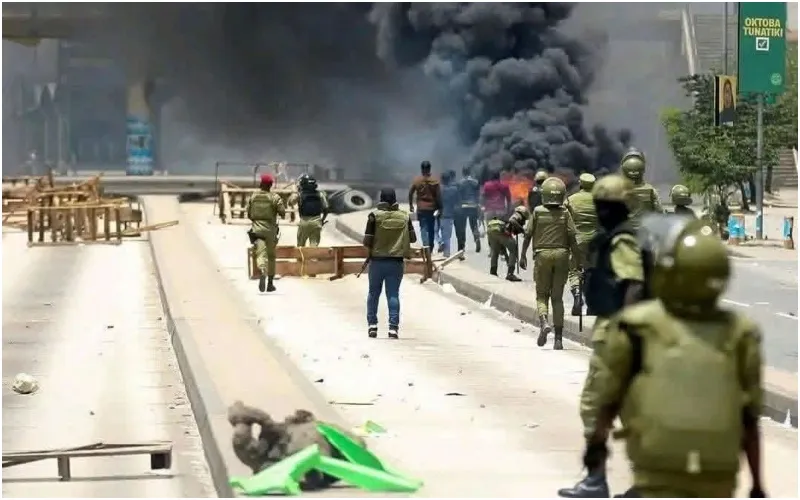
In the midst of a statewide internet blackout, security personnel beat and mistreated people, prevented injured people from receiving medical attention, detained some people who were still in need of care, and removed the remains of their victims from mortuaries and transported them to unidentified locations.
“The violence that security forces inflicted on protesters and other people who were just going about their daily lives was shocking and unacceptable and yet another sign of growing intolerance in Tanzania,” said Agnès Callamard, Amnesty International’s Secretary General.
On November 14, 2025, Tanzania’s president announced a commission of inquiry into the killings of protesters. However, civil society members have expressed concerns about its independence.
“The formation of the commission is the first of many steps that must be followed to deliver accountability. The authorities must now ensure that all investigations are independent, thorough and impartial. No one should be shielded from justice: those who ordered, enabled and used unlawful force must be held accountable regardless of their position. Every grieving family deserves answers, justice and the chance to seek reparations. Anything less would be an exercise in whitewashing abuses,” Agnès added.
Between November 3 and 28, 2025, Amnesty International interviewed 35 people, including survivors of gunshot and teargas canister injuries, eyewitnesses, lawyers assisting arrested protesters and healthcare professionals who treated injured victims, as well as relatives of those killed. Amnesty International’s digital investigations team, the Evidence Lab, verified 26 videos and six photos posted on social media between 2 and 18 November or shared directly with Amnesty International staff by trusted sources. Tanzanian authorities did not respond to Amnesty’s request for comment.
‘Crows were eating flesh from the dead bodies’
Three healthcare professionals in public hospitals in Dar es Salaam, Arusha and Mwanza told Amnesty International that hundreds of people with gunshot wounds were admitted for treatment between October 29 and 31, 2025. Most were young men, but the injured also included children and women. They had suffered injuries to the head, groin, legs, neck, stomach, buttocks, back and chest.
Healthcare workers from Arusha and Dar es Salaam said hundreds of dead bodies were brought to their hospitals, with some left outside due to a lack of space in the mortuaries.
The Evidence Lab verified one video showing at least 70 bodies piled up on the floors and on stretchers in the mortuary at Mwananyamala Regional Referral Hospital in Dar es Salaam. It also verified two videos and one photo showing at least 10 bodies piled over three stretchers outside Sekou Toure Region Referral Hospital in Mwanza.
“Since I started working over 15 years ago, I have never seen something like this. I had never seen so many people shot like this and so many dead bodies piled up and crows eating their flesh,” a Dar es Salaam-based healthcare professional told Amnesty.
Reckless use of firearms and teargas
Maria*, 28, said police shot her husband in Dar es Salaam’s Magomeni area on 29 October 2025, and he died two days later while receiving treatment for internal bleeding.
“The police didn’t launch any teargas. They just used live bullets. They were standing behind the car. After a short while, I came out and heard people shouting, ‘He has killed him, he has killed him.’ I saw from a distance the collar of the shirt of the person lying on the ground, and I noticed it was my husband,” she said.
Paulo Kingi*, 46, fled to Kenya after being shot at his home in Goba in Dar es Salaam on October 29, 2025.
He recalled seeing armed people, whom he believed to be security officers, driving by his house.
“They aimed and fired; I felt pain in my left lower leg near the ankle. That pain brought me down to the ground. When I touched it, I saw blood oozing out. That’s when I realised I had been shot. From the ground, I could hear more firing,” he said.
Amnesty International received reports that some protesters threw stones, burnt tyres to block roads, damaged government vehicles, set administrative offices ablaze, engaged in acts of vandalism or attended protests holding wooden sticks. However, in the cases the organisation documented, protesters or bystanders who did not appear to pose an imminent threat to the lives of police officers or others were targeted with lethal force.
Eyewitnesses told Amnesty International that police and plain-clothed security officers resorted to firing live ammunition without warning to disperse crowds, almost immediately or shortly after using teargas against them.
One witness said that, around noon on 30 October, men in police uniforms threw tear gas canisters into the street near Sirari market and then opened fire in front of a shop, where he was sitting with his friend. They killed the friend on the spot while he suffered a gunshot wound to the head.
Digital evidence of misuse of lethal force
Amnesty’s Evidence Lab also verified footage indicating the apparent misuse of lethal force. In one video, a woman is among a group of people seen running down a street in Arusha as sounds consistent with gunshots are heard. At one point, the woman holding a wooden stick falls, briefly gets up with the help of another person, and then collapses again. A small red mark appears on her back, while a larger red stain appears on her chest.
Three other verified videos show her lying motionless on the pavement as more gunshots are heard.
In those videos, her top is covered in larger stains consistent with blood on both the back and the front. Another man is seen being carried away, apparently lifeless, bleeding from his head.
A forensic pathologist who reviewed photos provided by a medical source in a hospital in Arusha and a video of an injured man in a street in Dar es Salaam concluded that “photographs and videos… of the injured showed compelling evidence of high-velocity gunshot wounds, of a type produced by military rifles.”
“Using live ammunition against unarmed protesters and bystanders posing no imminent threat to the lives of others is a blatant violation of the right to life. The evidence is clear: state security officials showed total disregard for people’s lives,” said Agnès.
Security officers also repeatedly deployed tear gas in an unlawful manner to quash peaceful demonstrations. In other instances, they launched teargas canisters directly at bystanders or residents in areas affected by protests and the ensuing crackdown.
One witness told Amnesty International that teargas was thrown into his home on 29 October, while his one-month-old baby was present.
Torture and other ill-treatment
Amnesty International verified six videos showing separate incidents near Tabata primary school in Dar es Salaam in which security forces and men dressed in plain clothes carried out acts of torture or other ill-treatment. The victims – all men – were forced to roll over on the ground, crouch-walk, or sit by the side of the road while being beaten with batons, punched, whipped, kicked or dragged by their limbs.
Wounded denied adequate healthcare
Tanzanian security forces interfered with the injured people’s access to healthcare in some regions. A Dar es Salaam-based healthcare professional reported that officers ordered medical staff to hand over at least five severely injured patients who had gunshot wounds, while they were still bleeding, ostensibly for interrogation. The five were wearing the opposition CHADEMA party uniforms or T-shirts. He never saw those patients again.
Security officers also instructed medical staff to prioritise the treatment of some patients over others and warned medical staff against speaking out or recording what they saw at their hospitals.
One healthcare worker described a heavy police presence in his hospital in Mwanza, with officers instructing nurses to stop treating some of the injured. “They took people who were still breathing and could be saved to the mortuary,” he said.
The healthcare worker said a senior state official came to the hospital on 2 or 3 November and ordered medical staff to place all patients with gunshot wounds in separate wards, where they were to be handcuffed and placed under police watch, stating they would be charged with treason for participating in protests. Amnesty International also received reports that wounded protesters and bystanders either discharged themselves prematurely or avoided medical treatment in hospitals altogether for fear of arrest.
‘We decided to bury his clothes and picture’
Amnesty International interviewed the families and friends of eight people killed in Dar es Salaam, Mwanza, Arusha, Tunduma, Moshi and Mbeya who were unable to find their loved ones’ bodies, even after searching in various mortuaries, and who fear that security forces took them away to conceal evidence of killings.
Sources who knew Stephano China, 19, whose body was taken to Tunduma Referral Hospital mortuary after he was killed on 29 October, told Amnesty that the following day they went to view his remains. Still, his body was missing: “They (hospital officials) said police came to carry all the bodies. We couldn’t do anything.”
The family of 38-year-old Daudi Ndone, who was shot and killed in Dar es Salaam’s Manzese area on October 29, 2025, also could not find his body despite frantically searching several mortuaries for over a week. “As per our tradition, since we didn’t find his body, we decided to bury his clothes and picture,” one of his relatives said.
“Even in death, these victims of police brutality cannot rest in peace. Amnesty International calls on the authorities to hand over the remains of all those killed in the protests and their aftermath to their relatives for a decent burial and the necessary rites,” explained Agnès.









Discussion about this post