


NAIROBI, Kenya – Former Kiambu governor Ferdinand Waititu has received a five-year sentence after he was found guilty of money laundering.
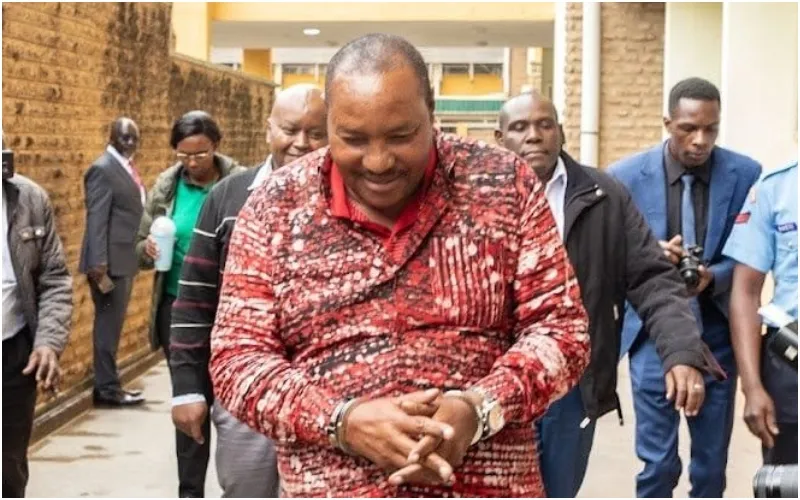
Waititu, alias Babayao, was charged alongside his wife, two other individuals and corporate entities.
The Ethics and Anti-Corruption Commission (EACC) welcomed the Milimani Anti-Corruption Court decision of imposing fines of up to KSh 36 million with default prison terms ranging from two to 13 years.
“The sentences followed a High Court decision delivered on October 14, 2026, which reinstated money laundering charges against Waititu, his wife Susan Wangari Ndung’u, and Charles Chege Mbuthia and his wife Beth Wangechi Mburu, who are directors of Testimony Enterprises Limited,” read a statement from EACC in part.
The court fined Waititu KSh 21 million or 13 years’ imprisonment in default, Charles Chege Mbuthia KSh 28 million or 13 years’ imprisonment in default, Beth Wangechi Mburu KSh 6 million or six years’ imprisonment in default, and Susan Wangari Ndung’u KSh 2 million or two years’ imprisonment in default.
The corporate entities charged included Testimony Enterprises Limited, fined KSh 36 million, and Saika Two Estate (A company owned by Waititu and his wife Susan), fined KSh 24 million.
The case originated from investigations launched by the Commission in 2019 following allegations that the County Government of Kiambu had irregularly awarded Testimony Enterprises Limited a contract worth KSh 588 million for the upgrading of gravel roads to bitumen standards in Thika, Limuru, Gatundu North, Juja and Ruiru sub-counties during the 2017/2018 financial year.
On February 12, 2025, Waititu and his co-accused were convicted of various offences, including conflict of interest, dealing with suspected property, abuse of office, fraudulent procurement practices and wilful failure to comply with procurement laws and regulations.
The court further ordered Testimony Enterprises Limited and Saika Two Estate to pay their respective fines within 14 days; failure to do so, the amounts shall be recovered in accordance with Section 334 of the Criminal Procedure Code.









Discussion about this post