


The Office of the Director of Public Prosecution (DPP) is at the forefront of ensuring Kenya curbs money-laundering activities, in a bid to protect the country’s financial system.
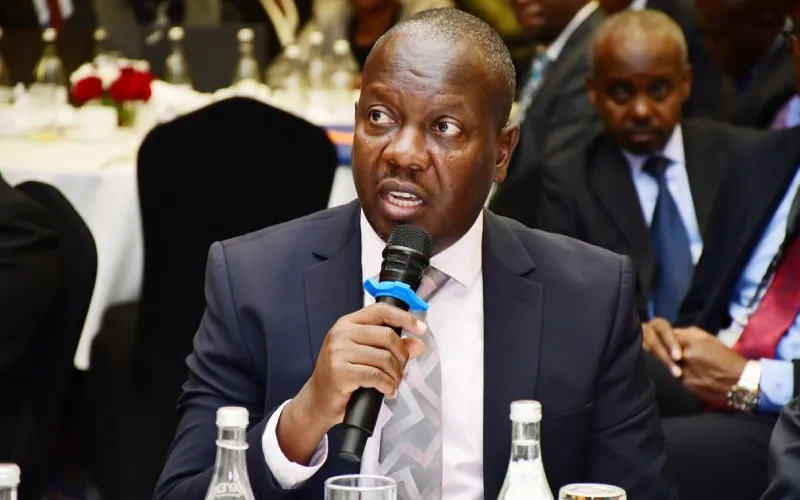
The Director of Public Prosecutions Renson Ingonga joined senior government officials on February 16, 2026 to review progress on the Financial Action Task Force (FATF) action plan, a move that is part of ongoing efforts to secure Kenya’s removal from the FATF Gray List.
If a country is on the FATF gray list, it is actively working with the FATF to address deficiencies in its anti-money laundering (AML), counter-terrorist financing (CTF), and proliferation financing efforts within agreed timeframes and is subject to increased monitoring.
Speaking during an engagement session with leading government officials, Ingonga emphasized that strong inter-agency collaboration and enhanced prosecutorial capacity are key to protecting Kenya’s financial system and ensuring compliance with international standards.
“We have strengthened our Anti-Money Laundering (AML) response through targeted capacity-building initiatives. We continue to train prosecutors across the country to enhance their ability to handle AML-related cases effectively,” Ingonga explained.
Those present at the meeting included Attorney General Dorcas Oduor, Principal Secretary for Internal Security Raymond Omollo, Principal Secretary for Treasury Chris Kiptoo, the CEO of the Ethics and Anti-Corruption Commission (EACC) Abdi Mohammed, the Director of the Directorate of Criminal Investigations (DCI) Mohammed Amin, and representatives from the Kenya Revenue Authority (KRA), Gambling Regulatory Authority, and National Intelligence Service.
Ingonga highlighted reforms within the Anti-Money Laundering and Asset Forfeiture Division at the Office of the Director of Public Prosecutions (ODPP), which now manages money laundering cases and advises county prosecution offices on prioritizing Anti-Money Laundering (AML) prosecutions.
The session focused on strengthening coordination within different departments of the government and advancing Kenya’s compliance with FATF timelines to safeguard the integrity of the country’s financial system.
What is the Financial Action Task Force (FATF)?
The Financial Action Task Force (FATF) is an independent intergovernmental body established in 1989 to set global standards for combating money laundering, terrorist financing, and proliferation financing.
With its headquarters based in Paris, it serves as a global watchdog, identifying jurisdictions with weak measures and monitoring compliance to protect the international financial system.
It categorizes countries with weak measures in combating money laundering, terrorist financing, and proliferation financing in two public documents that are issued three times a year.
The two public documents are commonly referred to as grey list and black list.
More on the FATF gray list
The grey list is officially referred to as “jurisdictions under increased monitoring’. It acts as a warning to the international financial system that a country has weak anti-money laundering (AML) and counter-terrorist financing (CTF) controls, but is committed to fixing them.
Being grey-listed can lead to reputational damage, increased scrutiny from financial institutions, higher compliance costs, and potential reductions in foreign investment or aid.
FATF works closely with the jurisdiction to monitor the implementation of action plans designed to resolve the identified weaknesses. A country is removed from the list once the FATF determines that the agreed-upon reforms have been successfully implemented.
On the other hand, the FATF black list (officially called High-Risk Jurisdictions subject to a Call for Action) identifies countries or jurisdictions with serious strategic deficiencies to counter money laundering, terrorist financing, and financing of proliferation. This classification triggers stronger counter-measures from the international financial system.
For countries identified as high-risk, the FATF calls on all members and urges all jurisdictions to apply enhanced due diligence, and in the most serious cases, countries are called upon to apply counter-measures to protect the international financial system from the ongoing money laundering, terrorist financing, and proliferation financing risks emanating from the country.
According to the FATF website, its process of publicly listing countries with weak AML/CTF regimes has proved effective. As of February 2025, the FATF has reviewed 139 countries and jurisdictions and publicly identified 114 of them. Of these, 86 have since made the necessary reforms to address their AML/CTF weaknesses and have been removed from the process.









Discussion about this post