


Editor’s note: In this opinion piece, Dr Juma Mukhwana says there comes a time in every nation’s journey when it must decide what kind of country it wants to become. For Kenya, Dr. Mukwana observes that that moment is now.
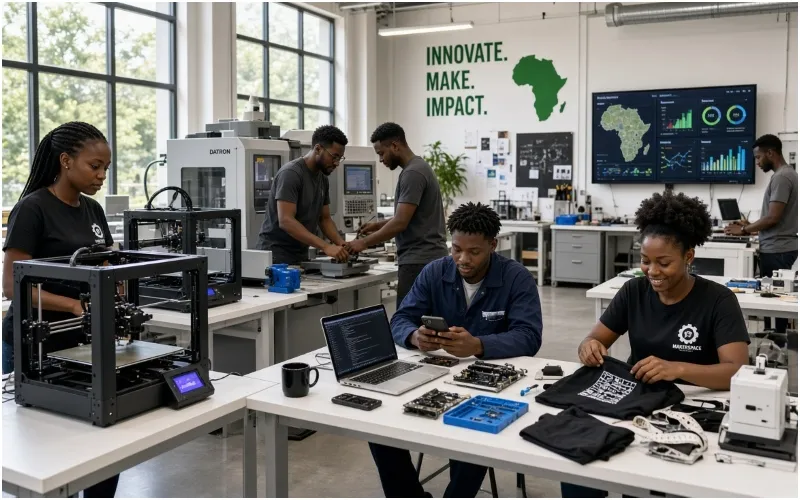
As we begin to think beyond Vision 2030 and towards the Kenya we want to see by 2060, we must ask ourselves a fundamental question: What will make Kenya a truly prosperous, globally competitive, and world-class nation?
My answer is straightforward: Kenya must manufacture. We cannot import our way into prosperity.
We cannot become a wealthy nation simply by selling one another goods manufactured elsewhere. We cannot create enough productive jobs for our young people by exporting raw materials and importing the finished products made from them.
By 2060, Kenya should not merely be a bigger economy. We must become a fundamentally different economy: productive, industrial, technologically sophisticated, export-oriented, and globally competitive.
Manufacturing is the bridge that can take us there.
The Countries We Admire Built Factories
Look at the economic transformation of Japan, South Korea, China, and Singapore.
These countries followed different development paths, but industrialisation was central to their transformation. They built productive capacity. They invested in skills. They developed infrastructure. They encouraged technology transfer and progressively moved from producing relatively simple goods to sophisticated products.
The lesson for Kenya is powerful.
Countries become wealthy when their people become more productive and when their economies progressively produce goods and services of greater value.
We must therefore stop thinking about manufacturing as simply another sector of the economy. Manufacturing is an ecosystem.
When we manufacture a motor vehicle, for example, we create demand for steel, glass, rubber, plastics, electronics, batteries, cables, seats, paint, and thousands of other components. Behind those components are engineers, designers, technicians, researchers, transporters, software developers, financiers, distributors, and thousands of MSMEs.
That is why I have increasingly argued that Kenya must graduate from simply assembling products to progressively manufacturing their components.
Assembly should be a doorway into manufacturing, not our final destination.
From the Container to the Factory
For decades, some of our most successful entrepreneurs have built businesses around importing and distributing products. There is nothing inherently wrong with trade. Trade is essential to every modern economy.
But there is a question I increasingly pose to our business community: If you have imported a product successfully for 20 years, isn’t it time to ask whether you can manufacture it in Kenya?
The importer already understands the market. He knows the customers. He understands distribution. He knows the volumes and the price points. The next logical step should be manufacturing.
Our ambition should therefore be to create a generation of Kenyan industrialists who move from the container to the factory; from the warehouse to the production line; from being agents of foreign manufacturers to becoming manufacturers themselves.
Foreign direct investment will remain important. We welcome investors from every part of the world. But industrialisation cannot be entirely outsourced to foreigners. Ultimately, Kenyans must own factories too.
Agriculture Must Feed Industry
Kenya also needs to rethink the relationship between agriculture and manufacturing. For too long, we have treated agriculture and industry almost as separate sectors. They should be partners.
We grow coffee. But how much value do we capture from the final cup sold worldwide? We grow tea. But how much of it leaves Kenya as a sophisticated, branded consumer product?
We produce milk, livestock, hides and skins, fruits, vegetables, cereals and oil crops. Every agricultural value chain should eventually lead us to an industrial question: What can we manufacture from this?
The farmer should not merely produce raw materials. Agriculture must increasingly become the foundation upon which agro-industries are built.
This is why county aggregation and industrial parks are so important. The government is working with county governments to establish CAIPs as centers for aggregation, processing, and value addition closer to production areas.
The objective is simple: instead of transporting poverty in the form of unprocessed raw materials, let us transport value. Let processing happen near the farmer. Let industries emerge in our counties. Let jobs follow production.
Every County Can Become a Workshop
Industrialisation must not become another Nairobi story. A Kenya of 2060 cannot have one giant economic center surrounded by counties that mainly supply labour and raw materials.
Every region has something it can manufacture. Dairy-producing counties can build sophisticated dairy-processing industries. Coffee-growing regions can process, package, and brand coffee. Livestock counties can support meat, leather, animal feed, and pharmaceutical industries. Cotton-growing counties can anchor textile and apparel industries. Fishing communities can build modern fish-processing value chains.
Our counties must progressively become the workshops of Kenya.
The national government is consequently supporting county aggregation and industrial parks and promoting special economic zones, export processing zones, and other industrial infrastructure to create locations where investors can manufacture competitively.
Kenya’s New Automotive Opportunity
One sector illustrates the scale of opportunity before us: automotive manufacturing.
Kenya has assembled vehicles for decades. We must now deepen that industry. Our next frontier is local automotive components: seats, batteries, wiring harnesses, glass, tyres, filters, plastics, electronics, brake components, and eventually increasingly sophisticated parts.
We also have considerable capacity in bus body building that can be modernised and scaled.
Then comes electric mobility. Electric vehicles represent one of the great industrial disruptions of our generation. Kenya should not wait for other countries to manufacture the electric vehicles of the future and then become merely their market.
We should assemble electric buses, motorcycles, and vehicles here. We should progressively manufacture battery systems, chargers, cables, electronics, and other components.
The government’s automotive development efforts are intended to strengthen local manufacturing, skills, and investment in the automotive ecosystem.
Kenya must move from importing mobility to manufacturing mobility.
Leather, Textiles, Pharmaceuticals and Agro-processing
The same thinking applies across our priority value chains.
Why should a country with millions of livestock export hides and skins and then import shoes? Why should a country capable of producing cotton import enormous quantities of garments? Why should our farmers produce agricultural commodities while supermarket shelves fill with imported processed foods that could have been manufactured locally? Why should Africa, with its rapidly growing pharmaceutical market, remain overwhelmingly dependent on medicines manufactured elsewhere?
These contradictions must define our industrial opportunities.
Government is therefore prioritising agro-processing, textiles and apparel, leather and leather products, pharmaceutical manufacturing, edible oils and local content, among other areas.
The objective is not merely import substitution. The bigger objective is export competitiveness. Kenyan factories must ultimately manufacture products that can compete across Africa and globally.
Africa Is Our Market
For decades, one argument against manufacturing in individual African countries was market size. That argument is becoming less convincing.
Kenya sits at the heart of the East African Community. We have access to COMESA and, most importantly, the African Continental Free Trade Area. Africa is gradually creating a continental market of enormous scale.
Therefore, when we speak to investors, our proposition should not be: Come and manufacture for Kenya alone. It should be: Come to Kenya and manufacture for Africa.
Kenya should become one of the great manufacturing, logistics, technology, and export platforms of the African continent.
Technology Will Transform Manufacturing
Some people ask whether manufacturing still matters in the age of artificial intelligence, robotics and the digital economy. It matters more than ever.
The factory of 2060 will certainly look different from the factory of 1960. It will be automated. It will use artificial intelligence. Machines will communicate with machines. Robotics, sensors, digital twins, advanced materials, 3D printing, and sophisticated data systems will change production.
Kenya, therefore, does not have to repeat every stage followed by today’s industrial powers. We can build smart, green and digitally enabled manufacturing from the beginning.
Our young people should not only learn how to operate machines. They must learn how to design, program, repair and eventually manufacture them.
The ultimate measure of our education system should therefore not simply be how many certificates we issue. We must ask: What can our graduates do? What can they design? What can they build? What problems can they solve?
Buy Kenya, Build Kenya
There is also a truth we cannot avoid: local manufacturing requires markets.
A Kenyan manufacturer cannot employ workers, service loans and invest in better machinery if locally manufactured goods are ignored while institutions automatically procure imports.
This is why Buy Kenya, Build Kenya is important. It does not mean closing Kenya to the world. It means understanding that procurement can be a strategic instrument for developing productive capacity, where consistent with our laws and trade obligations.
When Kenyan manufacturers meet the required standards, quality and price competitiveness, we should be proud to buy Kenyan.
Every Kenyan product we competitively manufacture strengthens a local value chain. Every successful factory can become a classroom for skills. Every Kenyan manufacturer who enters an export market becomes an ambassador for our productive capability.
Quality Must Be Non-negotiable
But Buy Kenya cannot become an excuse for poor quality. Made in Kenya must mean quality.
Our products must meet national and international standards. If we manufacture shoes, they must be excellent shoes. If we manufacture pharmaceuticals, they must meet rigorous standards. If we manufacture buses, they must be safe and durable. If we manufacture electrical products, consumers must trust them.
The future of Kenyan manufacturing will not be secured by patriotism alone. It will be secured by quality, productivity, innovation and competitiveness.
Vision 2060 Must Be Built in Factories
The government is laying important foundations for a more industrial Kenya. These include county aggregation and industrial parks, special economic zones and export processing zones, support for priority value chains, local content development, industrial skills, standards and quality infrastructure, investment facilitation, market access, and the Buy Kenya, Build Kenya agenda.
But government policy alone will not industrialise Kenya.
Government can create the enabling environment. Government can develop infrastructure. Government can negotiate market access. Government can establish industrial parks. Government can develop standards. Government can support skills development. Government can facilitate investment.
But ultimately entrepreneurs build factories.
Our private sector must therefore rise to this historic challenge.
Who Will Industrialise Africa?
This brings me to a question that I believe every African leader, entrepreneur, engineer, student, and policymaker must confront: Who will industrialise Africa?
Will somebody come from Europe to do it for us? Will America do it? Will China do it? Will India do it?
Will Japan do it? These countries can be our partners—and we need their investment, technology, markets, and experience. But they cannot substitute for our own ambition.
Africans must industrialise Africa. And Kenyans must take responsibility for industrialising Kenya.
By 2060, I want to see a Kenya that exports machines, vehicles, pharmaceuticals, electronics, processed foods, textiles, and sophisticated industrial products.
A Kenya whose young engineers design products used around the world. A Kenya whose farmers supply raw materials to industries located in their own counties. A Kenya where thousands of MSMEs supply components to major manufacturers. A Kenya whose industrial products compete confidently across Africa and globally.
That is the Kenya we must build.
We must produce. We must add value. We must innovate. We must export. We must manufacture.
The journey from a developing economy to world-class status will not be made aboard containers bringing finished goods into our ports. It will be made on our farms, in laboratories, workshops, universities, industrial parks, and factories.
Vision 2060 must therefore not remain a document on a shelf. It must become steel, leather, textiles, medicines, electronics, machines, vehicles, and millions of productive jobs.
Kenya’s road to world-class status runs through the factory floor.
And the time to build those factories is now.
The author is Dr. Juma Mukhwana, CBS, PhD, principal secretary, State Department for Industry.
Views expressed in this article are solely those of the author and do not represent the editorial position of news9.africa.










Discussion about this post