


The global logistics provider FedEx has highlighted the essential role efficient logistics will play in Kenya’s ambition to strengthen the local production of medicines and medical devices and expand its role in the regional healthcare economy.
Beyond growing the country’s manufacturing capacity, proper infrastructure is needed to connect products, suppliers, and markets to ensure the smooth running of operations.
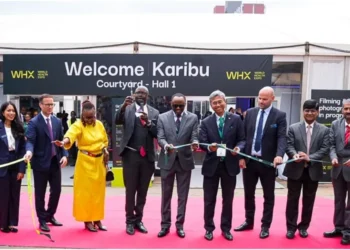
Speaking at the World Health Expo (WHX) Nairobi held at the Kenyatta International Convention Centre, FedEx’s Managing Director for Sales in Sub-Saharan Africa Leon Bruwer highlighted the role of efficient logistics and cross-border connectivity in supporting the growth of Kenya’s healthcare ecosystem and its links to markets across Sub-Saharan Africa.
“Kenya’s ambition to strengthen local manufacturing of medicines and medical devices will require more than production capacity alone. It will also depend on efficient supply chains, access to international markets and the ability to move raw materials, components and finished healthcare products quickly and reliably across borders,” he said.
Bruwer said WHX Nairobi provides a platform to see the wider healthcare ecosystem take shape, including opportunities for local and regional production.
“At WHX Nairobi, we are seeing the growing focus on building stronger healthcare ecosystems in Kenya and across Sub-Saharan Africa, including opportunities to develop local and regional production.”
“As a logistics partner, FedEx can support this transition by connecting manufacturers and healthcare businesses to suppliers and markets, helping them improve speed to market and compete more effectively on a regional and international level.”
For FedEx, which is a global logistics provider, the opportunity extends beyond moving finished products. As healthcare manufacturing develops, companies need reliable access to raw materials and components, while manufacturers and distributors need efficient routes to reach customers in other markets.
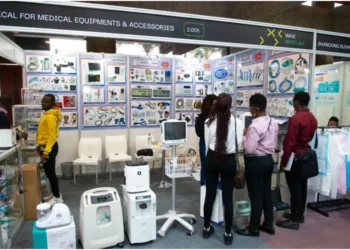
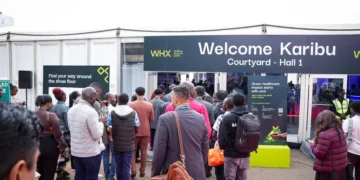
WHX Nairobi, which is running from September 16 to September 18, 2026, has had more than 5,500 attendees and exhibitors from more than 30 countries, bringing together manufacturers, distributors, healthcare providers, investors and other industry stakeholders to explore products, partnerships and opportunities across the healthcare value chain.
The emphasis on connectivity reflects the changing role of Nairobi within the region’s healthcare economy and WHX Nairobi is designed to connect suppliers with buyers, distributors and decision-makers, creating opportunities for partnerships, distribution agreements and new business relationships.
For healthcare companies entering or expanding across African markets, the ability to move medical equipment, devices, pharmaceuticals and other healthcare products efficiently can be an important part of reaching those markets.
FedEx’s healthcare logistics portfolio includes specialised handling and monitoring solutions for sensitive healthcare shipments.
“Nairobi is an important hub for the region, bringing together healthcare businesses, manufacturers, distributors and other industry stakeholders from Kenya and across the continent,” Bruwer said. “We are here to showcase our capabilities, connect with the Kenyan healthcare ecosystem and build relationships across Sub-Saharan Africa.”
The presence of a global logistics provider alongside manufacturers, technology companies, distributors and healthcare buyers at WHX Nairobi underscored a broader point: strengthening healthcare in Africa requires not only the technologies and products themselves, but also the partnerships, infrastructure and supply chains that enable them to reach healthcare facilities and patients.
As Kenya continues to position itself as a regional healthcare and distribution hub, platforms such as WHX Nairobi are creating a space where those connections can move from conversations on the exhibition floor to potential commercial relationships across the region.








Discussion about this post