

Nairobi, Kenya The government plans to provide loans to non-salaried Kenyans who will have a hard time paying for the compulsory social health insurance fund (SHIF).
According to the SHIF draft, salaried Kenyans are expected to contribute 2.75 percent of their gross income monthly to the government’s health insurance scheme.
Those in non-salaried employment will pay an annual premium based on 2.75 percent of their gross annual income. This is an effort to ensure every Kenyan contributes to the insurance fund to improve healthcare in the country.
The Kenyan Medical Practitioners and Doctors Union (KMPDU) has challenged the SHIF legislation saying the 2.75 percent is a too high amount, and has filed a petition against the insurance scheme.
Through a public notice, Health Cabinet Secretary Susan Nakhumicha asked Kenyans to submit their views on the regulations either through written memoranda or physical and virtual public participation meetings.
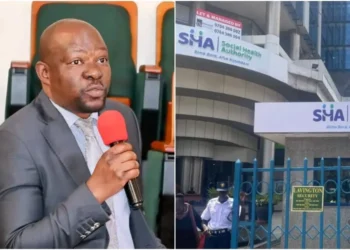
The government plans to work with private medical insurance providers and claim settling agents to review and process claims under the proposed SHIF. The two will be the link between hospitals and the Social Health Authority (SHA), the entity that will replace the National Health Insurance Fund (NHIF).
Hospitals will be required to submit to the contracted insurers and agents details such as the social health insurance number of the patient, the name of the patient their hospital registration number, and the amounts being claimed.
The private insurers and claims settling agents will be required to be registered by the Insurance Regulatory Authority, have a valid license, and have at least two qualified and experienced doctors.
Why is the government pushing for SHIF implementation?
William Ruto’s administration is pushing for the implementation of SHIF and ensuring its success.
When Health Cabinet Secretary Susan Nakhumicha first introduced the new healthcare insurance scheme to the public in late 2023, she claimed Kenyans without membership would be denied services in national and county governments, causing intense reactions from Kenyans.
A petition was later presented to court against the proposed legislation and in January 2024, President Ruto publicly claimed there were corrupt individuals in the judiciary derailing government development plans like the Social Health Insurance Fund (SHIF).
After a meeting with the judiciary led by CJ Koome and legislature representatives, a court ruling on January 19 allowed the government to continue with SHIF implementation, offering relief to the health ministry.
The government claims that SHIF will be better than NHIF, which has been marred with corruption and misappropriation of funds.
SHIF will also cover more healthcare needs, including emergency, chronic, and critical illnesses; thus, improving access to intensive care and high-dependency units for Kenyans.










Discussion about this post