


NAIROBI, Kenya – The Green Thinking Action Party (GTAP) has raised concern over the rising pleas and deep distress among Kenya’s tea farmers and tea-growing communities.
According to the Dr. Isaac Kalua Green-led party, tea is not just a crop. It is a national livelihood system, a foreign exchange pillar, and a stabiliser of rural economies.
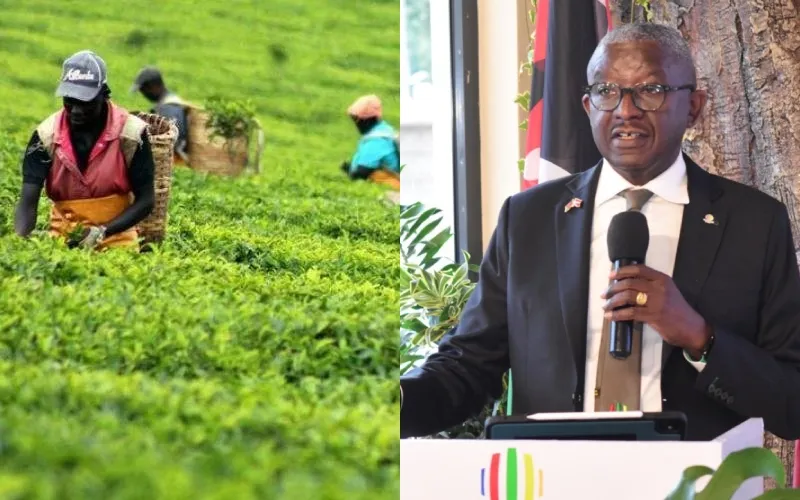
In a statement seen by news9.africa, the party acknowledged that when tea is shaken, households shake, county economies shake, and national confidence in governance is affected.
Against this backdrop, the party observed that the National Government has a constitutional and moral duty to protect tea farmers, restore export confidence and secure Kenya’s tea sector.
“Tea was once Kenya’s leading foreign exchange earner, but over the years, the sector has deteriorated significantly, placing millions of livelihoods at risk,” the statement reads in part.
GTAP reiterated that in 2023, Iran, one of Kenya’s biggest tea buyers, banned Kenyan tea due to a controversial consignment by an Iranian firm with links to highly placed officials in the Kenyan government.
“This dealt a huge blow to Kenyan tea farmers. Today, however, there is a window of hope as the Kenyan and Iranian governments open talks on reopening that key market for Kenyan tea,” the statement further reads.
News9.africa understands that tea farming in Kenya is a major agricultural sector, thriving in the highland regions with volcanic soils, ample rainfall, and equatorial sun, supporting both smallholder farmers and large estates that produce a significant portion of the world’s tea, primarily black tea for blending, using techniques like CTC (Cut, Tear, Curl).
The statement signed by the party’s secretary-general showed that Kenya must treat this moment with urgency, discipline and integrity.
“Farmers must not continue paying the price for policy delays, weak oversight, market opacity, regulatory failure and the activities of cartels and unethical actors. The cost of inaction is now greater than the cost of reform,” said the party’s secretary general.
Why should Kenyan tea farmers never bear losses?
GTAP, therefore, is calling upon the National Government to take immediate, measurable, transparent and enforceable action in farmer payment and price stability action within 30 days.
“The Government must immediately publish and enforce a national tea payment timeline, ensure full transparency on deductions at the factory level and activate emergency household cash flow protection mechanisms in affected tea-growing zones. No tea farmer should bear losses arising from fraud, delayed payments, policy failures, or market access breakdowns,” GTAP urges.
The party has also called for an export integrity and traceability programme within 90 days.
“All tea exports must be fully traceable from factory to port to buyer. Every consignment must undergo verified quality certification. No traceability and no verification must result in no export clearance. Enforcement responsibility must be clearly assigned and publicly reported,” the party says.
GTAP is further pushing for the exporter licensing and zero tolerance enforcement, starting immediately.
“A public integrity register of all licensed tea exporters must be published within 30 days. Any firm found guilty of adulteration, misrepresentation, payment default, or falsification must face immediate suspension, prosecution, recovery of farmer losses, and long-term disqualification from the tea sector,” GTAP explained.
Why should the government publish a Tea Sector Transparency Dashboard?
Another reform that GTAp is pushing is the tea sector public transparency dashboard and an independent audit within 30 days.
“The Government must publish a public Tea Sector Transparency Dashboard detailing factory payment timelines, deductions, licensed exporters, volumes exported, prices realised and enforcement actions taken. In addition, an independent forensic audit of factory-level deductions and exporter conduct must be commissioned, and its findings made public.”
Tea market recovery envoy and strategic sector status within 14 days is another reform that GTAP wants the Government to look into by appointing a high-level Tea Market Recovery Envoy to restore buyer confidence, reopen blocked markets and protect existing ones, with mandatory public progress updates every 30 days.
“Within six months, tea must be formally designated a Strategic Livelihood Sector supported by a permanent inter-agency Tea Integrity and Market Protection Council,” the party further stated.
GTAP has further committed to tracking, publishing, and periodically updating the public on progress against these commitments.
“Where institutions fail to act, GTAP will pursue parliamentary and judicial remedies in the public interest,” the statement also reads.
Where is tea mostly grown in Kenya?
News9.africa understands that key tea-growing areas are located around Mt. Kenya, the Aberdares, and Kericho, which benefit from ideal conditions for year-round production, making Kenya a leading global exporter.
The party further observed that it hears, respects, and stands with all Kenyan tea farmers.“Your work is national service and must be honoured through fair systems, predictable payments, transparent deductions, and protected markets.”
To the National Government, GTAP noted that Kenya will not regain confidence through statements alone.
“Confidence will return only through systems, enforcement, transparency, accountability and measurable delivery.”












Discussion about this post