


Editor’s note: In this opinion column, Kimutai Kirui says that a hospital’s reputation is not tested in daylight, when systems are running smoothly. Kirui argues that it is tested at 2 a.m.—when a critically ill patient arrives, a frightened family is desperate for help, and every minute matters.
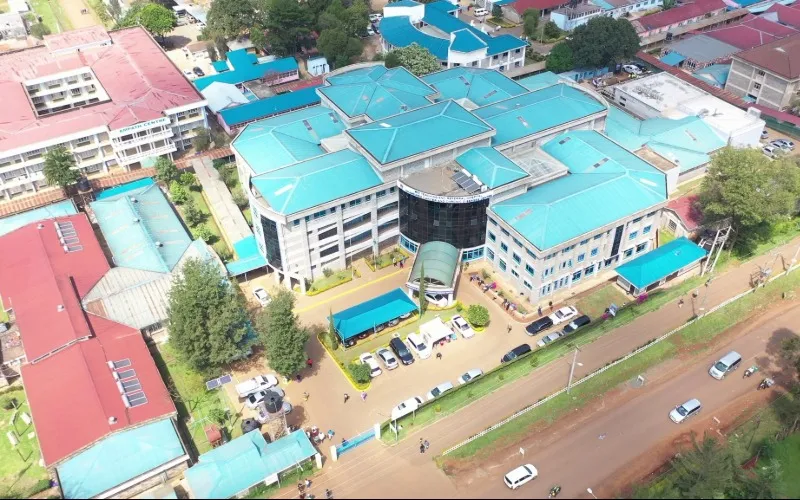
Is Moi Teaching and Referral Hospital (MTRH), a national referral hospital in Kenya, located along Nandi Road in Eldoret, Uasin Gishu County, at its deathbed?
That may sound dramatic. But the growing concerns surrounding night-time emergency services at MTRH demand serious attention.
MTRH is a major regional referral and teaching institution, serving millions across Western Kenya and beyond.
Yet patients arriving at its emergency department at night reportedly encounter long queues, delays, limited communication, and administrative bottlenecks.
When systems such as eCitizen are unavailable, the burden falls hardest on people who are already vulnerable.
In emergency medicine, urgency—not bureaucracy, congestion, or the hour—must determine priority.
This is not about vilifying frontline healthcare workers
Many are working under immense pressure.
The deeper question is whether the institution has the staffing, systems, supervision, triage protocols, and nighttime capacity required to deliver timely emergency care.
The relevant authorities should urgently examine the following:
- Night-shift staffing and supervision
- Emergency triage and patient-flow systems
- Registration and payment procedures
- Reliability of digital platforms
- Waiting times and communication with patients
- Overall emergency-response capacity
A hospital’s true institutional character is revealed not when everything works, but when a frightened patient arrives at 2 a.m. needing immediate help.
MTRH is too important to this region for its emergency services to inspire helplessness rather than confidence.
This is not a call for blame.
It is a call for institutional introspection, transparency, accountability, and urgent corrective action.
Because you may never fully understand the gravity of the problem until you arrive at MTRH at night—with a patient who simply cannot afford to wait.
The author is Kimutai Kirui, a Kenyan political analyst and human rights activist known for his work in Uasin Gishu County, where he has championed justice in cases ranging from police brutality to land disputes affecting widows.
Views expressed in this article are solely those of the author and do not represent the editorial position of news9.africa.









Discussion about this post