


NAIVASHA, Kenya – The Kenyan government has heaped praise on local communities for advancing conservation efforts that foster stewardship and equitable benefit-sharing and strengthen both biodiversity and human well-being.
news9.africa understands that sustainable ecosystems, where local communities actively profit from nature-based businesses like beekeeping, ecotourism, and sustainable agriculture, depend on integrating wildlife conservation with community livelihoods.
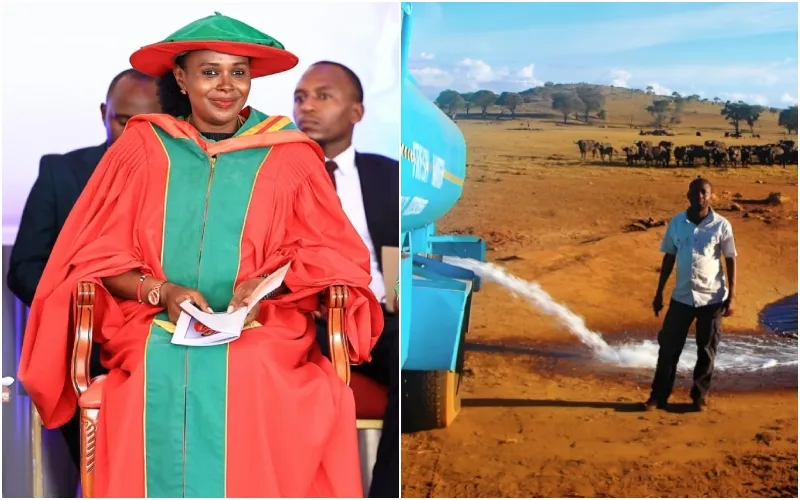
Against this backdrop, effective solutions frequently employ community-led, bottom-up strategies, such as conservancies, which turn locals into stewards of biodiversity while lowering poverty and lessening conflict between people and animals.
Principal Secretary, State Department for Wildlife, Silvia Museiya, observed that local communities also support ecosystem services, including water provision, climate regulation, and ecosystem resilience,” said PS Museiya.
Speaking on Friday, March 27, 2026, during the 23rd graduation for the Wildlife Research and Training Institute (WRTI) in Naivasha, the PS stated that Kenya’s wildlife is a symbol of immense national pride and a key pillar of the country’s economy and sustainable development.
“Wildlife ecosystems contribute significantly to tourism, which remains one of the country’s leading foreign exchange earners and a major source of livelihoods for local communities. They also support ecosystem services, including water provision, climate regulation, and ecosystem resilience,” she said.
According to the PS who represented Tourism and Wildlife Cabinet Secretary Rebecca Miano at the event, the sustainability of wildlife ecosystems in supporting community livelihoods and contributing to economic expansion is dependent on a skilled workforce.
“This is a key role of this Institute as outlined in the Wildlife Conservation and Management Act, 2013. I am happy that the Institute is growing steadily as a center of excellence in wildlife research, training, and innovation,” explained the PS.
Wildlife Conservation and Management Act, 2013
PS Museiya disclosed that the current review of the Act will aim to strengthen the training mandate, especially programs that target local communities, who she indicated are the custodians of wildlife resources.
“Equally, building strong partnerships with stakeholders in the wildlife and tourism sectors is an important focus of the Ministry. This is especially in recognition of the need for training programs to be responsive to the needs of the two sectors,” added PS Museiya.
She applauded the Institute for its active engagement with various partners in training and capacity-building initiatives.
“Several partners have also provided the much-needed financial support to students, especially from marginalised conservation communities. I urge the management to continue in this direction as they strengthen and develop more formidable partnerships,” emphasised PS Museiya.
On his part, the Institute’s Director/CEO, Dr Patrick Omondi, announced that the institution is at the tail-end of commencing the implementation of the Recognition of Prior Learning (RPL) programme, which seeks to formally acknowledge skills acquired through experience.
“This initiative is particularly important for individuals working in community conservancies, tour guiding, and other informal sectors within the wildlife space,” said Dr Omondi.
Continued collaboration with industry players
By certifying these competencies, Dr Omondi stated that the Institute is enhancing employability, promoting inclusion, and strengthening the overall capacity of the workforce.
“We look forward to continued collaboration with industry partners and government agencies to fully operationalise this programme,” Dr Omondi further explained.
PS Museiya used the occasion to remind the graduates that their dedication and perseverance have prepared them to join a noble profession that safeguards one of Kenya’s most treasured assets—wildlife and natural heritage.
“You are now ambassadors of this collaborative spirit. I encourage you to continue forging partnerships, engaging local communities, and finding innovative ways to protect and promote our natural heritage as you spur sustainable tourism,” explained PS Museiya.
In her own words, the PS went on: “You are the future of Kenya’s wildlife and tourism sectors, and we have every confidence in your potential to make a lasting impact.”
news9.africa has learnt that the Institute recorded a notable increase in the number of graduands and the transition rate this year, alongside an improved transition rate from enrolment to completion.
The Institute recorded 499 graduands (one posthumously), with 374 graduating with Diplomas, while 125 received Craft Certificates; the transition rate for the 2026 class is 77.63%.




Discussion about this post