


A harsh reality grips over 600,000 farmers across Kenya’s North and South Rift Region following an unusual dry season that struck between July and August ahead of El-Niño.
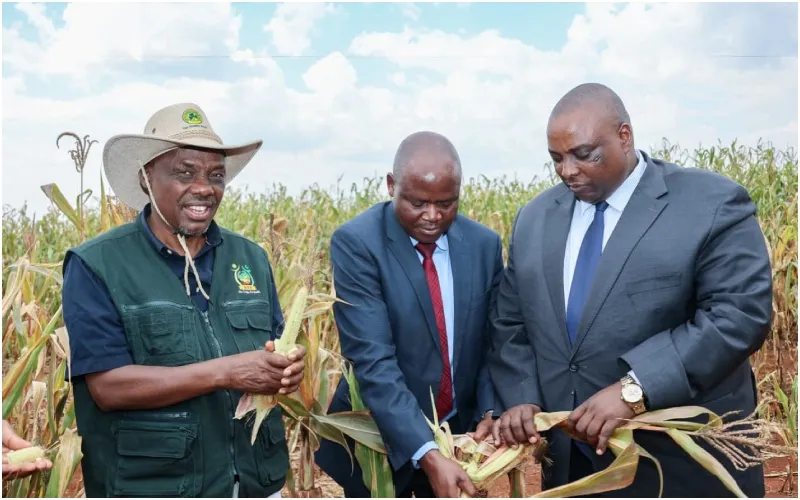
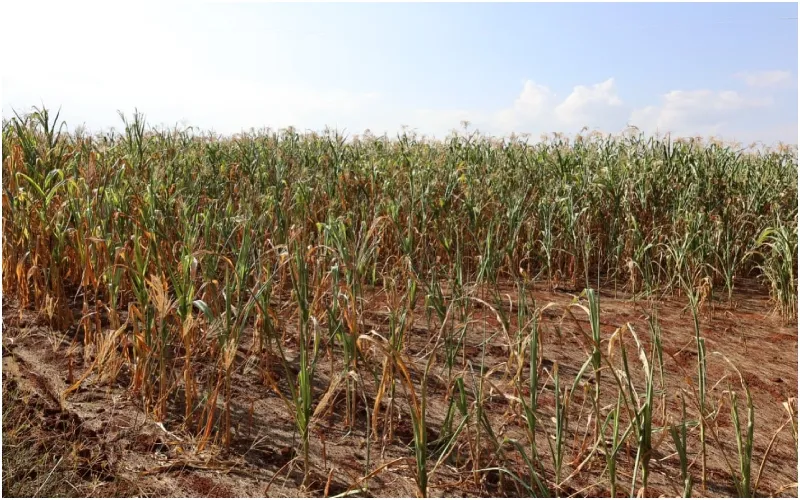
Large farms, once the pride of the country’s breadbasket, now present a heart-breaking sight of yellowing crops and rustling maize stalks bearing empty cobs.
Immediately after the planting season, when a majority of farmers in Trans Nzoia, Uasin Gishu and Nandi counties were preparing to top-dress their maize, an unexpected dry spell hit the region.
The spaced fields with yellow stalks now paint a grim picture of looming food insecurity as the country’s food baskets run empty. Farmers express their fears of poor harvest, lost incomes, and uncertain livelihoods.
Farmers incur losses running into bank debts
For Philip Matui, a seasoned farmer from Trans Nzoia County, the view of his fields brings a sense of loss he has never felt before. Decades of working the soil could not have prepared him for a crisis of this scale.
“I have never witnessed such a phenomenon since I was born. This year, I am very sure that farmers will not get anything from the harvest,” he said.
Having invested a KSh 2.5 million bank loan into this season’s crop, Matui now faces total crop failure with zero hope of a harvest. The devastating blow is compounded by the agonising question of how he will ever repay the bank.
“I usually take a loan of KSh. 2.5 million for all my farm activities, and with the current situation, I have to accept the reality of not getting any returns from the investment,” Matui stated.
The anguish in Uasin Gishu County is equally real, as echoed in the strained voice of Eliud Kibenei. Like so many of his neighbours, Kibenei poured everything into this season, taking out a KSh 2 million loan to get his maize into the ground.
Now, watching those investments turn to dust, he is burdened by a double tragedy: a destroyed livelihood and an unreachable debt.
“Our cries turn to the National government to help farmers so that we return to the farms next year. They should come up with a strategy to help us see how we can repay our loans,” Kibenei pleaded.
He urged authorities to step in and waive debts owed to the Agricultural Finance Corporation (AFC) and commercial banks, not just to ease the crushing financial pressure, but to give broken farmers a clean plan to borrow and plant again when the rains return.
“The government earlier wrote off loans owed by coffee farmers. We are also calling on them to come to the aid of maize farmers to help reduce the burden of loans owed by farmers,” Matui stated.
What next for farmers after dry spell
For Edwin Limo, a farmer operating in both counties, the current drought points to an urgent need for structural change. Reliance on rain-fed agriculture is no longer sustainable.
With even local boreholes now drying up under the relentless heat, Limo calls on the government to fast-track its promised dam construction projects.
Building large-scale water reservoirs, he argues, is the only way to power irrigation systems and secure a permanent shield against recurring climate shocks.
“The government should help us farmers in drilling the promised boreholes, as it will help in feeding our livestock at home and on our farms. We are anticipating high living standards, and for the first time, we will be forced to buy water. The stalled dams are our current hope for irrigation,” Limo urged.
Bringing an economic perspective to the crisis, economist Justice Matelong argues that long-term recovery hinges on making farming affordable again.
He urges the government to drastically slash the cost of critical farm inputs to reduce production overheads.
Lowering these financial barriers, Matelong explains, is essential to cushion struggling growers, get them back onto their land, and ensure the North Rift can continue its vital role of feeding the nation.
“This year the agriculture sector has been hugely affected by the drought. Production will go down by over 60%. I’m asking our government to reduce further the prices of fertilisers and seeds to an extent of even 50%, for our farmers to continue feeding the nation,” Matelong said.
Backing the calls by Matelong, Sheikh Abubakar Bini, a local religious leader, wants the government to step in with urgent farm inputs to help growers capitalise on the forthcoming short rains.
Eldoret-based youth policy analyst Kasim Swaleh warns that the looming food shortage is no longer just an agricultural issue, but a direct threat to national security.
“Vijana lazima watasaka vile watakula. Directly, cases of insecurity will rise as maize flour prices rise. This is not just a farmers’ problem; it is a problem for all of us as a nation,” Swaleh explained.
During his assessment visit to Uasin Gishu and Trans Nzoia counties, Principal Secretary in the Ministry of Agriculture, Dr Paul Ronoh Kipronoh, said the ministry had projected that Kenyan farmers would harvest at least 80 million bags of maize this season.
Ronoh, however, said that due to drought, the yields may not be realised. He described the crop failure as devastating and added that the government intends to undertake several measures to help mitigate the situation.
“Our farmers have lost close to 30% of their crops, and the president has given us clear directives as a ministry to assess so that we can see how the affected farmers are supported. We need to move away from rain-fed agriculture to irrigation. That is why the government is building 50 dams across the country to support our farmers in such times,” Ronoh affirmed.
The PS also called on farmers to embrace diversification, including planting drought-resistant crops like yams, sorghum, and cassava, to continue food supply even in dry seasons.
As the government puts across mitigation measures to cushion farmers, the situation highlights the reality of climate change and the need to embrace smart agriculture to ensure the country remains food secure. The crisis facing the North Rift region serves as a stark reminder that without urgent intervention and long-term planning, Kenya’s food security remains perilously fragile.
The farmers’ pleas for debt relief, irrigation infrastructure, affordable inputs, and government support reflect a collective desperation that demands immediate attention. For thousands of families whose livelihoods depend on maize farming, the coming months will be a test of resilience. Whether the government responds with the urgency this crisis demands will determine not only the fate of this season’s farmers but the future of food production in the nation’s breadbasket.












Discussion about this post