


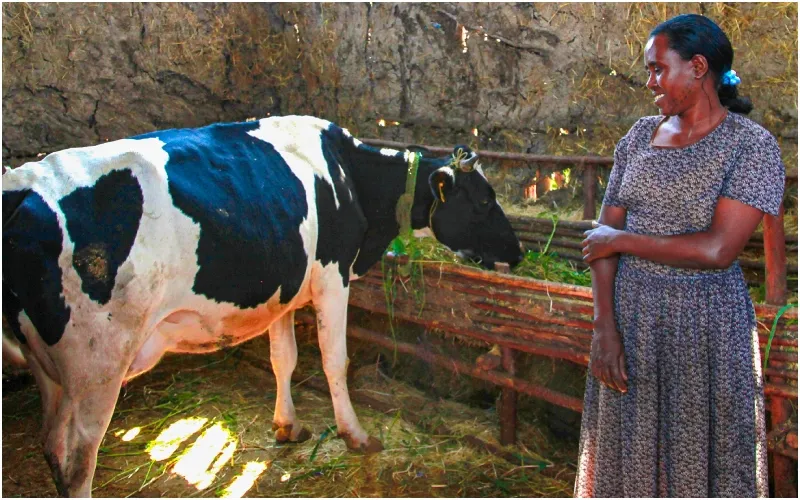
Nairobi, Kenya – Long before the sun rises over the Great Rift Valley, the day has already begun for thousands of Kenyan dairy farmers. In the cool haze of dawn, Margaret from Uasin Gishu moves between her cows with practised hands.
Every pull on the udder is a promise – school fees for her children, food on the table and dignity in her work. For millions of people like her, dairy farming is not just a job, but the heartbeat of rural life.
“It’s my main source of income. I take my children to school, pay my farm labourers and pay all my monthly bills with these cows,” Margaret confirmed in an exclusive interview with News 9 Kenya.
Solving climate change issues in Kenya’s dairy production
However, Margaret and many other farmers across the country are facing the challenge of declining fodder and milk production, exacerbated by high costs and climate change.
Now, a ground-breaking partnership is set to solve this problem and secure this heartbeat against the increasing pressures of climate change and rising costs.
The recently signed Memorandum of Understanding between the Kenya Dairy Board (KDB) and the International Livestock Research Institute (ILRI) promises a more resilient and profitable future for the country’s dairy farmers by combining world-class research with regulatory oversight in a project dubbed ‘MoreMilk’.
KDB data shows that Kenya’s dairy sector is a cornerstone of the national economy, contributing 4.5% to GDP and supporting over two million smallholder farmers.
However, as KDB Acting Managing Director Dr Kimutai Maritim noted at the signing of the MoU with ILRI on Friday, 12 September, the sector faces “real challenges”.
“Climate change is all around us. Production costs are rising. There are still gaps in quality assurance,” said Maritim.
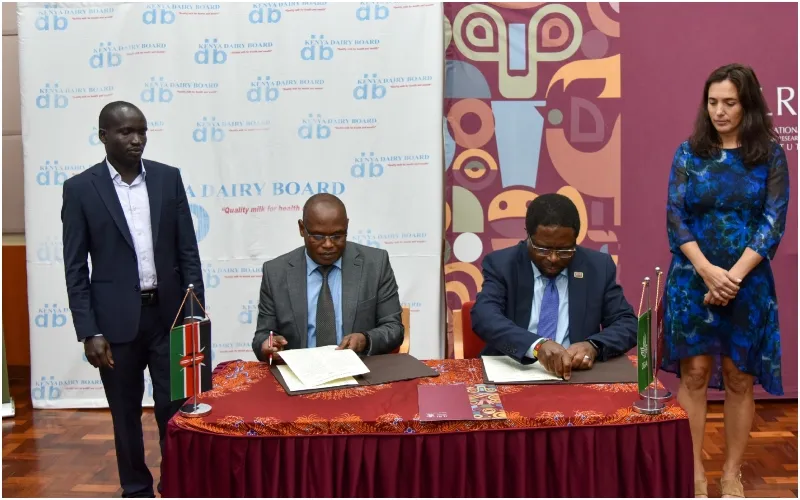
This is precisely where the partnership comes in. The MoU combines ILRI’s 50 years of scientific expertise with the KDB’s mission to regulate and develop the industry.
“Together, this partnership can bridge critical gaps, strengthening the dairy value chain… and scaling innovations that enhance productivity and resilience among smallholder farmers,” said Appolinaire Djikeng, ILRI’s Director General.
How partnership gets support
The collaboration will go beyond policy to deliver tangible, climate-smart solutions directly to the farm.
With support from funders such as the Bill & Melinda Gates Foundation and the UK Foreign, Commonwealth & Development Office, ILRI is pioneering innovations in animal health, genetics and feeding.
This includes research into breeding cattle that are not only more productive, but also more tolerant to heat stress and disease.
Maritim added that another important area of the MoreMilk project is the development of alternative feeds, such as converting agricultural waste like cassava peels into nutritious, affordable feed, directly addressing the problem of high production costs.
“For the farmer who wakes up at dawn, this partnership means concrete support. For the farmer, it means better technology, training and market access. It means access to improved livestock breeds that can better withstand drought, knowledge on sustainable farming practises that protect the environment and a stronger link to a regulated market that ensures a fair price,” Maritim told News 9 Kenya on the sidelines of the event.
As Kenya aims to double its milk consumption by 2030, this initiative is an important step. By equipping farmers with the tools to adapt to climate change, the KDB and ILRI partnership will not only help increase milk production but also ensure that the promise of a better life made every morning in the country’s milking parlours can be fulfilled for generations to come.




Discussion about this post