


NAIROBI, Kenya – The International Livestock Research Institute (ILRI) launched the CIRcularity of Nutrients in Agroecosystems (CIRNA) project.
The CIRNA project aims to develop and promote farmer-approved manure management practices that address environmental, health, and economic concerns, thereby contributing to the achievement of sustainable development goals.
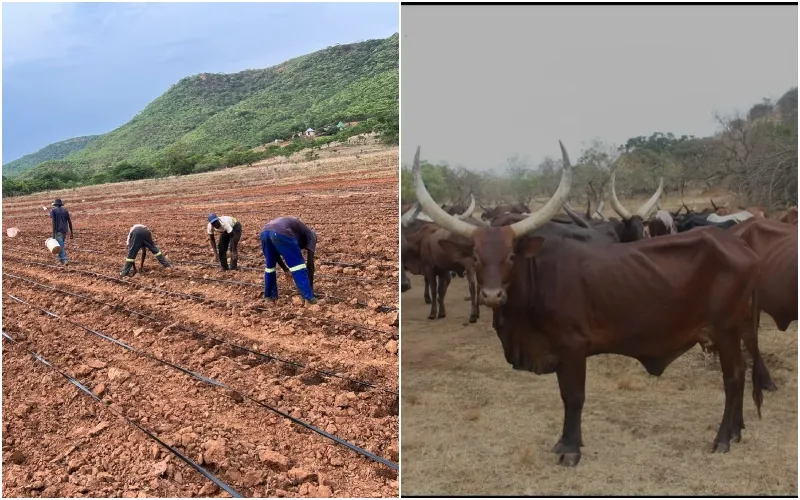
This has given farmers in sub-Saharan Africa cause for celebration. Identifying suitable manure management strategies for smallholders and understanding the trade-offs and synergies within an agroecological framework are the primary research concerns.
The study also aims to influence policy by making recommendations based on its results.
According to ILRI, access to plant nutrients, especially synthetic fertilisers, has been a problem for smallholder crop-livestock farms in sub-Saharan Africa for many years.
“Financial limitations are blamed for the limited use of synthetic fertilisers, which endanger food security and nutrition in low- and middle-income countries (LMIC) and are made worse by current international events like the conflict in Ukraine and unstable energy prices. Therefore, to increase crop yields and improve soil fertility, organic substitutes for plant nutrients—more especially, livestock manures—are essential,” ILRI says in a statement.
Why the CIRNA project takes a multidisciplinary approach to answering farmer concerns
However, ILRI notes that there are dangers associated with poor manure management, such as nutrient losses, pollution of the environment, and health problems.
https://twitter.com/FAOLivestock/status/1915021142378602512
It is unclear which methods may simultaneously address health and environmental issues, guarantee that crops have adequate nutritional availability, and be practical for smallholder farmers.
“The CIRNA project takes a multidisciplinary approach to answering these concerns, balancing the economic, social, biophysical, and health aspects of manure management in Kenya and Uganda,” ILRI further says.
How do you find manure management techniques that are appropriate for farmers’ use
ILRI reveals that the technological readiness of manure management techniques varies, ranging from straightforward, practically and scientifically tested methods that are ready for scaling, like composting or cleaning animal housing, to cutting-edge methods like biochar and useful microorganisms that have shown promise in the lab but still require field validation.
“To find manure management techniques that are appropriate for smallholders and safe for people, animals, and the environment, the CIRNA project will integrate field and lab trials in a co-creation of knowledge approach, closely collaborating with farmers, extension agents, local researchers, and development actors,” the organisation announced.
https://twitter.com/ILRI/status/1988984264453431374
Mitigation and adaptation to climate change are two of the many co-benefits of effective manure management.
The cattle industry’s involvement in national climate strategies and the requirement for better manure management techniques in the context of mitigating climate change make this especially crucial.
“Since sustainable management solutions can only be successfully scaled in an enabling political climate, the CIRNA project will examine existing policies and offer guidelines and policy recommendations,” the statement from ILRI further reads.








Discussion about this post