


ADDIS ABABA, Kenya – Following the Grand Ethiopian Renaissance Dam’s (GERD) inauguration, Ethiopians from all walks of life have expressed gratitude and celebrated.
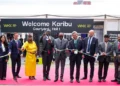
Leaders from Africa and the Caribbean joined Ethiopia in celebrating the inauguration of the hydropower dam on the morning of Tuesday, September 9, 2025.
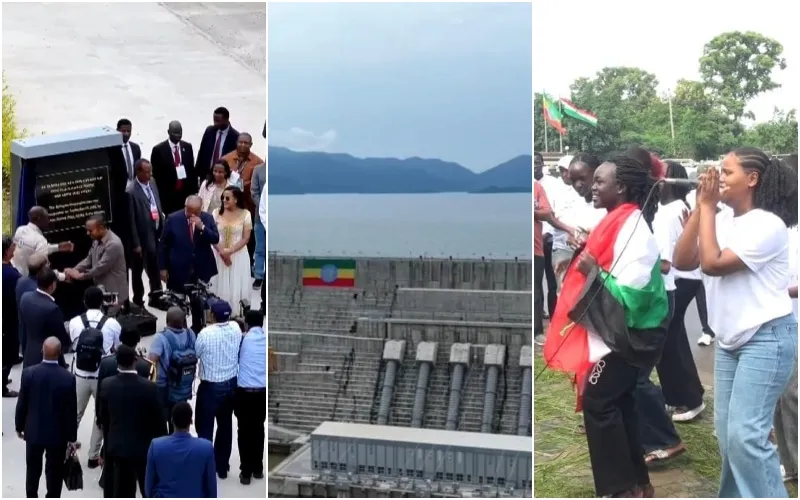
Ethiopians throughout the country expressed their happiness in the streets after the inauguration of Africa’s largest hydroelectric project on the Blue Nile.
The dam, which has deepened tensions with downstream nations Egypt and Sudan over how to manage the Nile, the main source of fresh water for more than 100 million people, was built to generate over 5,000 megawatts of power for Ethiopia’s energy needs.
The financing of the GERD is one of its distinctive features. To demonstrate its independence and sovereignty, the Ethiopian government made the decision to finance the project solely using domestic funds.
The money was provided by individual donations, government bonds, and contributions from Ethiopian nationals living abroad.
President William Ruto, who spoke at the inauguration of the GERD, commended the progress that has been achieved and urged continued cooperation between all regional countries.
“I want to commend the people, government, and more particularly, Prime Minister Abiy Ali, for this monumental achievement. Listening to you, PM Abiy, you not only inspire your own people in Ethiopia, you inspire our people in the region,” said President Ruto.
He went on: “Knowing so well that the sweat and blood and energy and effort and resources that have been put into the development of this dam are a result of locally mobilised resources.”
The dam is now a potent representation of Ethiopia’s unity, resolve, and national sovereignty thanks to its self-funding approach, which also shows that the country can carry out significant projects without foreign assistance.
What the inauguration of GERD means to a majority of Ethiopians
For many Ethiopians, this represented unity and pride in their country.
Due to their substantial role in making the dam a reality, the inauguration has evoked a unique emotion in all Ethiopians. No matter where they live, every citizen is joyfully rejoicing.
According to Ethiopian dedicated and accomplished academician Birhanu M Lenjiso, the inauguration of GERD has sparked widespread euphoria among Ethiopians, symbolising a historic triumph of national pride, sovereignty, and collective resilience.
“After 14 years of self-financed construction through domestic bonds and public donations, Africa’s largest hydroelectric dam is seen as a transformative milestone that will double Ethiopia’s electricity output, addressing chronic energy shortages for millions and positioning the country as a regional power exporter,” said Lenjiso.
Ethiopia and the larger African continent are expected to benefit greatly from the GERD, especially in the fields of energy, economic growth, and regional collaboration.
Speaking separately, GERD project manager Eng. Kifle Horo said the dam will benefit not only Ethiopians but also the downstream countries, especially Sudan.
“The water will flow consistently. Previously, during the rainy season, it would rain for three months, flooding Sudan as it passed through. Now, however, they will receive a balanced flow of water every day, every month, every year. Their dams will always be full, and they will get as much benefit from the power as we do,” Eng. Horo explained.
How GERD is expected to benefit all the downstream countries
Beyond that, Eng. Horo observed that the downstream countries will be able to farm year-round.
“Also, when we look at Egypt, the Egyptian lake is on a plain. When it is on a plain, there is evaporation, which amounts to about 10 billion cubic meters. Therefore, it is estimated that it could save up to an additional 4 billion cubic meters of water than previously thought,” he added.
Currently, a sizable section of Ethiopia’s population does not have access to power. It is anticipated that millions of people will receive electricity for the first time thanks to the massive power production of the inaugurated GERD, enhancing their quality of life and opening up new business opportunities.
One of the main forces behind industrialisation and economic expansion is the availability of inexpensive, dependable power. In order to accelerate Ethiopia’s economy and achieve its objective of ensuring comprehensive prosperity, the GERD’s power would promote the growth of manufacturing, agriculture, and other sectors.
However, Eng. Kifle Horo said that Sudan and Egypt should have shared half of the construction cost.
Why does Addis Ababa appear not to be in good books with Egypt and Sudan
He said that the dam has multifaceted benefits for all the countries around the Nile.
“If there were truth and cooperation, Sudan should have covered at least 30% (of the cost) and Egypt the remaining 20%. Leaving all that aside, it would have been good if they had at least given us the chance to work in peace. They have waged wars against us, causing the sacrifice of lives and forcing us to spend extra money. Well, one day, truth will be our judge,” the engineer said.
Following the inauguration of GERD, Ethiopia intends to become a significant exporter of electricity to its neighbours, including South Sudan, Sudan, Djibouti, and Kenya, by producing excess electricity. This will promote greater economic interconnectedness, lessen dependency on more costly and polluting power sources, and increase regional energy security.
Lenjiso further observed that the GERD’s success embodies Ethiopia’s determination to harness its resources independently, fueling a renewed sense of optimism and national unity.
Additionally, GERD’s participation in the regional power trade complements programs such as the African Continental Free Trade Area (AfCFTA) and the East African Power Pool (EAPP).
It has the ability to improve collaboration and economic links throughout the continent by establishing a cross-border energy market.




Discussion about this post