


NAIVASHA, Kenya – Initiatives by the government to improve the quality and impact of wildlife conservation science have received a shot in the arm after two state agencies entered into a joint memorandum of understanding (MoU).
The landmark MoU that seeks to deepen cooperation in wildlife research, conservation, and management was reached between the Wildlife Research and Training Institute (WRTI) and the Kenya Wildlife Service (KWS).
The agreement cements a shared vision of enhancing scientific research, promoting evidence-based conservation strategies, and building stronger institutional synergies for the benefit of Kenya’s wildlife heritage.

Through the MOU, the Institute will provide scientific data and information to support KWS in management of wildlife; develop a standardised national wildlife monitoring tools and protocols; provide technical support to KWS on implementation of wildlife related Multilateral Environment Agreements (MEAS); undertake training of KWS personnel on tailor made courses; jointly identify priority research areas together with conservancies to inform conservation and management of wildlife.
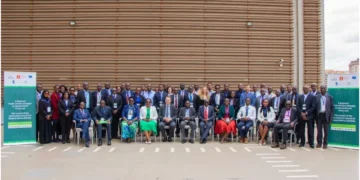
Speaking during the signing ceremony at the Institute’s Headquarters, Board Chair Dr. David Nkendiaye emphasised the strategic importance of the partnership.
“This MOU marks a historic step towards aligning our national institutions in the service of wildlife and people. By pooling resources, expertise, and knowledge, we are building a stronger foundation for scientific research that directly informs conservation action. This collaboration will ensure that our wildlife remains protected for future generations while supporting Kenya’s global leadership in conservation.”
What are the challenges facing wildlife today
On his part, Director Dr. Patrick Omondi, noted that the agreement will bridge gaps in research and management.
“The challenges facing wildlife today — from climate change to human-wildlife conflict — require coordinated responses anchored on science. This partnership with KWS ensures that our research does not remain on shelves but is directly applied to conservation practice. Together, we will produce knowledge that empowers communities, supports policy, and enhances Kenya’s biodiversity resilience.”
In her remarks, Silvia Museiya, Principal Secretary, State Department for Wildlife, on behalf of the Cabinet Secretary for Tourism and Wildlife, Rebecca Miano, congratulated the joint KWS/WRTI Board Ad Hoc Committee, co-chaired by Daniel Letoiye and Dr. Helen Gichohi, for their professionalism in steering the process to a conclusion.
She emphasised that the renewed MoU must serve as a practical framework to guide conservation action, not remain idle on shelves.
On behalf of the CS Miano, she further reaffirmed the Ministry’s support to ensure that both institutions complement each other while executing their distinct mandates.
“This MOU is a demonstration of the government’s commitment to foster partnerships that advance conservation. The Institute and KWS complement each other in unique ways, and by working together, they will unlock greater potential in research, innovation, and field-based conservation. This is how we safeguard our heritage and strengthen the wildlife economy as envisioned in our development agenda,” explained the PS.
What the Memorandum of Understanding entails
The MoU establishes a robust governance framework to minimise duplication, promote transparent asset transfers, and strengthen coordinated responses to conservation challenges such as climate change and human–wildlife conflict.
By pooling expertise, resources, and knowledge, the partnership will bolster Kenya’s leadership in conservation science, enhance biodiversity resilience, and safeguard wildlife for the benefit of present and future generations.
The partnership between the Institute and KWS is expected to create impactful research outputs, bolster conservation policy, and strengthen Kenya’s role as a continental hub for wildlife science.








Discussion about this post