


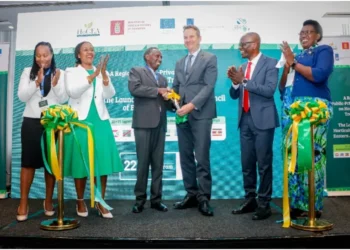
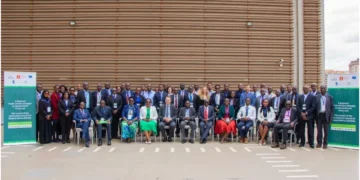
NAIROBI, Kenya – The Regional Public-Private Dialogue and official launch of the Horticulture Council of Eastern Africa (HoCEA) have opened today, Tuesday, September 22, 2026, in Nairobi with calls to transform Kenya into a competitive, export-led, and efficient economy.
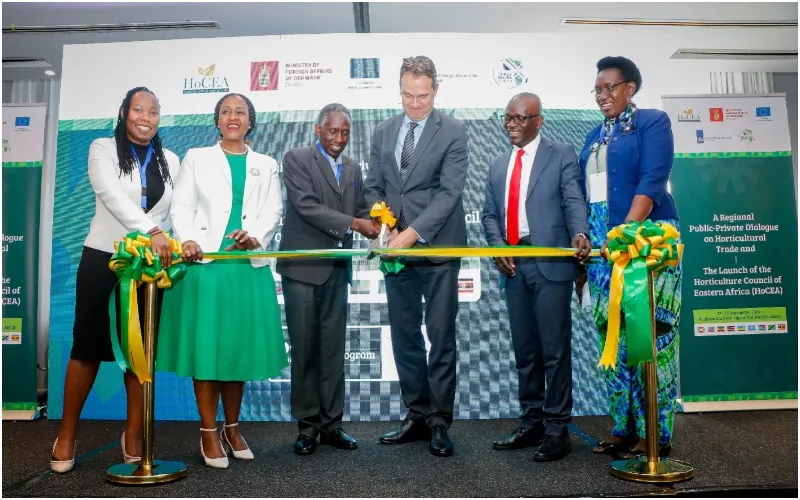
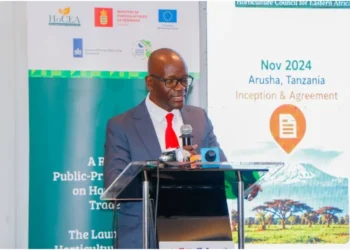
Speaking during the event, Principal Secretary, State Department for Trade, Ministry of Investments, Trade and Industry Regina Akoth Ombam, observed that the dialogue is important, as it has been deliberately structured around five priority areas that are central to competitiveness.
They include trade logistics and cold chain; digital trade and smart horticulture corridors; SPS measures and non-tariff barriers; AfCFTA market access; and commercially viable pathways for transitioning from air to sea freight where feasible.
According to the PS, these priorities align closely with Kenya’s National Trade Policy, which seeks to transform the country into a competitive, export-led and efficient economy, and with “our Integrated National Export Development and Promotion Strategy”.
“They also speak directly to the opportunities presented by the African Continental Free Trade Area, the EU-Kenya Economic Partnership Agreement, the UK-Kenya Economic Partnership Agreement, the Kenya-UAE Comprehensive Economic Partnership Agreement, preferential access under AGOA, and expanding opportunities in the Chinese market,” said PS Ombam.
Kenya focuses on the five priority areas that are central to competitiveness
On logistics and cold chain, PS Ombam indicated the country must accelerate investment in distributed, climate-smart cold storage and reefer capacity—particularly at production areas, along the Northern Corridor, at the Port of Mombasa and inland container depots—”so that quality is preserved from farm to market.”
On digital trade and smart corridors, the PS reaffirmed that the government will continue strengthening the National Electronic Single Window, electronic cargo tracking, Authorised Economic Operator programmes and cross-border paperless systems to reduce time and cost.
On SPS and non-tariff barriers, she announced that the government remains committed to enhancing laboratory capacity, digital certification, mutual recognition and rapid resolution of barriers that undermine regional and international market access.
“Under AfCFTA, we will work to ensure that preferential tariffs translate into real trade by addressing the practical constraints that currently limit utilisation. And on the air-to-sea transition, we support commercially viable shifts for suitable products, backed by stronger cold-chain reliability and port readiness, while maintaining the speed and flexibility that air freight provides for the most sensitive produce,” PS Ombam stated.
Inside what Kenya expects from the two-day Nairobi dialogue
She further said that HoCEA offers her ministry as the institutional platform to turn the discussions into concrete results.
“The Government of Kenya expects this dialogue to produce a clear Nairobi Communiqué and Action Roadmap—identifying a limited number of priority regional interventions, the institutions responsible, realistic timelines, and mechanisms for monitoring progress. We must move from fragmentation to coordination, from raw commodity exports to value addition, and from country-by-country competition to genuine regional cooperation,” explained the PS.
She emphasised that Kenya is ready to play its part, observing that hosting the launch and dialogue reinforces the government’s commitment to positioning Eastern Africa as an integrated, competitive and sustainable horticultural trade and logistics hub serving regional, continental and global markets.
Speaking at the same event, Dr. Jacqueline Mkindi, chairperson of the Horticulture Council of Eastern Africa, said they have travelled across the world in search of markets, technology, knowledge and investment.
“The time has now come to invite the world to Africa—to meet our producers, experience the quality of our products, discover our capabilities and see our investment opportunities firsthand,” she explained.
International horticulture trade and investment platform
She disclosed that this is the ambition behind HortiLogistica Africa, an international horticulture trade and investment platform organised by TAHA in partnership with the GoT and taking place in Arusha, Tanzania, from 8 to 10 November 2026.
“We are accustomed to going out to the world; now let us invite the world to come to us. Through HortiLogistica Africa, let us open Africa’s doors wider to the world, strengthen our position in global trade, and create opportunities that benefit our farmers, businesses, investors and economies. Our ambition is simple: let us unlock opportunities together so that we can grow together,” she further explained.
According to the event organisers, HoCEA was established with a clear purpose and vision: to strengthen regional private-sector coordination and advance a common agenda for horticultural trade, inclusive growth and competitiveness.
Dr. Mkindi said their national platforms bring considerable expertise, as HoCEA gives them the collective voice to address challenges that cross our borders.





Discussion about this post