


MBALE, Uganda – Kenya and Uganda have jointly agreed to remove all non-tariff barriers that impede trade between their two nations.
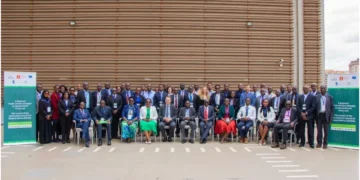
Following their meeting in Mbale, Eastern Uganda, Kenyan Trade Cabinet Secretary Lee Kinyanjui and his Ugandan colleague Gen. Wilson Mbasu decided to properly align all trade-related commitments with the East African Community (EAC) treaty and associated protocols.
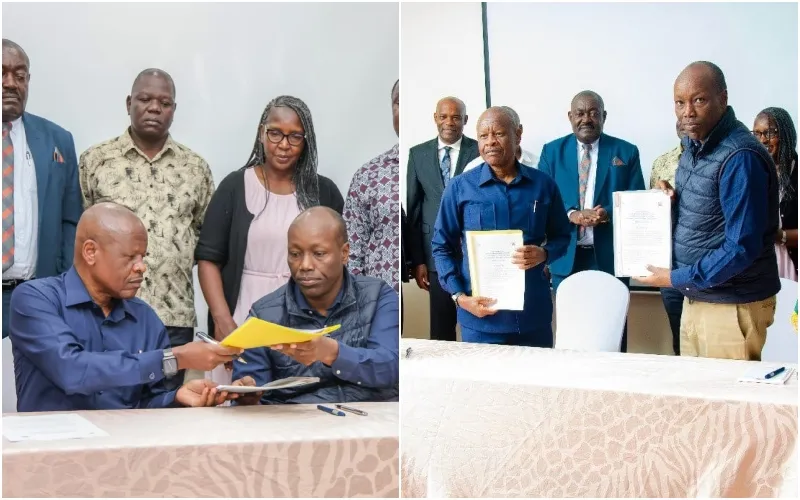
During their bilateral meeting in Nairobi, Kenya, from July 30 to July 31, 2025, Kenyan President William Ruto and his Ugandan counterpart Yoweri Museveni issued this directive.
The two presidents instructed the trade ministers of the two adjacent nations to urgently convene a meeting to break the impasse over trade restrictions.
In a joint statement, the two ministers also agreed to ease truck traffic at strategic cross-border crossings, including Malaba, Busia, Suam, and Lwakhakha, to guarantee the smooth movement of people, products, and services.
“It’s very serious to receive numerous complaints affecting business at the border points, noting that they are committed to returning normalcy across border points,” Kinyanjui stated.
CS Kinyanjui went on: “We don’t want activities that affect business. If officers who have been given cargo clearance do not carry out their responsibilities effectively, they will suffer dire consequences.”
How countries can remove trade barriers
Nine News understands that countries can employ several methods to remove trade barriers, including implementing trade facilitation measures like streamlined customs, establishing or strengthening Free Trade Agreements (FTAs) to encourage the free flow of goods and services, and taking part in international negotiations to lower tariffs and non-tariff barriers (NTBs).
A more open and effective global trading system can also be achieved by implementing coordinated regulatory reforms, leveraging technology for digitally delivered services, and supporting regional infrastructure.
Meanwhile, CS Kinyanjui regretted that cargo from Kenya takes two to three days to enter Ugandan border.
“We must make sure that our boundaries are smooth. We should make sure that there are non-tariff barriers along our borders,” he stated.
According to Gen. Mbasu, they visited Kenyan and Ugandan border crossings to conduct an on-site scenario assessment at the OSBP.
“We want facilitation of quick movement of people and services trade, services, and people in a bid to raise the economy of the region,” said Gen. Mbasu.
Why did the two trade ministers tour Mbale
The Ugandan Trade Minister noted that barriers are restricting trade.
“We are here for an on-spot check of the OSBP. It is essential to facilitate the free flow of people, products, and services,” Gen. Mbasu continued.
The follow-ups will verify the rationale behind their establishment in accordance with economic integration and the EAC.
The Principal Secretaries Regina Ombam (Trade, Uganda) and Dr. Juma Mukhwana (Industry, Kenya) were also present.








Discussion about this post