


Commercial banks in Kenya have surpassed their annual lending target to Micro, Small, and Medium Enterprises (MSMEs) by 2% to issue Sh153 billion, up from the KSh150 billion target.
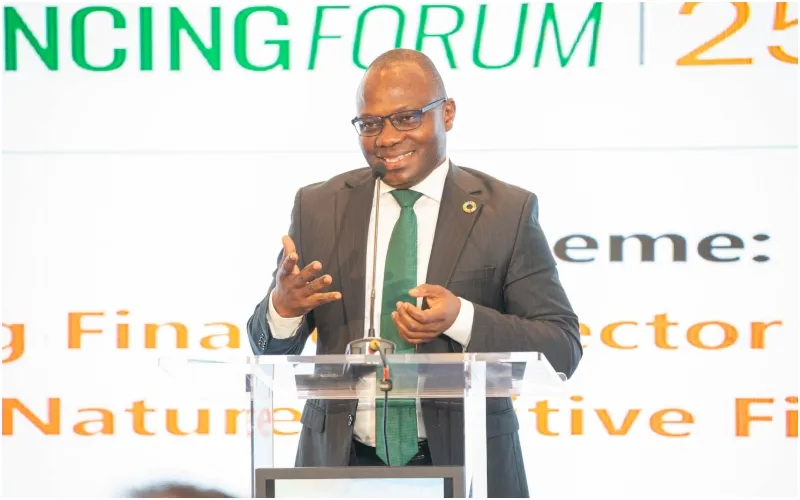
Speaking during the launch of the Nature Positive Financing Assessment Report that seeks to quantify nature-related investment opportunities available in Kenya and advance the industry’s commitment to sustainable finance, KBA CEO Raimond Molenje reaffirmed the bank’s commitment to financing nature-related enterprises in efforts to create a resilient green economy.
“From a macro-level perspective, we are doing well in the economy. We promised to support MSMEs with Sh150bn every year for the next year and I am happy to report that we have surpassed this target to issue out KSh 153bn, which I hope will be sustained in the remaining months of the year. As we configure our survival and the survival of our day-to-day business operations, we aim to integrate the existing opportunities in the economy with nature finance to sustain this growth as we aim to attain the global target on full biodiversity recovery by 2050,” said Molenje.
The report reveals that Kenya’s manufacturing, water resource management, environmental services, and agriculture sectors hold combined nature-related investment and financing opportunities valued at KSh 19.4 trillion (USD 100–150 billion) over the next 5 to 10 years.
The four identified sectors present the most viable opportunities for nature-positive financing. The findings provide banks with bankable options to significantly contribute to Kenya’s sustainable economic development, curb nature loss, and strengthen resilience to climate change, aligning with the Green Economy Strategy, National Biodiversity Strategies and Action Plans (NBSAPs), and climate change policies.
It also quantifies Kenya’s investment potential in nature and outlines barriers and solutions for creating bankable projects. Conducted by Rebel on behalf of KBA, WWF-Kenya, and GIZ, the study highlights innovative instruments such as green bonds, blended finance, and de-risking mechanisms (including guarantees) as key enablers.
At the same time, KBA launched the Centre for Sustainable Finance and Enterprise Development (CSFED), which will rally banks to develop interventions that advance sustainable value for society and the environment, fostering growth for people, nature, climate, and the economy. The Centre was launched in partnership with WWF-Kenya, GIZ, and IUCN.
Besides promoting sustainable finance practices within the banking sector, the Centre will serve as a hub for supporting MSME transformation through capacity building and enhanced access to finance.
Mr Molenje said the Centre will be instrumental in greening the financial system while bolstering enterprise development in Kenya.
“We are committed to supporting the industry in advancing the sustainable finance agenda in the country while also promoting financial inclusion for underserved segments, and enhancing MSMEs’ access to affordable finance,” said Mr. Molenje.
Speaking during the launch, Mohamed Awer, WWF-Kenya Chief Executive Officer, said: “Kenya’s prosperity is deeply tied to nature, with nature-based sectors, including agriculture, tourism, forestry, and fisheries, contributing approximately 42% of the country’s GDP. This report showcases the intersectional role the financial sector plays in driving a nature-positive economy and how we can close the biodiversity finance gap. Together, we can continue to chart a transformative pathway to economic resilience, climate stability, and inclusive growth for people and the planet.”
Maren Kneller, Head of Development Cooperation, Embassy of the Federal Republic of Germany, noted that Nature’s Return – Kenya examines investment opportunities in nature-based solutions in Kenya.
“Focusing on four key NbS revenue models – ecotourism, agroforestry, forest carbon projects, and sustainable timber – the report assesses their maturity, maps key players, analyses the regulatory and policy environment, and investigates market dynamics. It identifies hurdles in policy, capacity, and infrastructure, while outlining the important strides made to support the development and formalisation of these NbS revenue models and the abundant resource potential in Kenya. The report is aimed at financial institutions seeking to access these markets and has been developed under Finance for Nature, a collaboration between Triodos Investment Management and GIZ, funded by the German Federal Ministry for Economic Cooperation and Development (BMZ) through its programme develoPPP. The report will be published on September 12.”
Overall, the study emphasises the need for a stronger enabling policy environment at both local and international levels, improved availability of data on nature-related investment opportunities, and enhanced technical expertise to accelerate the growth and scaling of Kenya’s nature-financing market.









Discussion about this post