


VATICAN, Italy – Pope Leo XIV oversaw the canonisation of Carlo Acutis, a 15-year-old computer programmer who used technology to spread his faith and passed away from leukaemia on September 7, 2006.
He has been referred to as God’s influencer. The internet’s patron saint. The first millennial to be declared a saint by the Roman Catholic Church.
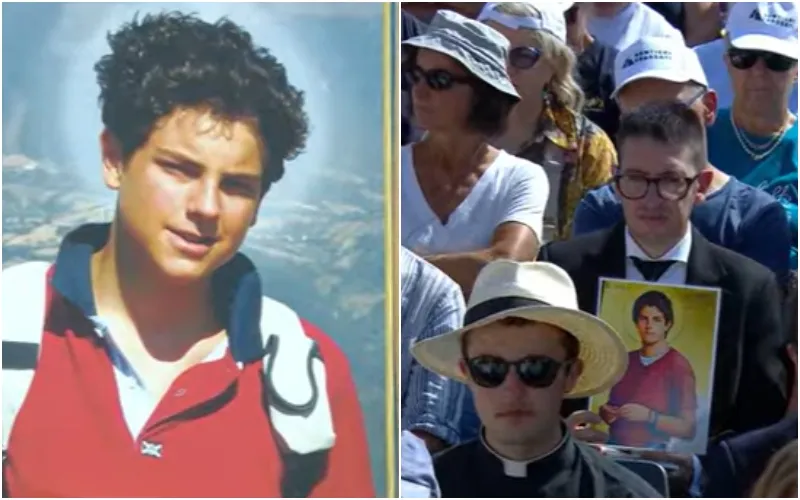
The event, which challenges the conventional notion of a saint, has received a lot of attention. Acutis is neither a religious martyr from the Crusades nor an old biblical person. To catalogue miracles, he created a website. To put it another way, he is a contemporary saint.
According to Kathleen Sprows Cummings, a history professor at the University of Notre Dame and the author of the book A Saint of Our Own, “canonisation is fundamentally about holiness—but it’s also about relevance.”
The first millennial saint is arguably the most relevant figure as young people abandon the Catholic Church in large numbers. “They could see themselves reflected in him,” Cummings says of the saint. “That’s what saints are all about.”
But in the present day, what does it take to become a saint? Here are several ways that the centuries-old custom is still applicable today.
Does anyone get to be a saint
Sainthood, according to the Catholic Church, is a formal affirmation that a person has attained God’s everlasting presence—in other words, that they have reached paradise by leading “heroically virtuous lives.”
In heaven, saints are just like everyone else. The title merely alters their veneration on Earth: For instance, the Church may build shrines to them or observe special days in their honour.
However, not all people who led heroically moral lives will receive the title of saint. That’s because it’s a laborious—and calculated—process.
Anyone can start a saint’s petition, but they must first persuade their bishop that the cause is justifiable. Although the Pope may make an exception, a candidate for sainthood must also have passed away within the last five years.
To demonstrate their virtues—such as faith, hope, compassion, justice, and courage—local investigators go through their writings and speak with everyone who knew them once a cause is open. A person is deemed “venerable” if they exhibit these qualities and the Pope approves.
The miracles start to happen at that point. In order to beatify a potential saint, the Catholic Church requires proof of one miracle. This enables the local church to revere the individual, which is the practice of giving them special honours. The church can formally canonise them at this point if a second miracle takes place.
In a scientific age, what constitutes a miracle
Physician and historian Jacalyn Duffin claims that medical miracles have accounted for 99% of all miracles in the 20th century. This is because they are somewhat easier to defend than, for instance, the spontaneous growth of fish and loaves.
The Vatican assembles a panel of medical professionals to review a patient’s medical records and attest that there was no scientific explanation for the treatment to demonstrate a miraculous healing.
Proving that recovery was only possible through divine intervention is more difficult. According to Cummings, if an injury seemed irreparable and healed rapidly, the Church is more inclined to declare a miracle. Devotees must swear that they prayed to the potential saint and no one else for them to receive credit for it.
According to Cumming, modern medicine is making even these marvels more difficult. Actually, four miracles were needed to become a saint before changes led by Pope John Paul II halved that criterion in 1983.
Why is a saint important
Because it may be so challenging for a case to navigate the Vatican’s bureaucracy, sainthood is a unique honour. (The Vatican, for instance, has denied miracles due to paperwork problems.) However, it also involves who you know and how you may contribute to the church’s continued relevance.
A major factor in energising Catholic membership is saint-making. That was the case in a 2016 study by Robert Barro and Rachel McCleary of Harvard University that examined all beatifications and canonisations from 1590 to 2009. They discovered that a region’s number of Catholic saints increased in tandem with its Protestant population.
The naming of holy persons appears to have been a reaction by the Catholic Church to opposition from Evangelicalism or Protestantism since about 1900, they wrote.
Is Acutis’ canonisation, which took place during the 2025 Jubilee, a significant pilgrimage period, also a calculated move to entice millennials to rejoin the Catholic Church?
“It is, of course,” Cummings responds. She contends that while this doesn’t lessen his sanctity, it only makes sense in light of the widening age divide in religion worldwide.












Discussion about this post