


Editor’s note: In this opinion piece, Kimutai Kirui questions what happens when a suspect is arrested, photographed, and branded a “notorious and dangerous criminal” online—and then faces renewed criminal proceedings after acquittal. Kirui reflects on the case of Boniface Kipchumba Biwott, which he says raises the question: Who supplied his photograph, who revived the case after his acquittal, and under what lawful authority?
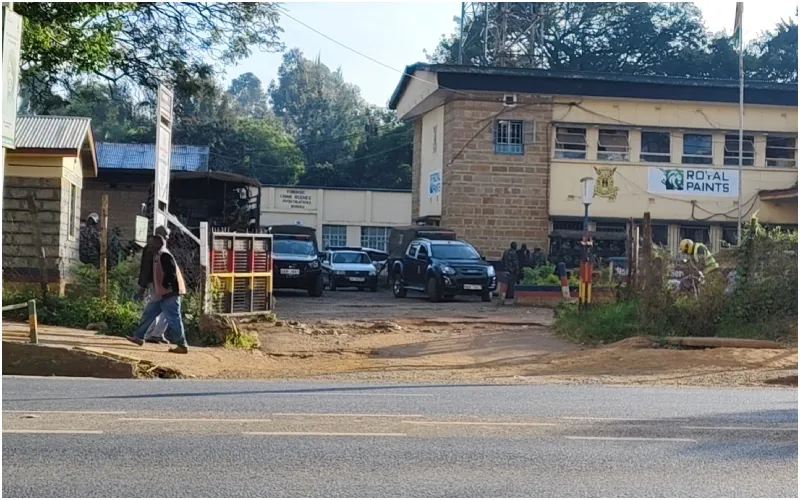
“Is this not, in effect, weaponising public opinion against someone who was acquitted and has no other criminal record? What is the evidence for branding him “notorious” and “dangerous”?
Such labels can inflame public hostility and, at worst, expose him to mob justice or extrajudicial killings by the police!
An acquittal is not a footnote. It matters. If there is credible evidence to the contrary, let it be produced. Otherwise, who takes responsibility for the consequences of publicly branding an acquitted person as “notorious” and “dangerous”?
Police culture in Kenya remains deeply troubling. The more things change, the more they remain the same. A few rogue officers and alleged extortionists should never be allowed to capture the machinery of an entire police service.
No wonder graduates allegedly pay heavily to join the service—and even more to secure lucrative postings.
The allegation is staggering: at a busy station like Eldoret, an OCS can make in a week what the President earns plus allowance in a month.
If true, then policing has become a business model
The uniform cannot become a shield against accountability, and policing cannot become a licence for abuse.
BONIFACE KIPCHUMBA BIWOTT: PROFILING BEFORE OR AFTER TRIAL
Boniface Kipchumba Biwott is being portrayed on social media as a “notorious criminal”.
It is alleged that CI James Lenaso took photographs of him and caused them to be shared with bloggers for publication online. This dangerous culture has been ongoing.
However, grave allegations that some people in Eldoret are languishing in prison for offences they did not commit, or having allegedly been framed or prosecuted procedurally, acquitted, are subsequently subjected to renewed prosecutions.
We have raised these concerns with the IG, IPOA and ODPP and called for a review of pending cases.
One suspect currently in prison has allegedly faced similar prosecutions at Eldoret Police Station, Naiberi and Bungoma, based on substantially the same facts, exhibits and evidence.
The alleged targets are predominantly businesspeople, particularly brokers or those dealing in electronic merchandise, following business rivalries or disputes with police over alleged protection fees.
This alleged abuse of the criminal justice system has gone on for far too long.
It must stop in Eldoret.
It is further alleged that CI James Lenaso inherited and continues to protect this system or racket.
That allegation requires independent scrutiny.
An acquittal is not a criminal record
Boniface Kipchumba Biwott is a case in point.
He and his co-accused, Kevin Mwangi, were acquitted (E880/23) in January 2025 after the prosecution and defence presented their cases and the trial court made its determination under Section 215 of the Criminal Procedure Code (Cap. 75).
The same or substantially similar allegations were subsequently revived; the questions are straightforward:
Who revived the case? On what evidence? Under what lawful authority were charges read afresh to the accused in court after being acquitted?
Even if CI James Lenaso claims that the earlier matter was included in the charge sheet as a “previous record”, another fundamental question arises:
How can an acquittal constitute a previous criminal record?
An acquittal is not a conviction.
If Boniface Kipchumba Biwott was acquitted, on what lawful basis was that concluded matter treated as a previous record, and why was it reintroduced at this stage?
Section 215 requires the trial court, after hearing the prosecution and defence cases, to make a final determination by either convicting and sentencing the accused or acquitting them.
An acquittal concludes the criminal proceedings on the charge, subject to any lawful appeal or other procedure provided by law.
Any subsequent reliance on or revival of such proceedings, therefore, requires a clear and lawful basis.
A previous conviction follows a finding of guilt.
An acquittal cannot simply be converted into a conviction.
Who supplies the photographs to bloggers?
Boniface Kipchumba Biwott is not a “notorious criminal” merely because a blogger has described him as one.
It is alleged that Joshua Remmy and others share online photographs of arrested persons supplied through police sources.
Bloggers must know soon that the law will catch up with them.
Some of us publish photographs and matters arising from court proceedings or cases we are directly seized of. It is structured, evidence-based reporting—open to scrutiny and capable of being defended.
This raises a fundamental question:
Who supplies Joshua, Remmy or others with photographs and information concerning arrested persons in favour of the police?
Many members of the public share photographs officially released through DCI or NPS social media platforms.
That is materially different from allegations that individual police officers privately supply photographs of suspects to bloggers for publication.
If CI James Lenaso or officers acting under his direction are supplying such material, the practice warrants independent investigation
Publicly profiling suspects as “notorious and dangerous criminals” before trial or conviction raises serious concerns regarding privacy, dignity and the presumption of innocence.
Using bloggers to publicly prosecute suspects outside the courtroom would be deeply improper and potentially unlawful.
The allegation that social media is being used to create the appearance of enforcement while suspects are allegedly being framed or extorted is particularly serious and should be independently tested against evidence.
We respectfully requested in writing the Inspector-General of Police, Douglas Kanja, and the County Police Commander, Boniface Sharani, to independently investigate allegations concerning the conduct of CI James Lenaso regarding this matter.
In particular, the investigation should establish whether CI James Lenaso, or officers acting under his direction:
- Photograph suspects and supply their images to bloggers;
- Provide bloggers with personal information concerning suspects;
- Facilitate the publication of suspects as “notorious and dangerous criminals” before conviction;
- Maintain relationships with bloggers for the dissemination of police information;
- Facilitate or fund such publications, or otherwise use social media to profile, intimidate or prejudice suspects.
The investigation should, where lawfully obtainable, examine relevant communications, digital records, police records, payment records and other available evidence.
The central question is simple:
Who supplies the photographs and information concerning suspects to the bloggers—and under whose authority?
1. THE CURRENT CRIMINAL CASE AND ALLEGED CONTRADICTIONS
Police File: 831/257/2026
OB No.: 90/26/06/2026
It is alleged that Mr Joseph Ruto, the complainant, was at Talex and later travelled to the city by boda boda. He was reportedly transported by Duncan, who was paid Kshs. 100 for the ride.
Duncan was subsequently arrested on 21 July 2026 amr motorcycle was detained as well.
It is further alleged that Mohammed Borbor later picked up Mr Ruto and was paid Kshs. 150.
We have not been able to establish whether Boniface Kipchumba Biwott and Mohammed Borbor are the same person.
That identity should be clarified from the official records.
2. ARRESTS, DETENTION AND ALLEGED PAYMENT
Ms Irene Lolem reportedly had Kshs. 18,000 and a further Kshs. 49,000 transferred to her phone from Mr Ruto’s phone.
She was arrested on 21 July 2026 and subsequently released following what is alleged to have been a settlement at the police station.
Duncan, who allegedly received only Kshs. 100 as boda boda fare, reportedly paid Kshs. 20,000 and was released.
He subsequently returned with a further Kshs. 10,000, following which his boda boda was reportedly released.
We are further informed that these persons were booked by PC Alan.
This should be verified against the relevant police records.
Mrs Mary Njoroge reportedly received KSh 52,000 but was not arrested.
These circumstances raise legitimate questions about the basis upon which different individuals were arrested, detained or released and whether any monies exchanged constituted lawful bail, authorised payments, settlement amounts or something else.
We request examination of the relevant documents:
OB entries and custody records;
cash-bail records and receipts;
statements and occurrence-book entries;
mobile-money transactions; and
any other documentary or digital evidence.
3. ALLEGED DEMAND FOR KSHS. 200,000 FROM BONIFACE BIWOTT
It is alleged that Boniface Biwott was told he could pay Kshs. 200,000 to “settle the matter”, failing which he would be required to provide Kshs. 50,000 in cash bail.
The Kshs. 50,000 was reportedly paid through his wife, yet only Kshs. 30,000 appears on the official police cash-bail receipt.
That leaves a Kshs. 20,000 discrepancy requiring immediate investigation and reconciliation.
It is further alleged that Boniface was instructed to raise Kshs. 200,000 to “clear this mess”, failing which he would be “fixed” with previous charges.
If those allegations are true, the issue is no longer merely administrative. It raises serious questions about the use of criminal proceedings as leverage for payment or to cover for the actual criminals. Police solicited money from them and released them.
It is also alleged that a further KSh 10,000 was demanded for the release of his motorcycle.
Boniface reportedly failed to raise the alleged KSh 200,000 and subsequently sought assistance from the ODPP to have his motorcycle released and the matter handled through the proper legal process.
The following day, he reportedly went to the police station using another person’s motorcycle.
That motorcycle was detained, and when its owner went to the station to secure its release, he was allegedly arrested and detained.
Following intervention through IPOA, he was reportedly released later that evening.
How does a person who goes to a police station to recover his own motorcycle become a detainee?
That incident should be independently verified through the relevant OB, custody and vehicle records.
Finally, if Boniface Kipchumba Biwott was being investigated for robbery with violence, a serious offence carrying severe consequences, another basic question arises:
Why was KSh 50,000 allegedly sufficient to secure his release; why was KSh 50,000 reportedly paid, and why does the official receipt reflect only KSh 30,000?
The KSh 20,000 discrepancy, the alleged KSh 200,000 demand, the additional KSh 10,000, the motorcycle detention and the subsequent reliance on previous charges should all be independently investigated.
The public deserves a criminal justice system that investigates evidence, not one that manufactures narratives; one that prosecutes genuine offences, not people; and one in which an acquittal means what the law says it means.
National Police Service Independent Policing Oversight Authority – IPOA KENYA.
The author is Kimutai Kirui, a Kenyan political analyst and human rights activist known for his work in Uasin Gishu County, where he has championed justice in cases ranging from police brutality to land disputes affecting widows.
Views expressed in this article are solely those of the author and do not represent the editorial position of news9.africa.








Discussion about this post