


UASIN GISHU, Kenya – Dr. Cheptinga K. Philip, the chief nephrologist and head of nephrology and transplantation at the Moi Teaching and Referral Hospital (MTRH), Eldoret, has requested the government, through the Ministry of Health, to establish a national nuclear medicine plant and comprehensive nuclear medicine services in Kenya.
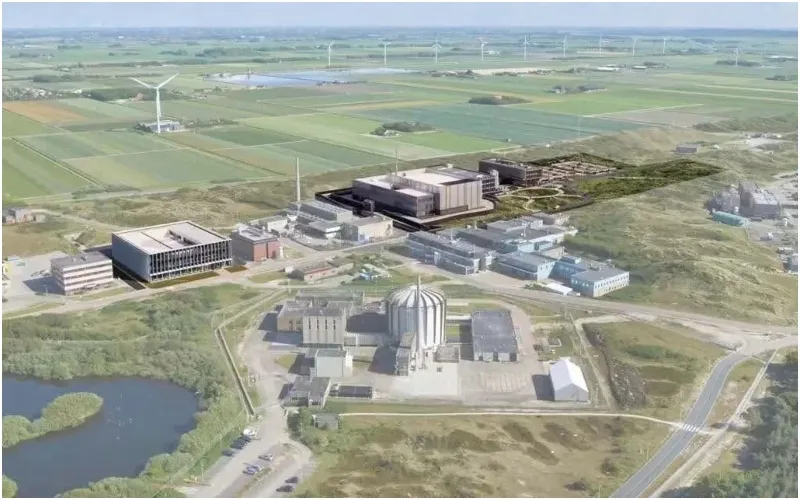
In a letter seen by news9.africa, Dr. Cheptinga argued that currently Kenya depends 100% on imported radiopharmaceuticals, giving an example of MAG3 renal scans.
“We routinely order MAG3 from South Africa for renal function and transplant assessment. However, due to flight schedules and customs delays, by the time it arrives in Eldoret/Nairobi, the half-life has already elapsed,” lamented Dr. Cheptinga.
Dr. Cheptinga, a prominent Kenyan paediatric nephrologist, observed that MAG3 half-life is equivalent to six (6) hours, adding that a delay of 12-18 hours means the product is clinically useless.
“Result: Cancelled scans, wasted forex, delayed patient care, and patients referred abroad,” said the medic.
In the letter copied to the Cabinet Secretary, Ministry of Health; Director General; and CEO, Kenya Nuclear Regulatory Authority, Dr. Cheptinga noted that the same challenge affects Tc-99m generators, FDG, and all short-lived isotopes.
“We cannot build UHC on a supply chain that expires on the tarmac,” the undated letter reads in part.
Rationale for a local plant
a. Clinical need
- Oncology: PET-CT staging, I-131 thyroid therapy, Lu-177 prostate therapy
- Nephrology/Urology: MAG3, DTPA, DMSA scans – critical for transplants and paediatric kidneys. Currently impossible to do reliably.
- Cardiology: Myocardial perfusion scans
- Paediatrics: Bone, renal, and infection scans
b. Economic case
- Forex Savings: We lose Ksh 800M – 1.2B annually on imports, much of it wasted due to expiry.
- Regional Hub: Uganda, TZ, Rwanda, and South Sudan all face the same MAG3/FDG problem. A Kenyan plant can serve the East African Community (EAC) with 4-hour distribution.
- SHA Sustainability: With SHA’s 90/10 model, local production reduces cost per procedure by 40-50%, making it affordable and viable.
Proposed solution: National radiopharmacy plant
Dr. Cheptinga announced that he respectfully proposes a GMP-compliant national radiopharmacy plant with the following capabilities:
Product: Use: Current Problem: With Local Plant
Tc-99m Generators: Bone, Renal, Cardiac, and Infection Scans. Weekly import, frequent stockouts – daily elution, 24/7 supply
FDG: PET-CT for cancer staging is 2-3x the cost. 1 flight/week; daily production. Cost drops 50%
MAG3, DTPA, DMSA: Kidney function, transplants, 6 hr half-life. Expires in transit. Produced in the morning, used the same day.
I-131 Thyroid Cancer therapy: Import delays, dose decay. Fresh doses weekly
Lu-177, Ra-223: Advanced cancer therapy – not available in Kenya -New treatments locally
Distribution Model: Hub at MTRH + KNH with cold chain to 6 regional centers within 4 hours.
Specific requests
To resolve the MAG3 and other isotope crises, Dr. Cheptinga requested the following:
- Approval in principle for a national nuclear medicine plant as a flagship UHC project.
- Seed Funding/CAPEX: USD 18M – 25M for Cyclotron, GMP Lab, and Distribution. Proposed PPP with a government anchor.
- KNRA + IAEA technical support to fast-track licensing and safety framework.
- Human Resources: Sponsor training of 20 nuclear medicine specialists, 10 radiopharmacists, and 40 technologists.
- SHA accreditation of all nuclear medicine procedures to guarantee demand and sustainability.
Expected impact
- Zero wasted doses due to half-life expiry. MAG3 and other scans done same-day.
- Reduce PET-CT cost from Ksh 120,000 to ~Ksh 65,000.
- Save Ksh 1B+ forex and generate revenue from EAC exports.
- Improve cancer and renal patient survival through timely diagnosis and therapy.
Dr. Cheptinga, who earned his MBChB and Master’s degree in paediatrics from Moi University, emphasised that the case of MAG3 arriving with half-life gone is a metaphor for our entire system.
“We cannot continue to import time-sensitive medicine. A local plant is no longer optional. It is the only way to guarantee dignity, timeliness, and affordability for Kenyan patients under SHA and UHC,” added Dr. Cheptinga.
Based primarily in Eldoret, Uasin Gishu County, and contributing actively to continuous professional development and paediatric nephrology training in Kenya, Dr Cheptinga said he remains available to present to the technical team and provide a detailed feasibility within 30 days.






Discussion about this post