

MOMBASA, Kenya – At the conclusion of the 2026 Our Ocean Conference in Mombasa, more than 100 countries, corporations, and civil society organisations made 320 new commitments worth $6.4 billion (KSh 828.8 billion) to promote ocean conservation, sustainable fisheries, climate resilience, and the blue economy.
Being the first Our Ocean Conference held in Africa, it was a momentous occasion that highlighted the continent’s increasing leadership in sustainable ocean development and global ocean governance.
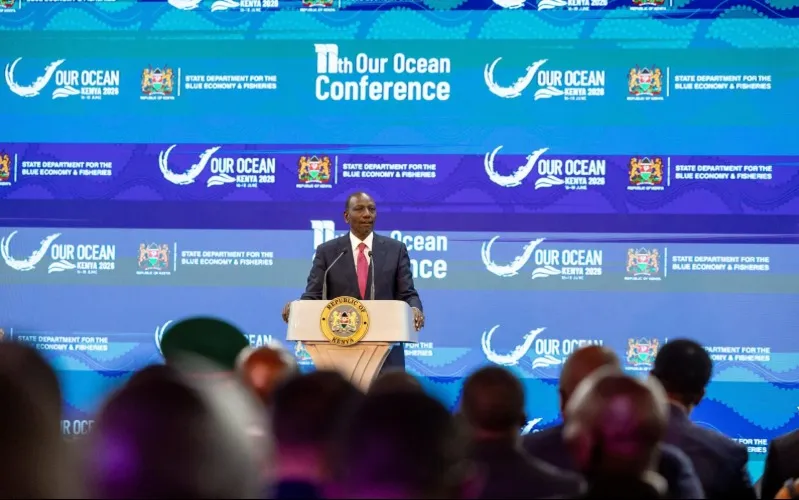
One of the top venues for ocean action in the world, the Our Ocean Conference converts policy goals into quantifiable pledges, investments, and collaborations.
Major announcements from this year’s conference included:
Kenya committed $200 million to install electronic monitoring on all industrial fishing vessels in its waters.
French Polynesia announced plans to strengthen protections within the Tainui Atea, the world’s largest marine protected area, through more than 27,000 square kilometers of new regulated fishing areas, coastal protection zones and seamount protections.
Canada committed $682 million to the Small Crafts Harbours Program to support coastal and rural communities, fishing activity and local economies
The World Bank Group announced plans to invest $1 billion over the next two years to help developing countries build sustainable and resilient blue economies.
Africa makes strides in the blue economy
In recent years, Africa’s participation in the global ocean agenda has grown significantly. With more than 13 million square kilometres of exclusive economic zones and 38 coastline and island governments, the continent has a big say in how the blue economy and ocean health develop in the future.
“This conference is about turning words into commitments, commitments into action, and action into a legacy we can be proud of,” said Hassan Ali Joho, Kenya’s Cabinet Secretary for Mining and Blue Economy.
Heads of state, ministers, scientists, Indigenous leaders, youth representatives, business executives, and civil society organisations were among the more than 5,000 people who attended the meeting.
Leadership plenaries, high-level thematic panels, official side events, exhibitions, community and cultural activities, an Executive Business and Investment Forum, a Youth Leadership Summit, and a Research Symposium were all part of the agenda.
Throughout the conference, youth engagement was a major theme. The OOC11 Youth Leadership Summit, which took place concurrently with the main event, brought together young innovators, scientists, entrepreneurs, and activists from throughout Kenya and beyond to present solutions for sustainable development and ocean protection.
Youth and the Global Biodiversity Framework: Showcasing Youth-Led Restoration in Kenya to Advance Global Biodiversity Framework Implementation was one of the highlighted events.
It showcased youth organisations that are restoring mangroves and other coastal wetlands to support local livelihoods, strengthen climate resilience, and advance Kenya’s National Biodiversity Strategy and Action Plan.
Progress of promises made at Our Ocean Conference
At a time when over 70% of Africa’s population is under 35, organisers stressed the vital role that youth play in advancing ocean solutions.
The Our Ocean Conference is a tool for monitoring progress and accountability in addition to generating new commitments. Since the start of the Our Ocean Conference in 2014, the World Resources Institute (WRI) Secretariat has examined the development of pledges throughout Africa.
According to data, almost 78% of promises are finished or in process. Although many of these commitments have previously come from outside the continent, the 2026 conference showed an increasing trend toward financing, execution, and solutions led by Africans.
“Africa is home to the world’s youngest and fastest-growing population, with more than 400 million people between the ages of 15 and 35,” said Wanjira Mathai, Managing Director, Africa and Global Partnerships, World Resources Institute.
Issues addressed by pledges at OOC11
In her own words, Wanjira further said:
“For many young Africans, the ocean is not simply an environmental issue. It is a source of jobs, food security and economic opportunity. The commitments announced in Mombasa demonstrate growing recognition that investing in ocean health is investing in Africa’s future.”
Numerous pledges addressed issues that are crucial to Africa’s development, such as marine conservation, blue carbon projects, sustainable fisheries, and the fight against illegal, unreported, and unregulated (IUU) fishing, which is thought to cost African economies between $11 billion and $13 billion a year.
Kenya, the host country, made over 42 pledges totalling an estimated $1 billion, including measures to increase marine protected areas, improve fisheries monitoring, raise money for climate change, and promote a sustainable blue economy.
As the host of the United Nations Environment Programme (UNEP), a founding member of the High-Level Panel for a Sustainable Ocean Economy, and an advocate for bold action on marine pollution and ocean sustainability, Kenya has become a prominent voice on ocean concerns.
Selected 2026 Commitment Highlights
Total Number of Commitments: 320
Total Finance Mobilised: $6.4 billion
Number of Countries and Organisations: 104
Action Area Number of Commitments Financial Values ($ million)
Ocean-Climate Nexus 57 1,180
Marine Pollution 45 223
Marine Protected Areas 67 355
Maritime Security 14 28
Sustainable Blue Economy 86 2,864
Sustainable Fisheries 51 1,750
Total 320 6,401
Overall total for OOC commitment mobilisation since 2014 is 3,220 commitments valued at $175.6 billion.
The Secretariat published two reports analysing progress made on commitments made before OOC11, including an analysis of commitment implementation in the past year and a commitment implementation in Africa between 2014 and 2026.
Following the conclusion of the three-day event in Mombasa, the conference baton passes to Canada in 2027 and Jamaica in 2029.









Discussion about this post