

MOMBASA, Kenya – As pressure mounts to protect delicate ocean ecosystems, Kenya has become the 42nd nation to join the expanding global movement advocating for a precautionary pause or moratorium on deep seabed mining.
With 42 nations already endorsing a moratorium or pause, the announcement strengthens the growing coalition that calls on governments everywhere to safeguard the deep sea and halt deep seabed mining operations.
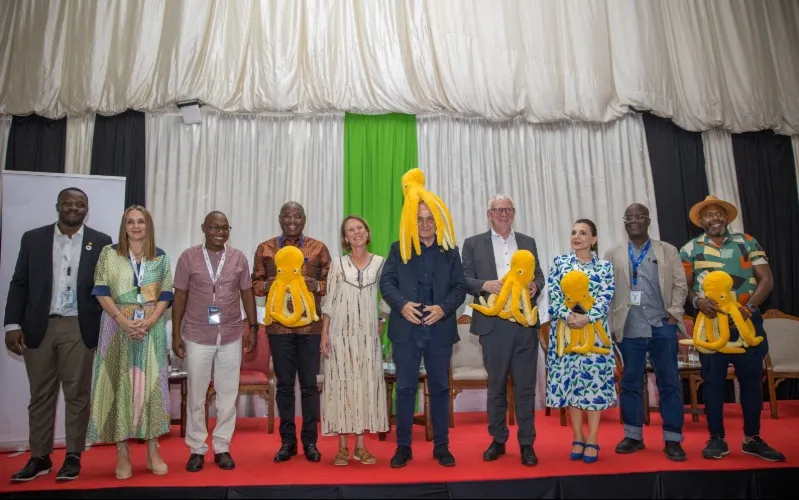
Kenya’s Principal Secretary for Mining, Harry Kimtai, emphasised the need for caution in the face of incomplete scientific knowledge during his speech at the 11th Our Oceans Conference’s “Navigating the Future of the Deep Sea” session.
“The interest in Deep Seabed Mining is advancing faster than the architecture that guides it,” Kimtai said. “That is why Kenya is lending its voice to calls for a precautionary pause on Deep Seabed Mining until there is sufficient science to support evidence-based decisions. We are yet to get there. We support the precautionary pause.”
Why Kenya must explore the offshore seabed
In addition, Kimtai urged the advancement of circular economy pathways as a more sustainable alternative to deep seabed mining and called for filling in knowledge gaps in science and research.
He added that although Kenya has made strides in geospatial mapping, it has not yet explored the offshore seabed, supporting the nation’s stance that solid scientific data must support choices.
Kenya’s announcement, which emphasises that the risks to marine biodiversity and ocean health are still too serious to ignore at this point, bolsters international advocacy efforts meant to increase pressure on governments to take decisive action.
Speaking during the side event held in Mombasa, Jackson Kiplagat, CEO, WWF-Kenya, congratulated the National Government on the bold decision to adopt a precautionary pause on Deep Seabed Mining.
“The Government has demonstrated leadership by putting science first and strengthening multilateral cooperation through joining the growing coalition of nations committed to ensuring that the protection of the marine environment remains at the heart of all decisions concerning the deep sea,” said Kiplagat.
Who are the people attending the OOC11
The 11th Our Ocean Conference (OOC11), which brings together world leaders, scientists, investors, innovators, civil society organisations, young leaders, and ocean advocates in Mombasa to accelerate action for the ocean’s future, was formally launched by the Kenyan government led by Deputy President Kithure Kindiki.
At a critical juncture for ocean and climate governance, OOC11 is being held on African soil for the first time. Africa and the Western Indian Ocean are at the center of international discussions on sustainability, resilience, innovation, and inclusive economic growth under the theme “Our Ocean, Our Heritage, Our Future”.
Marine Protected Areas, Sustainable Blue Economy, the Ocean–Climate Nexus, Sustainable Fisheries, Marine Pollution, and Maritime Security are the six major areas where the three-day conference will concentrate on turning aspiration into quantifiable action.
Kenya views the event as a forum to rethink how governments, communities, startups, investors, and technology experts can work together to create a more resilient ocean economy, rather than just a diplomatic meeting.
Why are oceans important to Earth
Oceans, which make up more than 70% of the planet’s surface, are essential to life on Earth because they produce more than half of the oxygen we breathe, control the temperature, and sustain billions of people’s livelihoods. However, overfishing, marine pollution, biodiversity loss, climate change, and maritime insecurity pose serious challenges to them.
“By hosting OOC11, Kenya seeks to leave a lasting imprint on global ocean governance—one that ensures future generations inherit a resilient, productive, and just ocean,” said Kenya’s Cabinet Secretary for Mining and the Blue Economy, Hassan Ali Joho.
The Our Ocean Conference has grown to be one of the most prominent venues for ocean action accountability in the world since its founding in 2014.
Through the process, more than 2,900 commitments of more than US$169 billion have been made in the areas of pollution reduction, marine security, climate adaptation, sustainable fisheries, and marine conservation.
Africa’s coastal and island republics
Kenya’s hosting reflects a growing understanding that technology-enabled governance, scalable collaborations, and investment models that may accelerate real-world effects are essential for the next phase of ocean action.
Africa is becoming a key engine for sustainable blue economy innovation, with 38 coastal and island republics and some of the fastest-growing coastal populations in the world.
Kenya seeks to highlight the potential to mobilise private-sector investment in fisheries, aquaculture, shipping, marine biotechnology, renewable energy, tourism, and digital ocean technologies during the conference.
Unlocking funding for ocean solutions and assisting early-stage innovation ecosystems that may propel sustainable growth throughout the continent will receive particular attention.









Discussion about this post