


NAIROBI, Kenya – Former Independent Electoral and Boundaries Commission (IEBC) Chief Executive Officer (CEO) James Oswago has dismissed the last by-elections held on November 27, 2025, claiming that the exercise did not meet the constitutional threshold.
While appearing on Radio Generation, Oswago stated that by virtue of the fact that the polls were allegedly marred with violence and bribery, they were not free and fair.
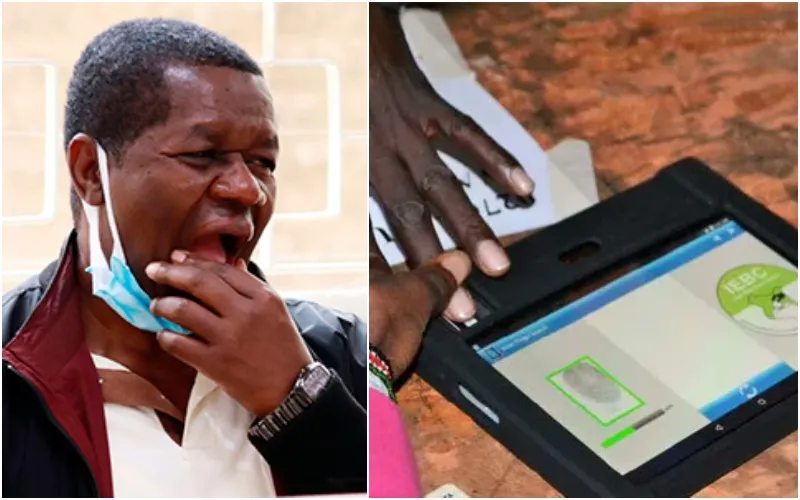
“We have to ask ourselves certain questions. Was there violence because Article 1 says that for an election to be free and fair, it must be free of violence? So, if there was violence, at which level? To what extent? Was there violence to the extent that it could impede the exercise of the will of the people? Was there bribery? Given these two factors alone, it means that the exercise we went through on November 27, 2025, in many of those places, in my view, did not meet the constitutional threshold,” he explained.
Oswago observed that one of the principles is that it must facilitate the exercise, the realisation of the political rights in Article 38.
“Even that, in my view, was not facilitated in this election. So, it did not meet those basic minimal standards as prescribed in the constitution,” said Oswago.
What did KHRC say about the by-elections
According to the Kenya Human Rights Commission (KHRC), the recent by-elections have peeled back the veneer of a functioning democracy and exposed a deeply corrupted electoral environment under equally compromised electoral management bodies, which has raised the level of trust deficit in the election process and their ability to conduct the next general election.
“What should have been routine, democratic contests to fill vacant seats in 22 electoral areas instead became a display of state manipulation, opposition complicity, and calculated violence. Today, we are releasing accounts that show how state institutions and opposition actors planned and executed violations aimed at defeating the will of the people,” the Commission said in a statement.
KHRC observed that these violations formed part of a deliberate architecture, built on intimidation, bribery, misinformation, violence, and abuse of public resources to distort the electoral process and predetermine outcomes.
Why IEBC appears not to be independent
Meanwhile, Oswago said that if IEBC were genuinely independent and had the authority, and somebody who is not supposed to be in a polling station goes there and infringes the regulation, IEBC should censure that individual.
“But it should not even come to that; it should be done long before that. If people in government know for sure that if, as a minister, I walk into a polling station or campaign, there will be some sanction from IEBC, they will not do it. But if they do so, and IEBC goes through the motions and asks the relevant government agency to take action, IEBC cannot take it to the public’s attention, protest, and bring that infraction clearly and without ambiguity,” Oswago explained.
Testimonies gathered from election monitors, journalists, and local observers indicate that state agencies played the most decisive role in orchestrating the violence and coercion that marked election day on November 27.
These by-elections were also marred by violence and intimidation across multiple constituencies. In Kasipul, two people were killed on the evening of November 6 in clashes between supporters of ODM’s Boyd Were and independent candidate Philip Aroko during a political rally in the Opondo area, Central Kasipul Ward, Homa Bay. Several others sustained injuries as gunshots were reported during the confrontations.
In Malava, violent clashes and roaming armed goons, some even escorted by police, created an environment of fear, as documented by observers. The goons appeared to be siding with the state-backed candidate, David Ndakwa, who also ran on the ruling party coalition, UDA.










Discussion about this post