


Editor’s note: In this opinion piece, Ahmed Yussuf explains why economic sabotage is not always committed through bombs or warfare. Ahmed argues that it is increasingly perpetrated through illicit markets that undermine legitimate commerce, weaken institutions, and impoverish nations.

The global economy is increasingly under siege from a sophisticated and rapidly evolving phenomenon that extends beyond conventional crime. c
Unlike traditional crimes that affect individuals or isolated sectors, illicit trade systematically attacks the economic foundations of nations by eroding government revenues, weakening industries, distorting markets, financing organised criminal groups, and undermining public confidence in governance. It is, therefore, accurate to describe illicit trade as economic sabotage.
How is illicit trade valued in numbers
According to the World Customs Organisation (WCO, 2025), illicit trade is valued at between USD 1.6 trillion and USD 2.2 trillion annually, representing approximately 2.5 to 3% of global merchandise trade. When the broader shadow economy—including underground production, tax evasion, informal markets, and illegal commerce—is considered, the value rises to nearly 12% of global Gross Domestic Product (GDP).
Counterfeit and pirated goods alone account for approximately USD 467 billion annually, equivalent to 2.5% of world trade (OECD & EUIPO, 2025). Cross-border smuggling involving illicit pharmaceuticals, tobacco products, wildlife products, arms, counterfeit currency, and narcotics contributes significantly to the remaining share. Alarmingly, digital marketplaces and e-commerce platforms have become major conduits for these illicit activities, with online channels now facilitating nearly half of global counterfeit transactions (WCO, 2025).
Why illicit trade is difficult to detect
The challenge in addressing illicit trade begins with its complexity. There is no universally accepted definition because illicit trade assumes multiple forms depending on the commodity, jurisdiction, and criminal enterprise involved. It encompasses counterfeiting, piracy, smuggling, tax evasion, customs fraud, trafficking in persons, illegal wildlife trade, illicit alcohol, substandard products, diversion of goods, money laundering, and other unlawful commercial practices. As Louise Shelley (2018) observes, globalisation has enabled criminal enterprises to integrate seamlessly into legitimate supply chains, making illicit trade increasingly difficult to detect and disrupt.
The distinction between legitimate and illegitimate trade has become increasingly blurred. Conventionally, legitimate trade complies with statutory requirements such as taxation, customs regulations, product standards, licensing, and consumer protection laws. Conversely, illicit trade violates one or more of these legal requirements.
However, many illicit operators today possess legitimate business registrations, tax certificates, import licences, and physical business premises, enabling them to infiltrate formal markets while simultaneously engaging in unlawful activities. This convergence between legal and illegal commerce has transformed illicit trade into a sophisticated economic enterprise that exploits regulatory loopholes rather than merely operating outside the law.
Counterfeit medicines threaten human lives
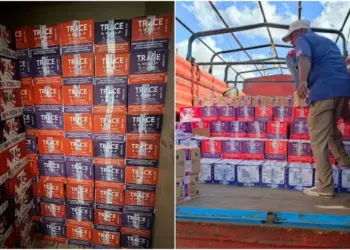
Perhaps the most visible manifestation of illicit trade is the global trade in counterfeit and pirated goods. Counterfeit medicines threaten lives by containing ineffective or toxic ingredients; counterfeit automotive spare parts contribute to fatal road accidents; counterfeit electrical appliances increase the risk of fires, and counterfeit agrochemicals undermine agricultural productivity while contaminating the environment.
According to the OECD and EUIPO (2025), counterfeit trade undermines innovation, discourages investment in research and development, distorts fair competition, reduces legitimate employment opportunities, and erodes consumer confidence. Every counterfeit product purchased represents lost income for lawful businesses, reduced tax revenue for governments, and increased profits for organised criminal networks.
Emerging evidence also demonstrates a strong relationship between illicit trade and labour exploitation. The OECD (2025) estimates that approximately 28 million people worldwide are victims of forced labour, many of whom work within illicit manufacturing and distribution networks. Criminal organisations deliberately evade labour laws, occupational safety standards, environmental regulations, and taxation to maximise profits. Consequently, illicit trade is not merely an economic offence but also a human rights concern that perpetuates exploitation, modern slavery, and social injustice.
Legitimate manufacturers are left counting losses
The economic consequences of illicit trade are devastating. Governments experience substantial revenue losses through customs fraud, tax evasion, under-declaration of imports, and illegal cross-border transactions. Reduced public revenue constrains investments in healthcare, education, infrastructure, security, and social protection programmes.
Legitimate manufacturers suffer declining sales, shrinking market share, diminished returns on innovation, and reduced investor confidence. Nobel Laureate Douglass North (1990) argued that strong institutions are essential for economic growth because they reduce uncertainty and create incentives for productive investment. Illicit trade systematically weakens these institutional foundations, thereby slowing national development and reducing economic competitiveness.
For developing countries such as Kenya, the consequences are particularly severe. Kenya has experienced significant industrial decline attributable, in part, to the proliferation of counterfeit, substandard, and illegally imported goods. Domestic industries—including leather manufacturing, textiles, electronics, pharmaceuticals, and consumer goods—have struggled to compete against cheaper counterfeit products that evade taxes and regulatory compliance.
Historical examples include the decline of several manufacturing firms, including Eveready East Africa, and the relocation of industries to neighbouring countries offering more favourable investment environments. Such developments have contributed to job losses, reduced industrial productivity, and diminished national competitiveness.
Kenya’s tourism sector suffers a major blow
Kenya’s tourism sector has similarly suffered from illicit trade through wildlife trafficking. The illegal trade in elephant ivory, rhino horn, pangolin scales, and other wildlife trophies threatens biodiversity while undermining one of Kenya’s leading foreign exchange earners. Likewise, the circulation of counterfeit medicines, adulterated food products, illicit alcohol, fake fertilisers, and counterfeit automotive parts poses significant public health and safety risks. Beyond their immediate dangers, these products impose substantial economic costs through increased healthcare expenditure, environmental degradation, and declining consumer confidence.
The cumulative effect is economic sabotage on a national scale. Illicit trade deprives the government of billions of shillings in tax revenue annually, weakens domestic production, discourages foreign direct investment, and fuels organised criminal enterprises. These criminal networks often exploit corruption, institutional weaknesses, porous borders, and technological advancements to expand their operations. As Moisés Naím (2005) aptly observed, illicit trade flourishes where governance is weak, borders are porous, and enforcement institutions lack adequate coordination.
Kenyan state agencies mount a war on illicit trade
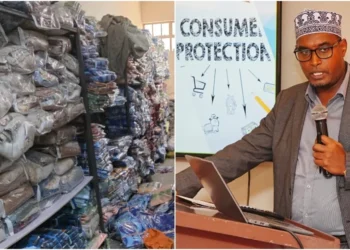
Recognising these threats, Kenya has implemented several institutional measures to combat illicit trade through agencies such as the Anti-Counterfeit Authority, Kenya Revenue Authority, Kenya Bureau of Standards, Directorate of Criminal Investigations, National Police Service, and Kenya Wildlife Service. A significant milestone was the 2017 Presidential Directive issued by former President Uhuru Kenyatta, which enhanced inter-agency collaboration against illicit trade. The directive improved intelligence sharing, coordinated enforcement operations, and strengthened political commitment. Nevertheless, fragmented institutional mandates, resource constraints, corruption, technological limitations, and inconsistent political support continue to undermine sustainable enforcement outcomes.
Addressing illicit trade requires a whole-of-government and whole-of-society approach. Governments should invest in digital customs systems, artificial intelligence-based risk profiling, blockchain-enabled supply chain traceability, and integrated border management. Stronger legal frameworks should target organised criminal networks while imposing deterrent penalties on offenders.
Public-private partnerships are essential in protecting intellectual property rights and strengthening product authentication technologies. Consumer awareness campaigns should empower citizens to identify and reject counterfeit products, recognising that consumer demand ultimately fuels illicit markets. Regional cooperation through organisations such as the East African Community, African Continental Free Trade Area, Interpol, the World Customs Organisation, and the World Intellectual Property Organisation should also be strengthened to address the transnational nature of illicit trade.
Ultimately, illicit trade is not simply an economic offence; it is a deliberate assault on national prosperity, institutional integrity, and sustainable development. It sabotages legitimate enterprise, destroys employment, finances organised crime, exploits vulnerable populations, weakens public institutions, and compromises national security. Combating this growing menace demands unwavering political leadership, institutional coordination, technological innovation, international cooperation, and informed consumer participation. Unless governments, businesses, and citizens collectively confront illicit trade, its economic and social consequences will continue to undermine global prosperity and national development for generations to come.
The author is Yussuf Osman Ahmed, the Director of Enforcement of the Anti-Counterfeit Authority (ACA)
Views expressed in this article are solely those of the author and do not represent the editorial position of news9.africa.








Discussion about this post