


Editor’s note: In this opinion piece, Yussuf Osman Ahmed observes that Kenya is confronting a growing alcoholic drinks menace whose impact extends far beyond excessive consumption. Yussuf opines that the problem has become a serious public health, consumer safety, revenue and national security concern, fuelled by the increasing availability of illicit, counterfeit, smuggled and unregulated alcoholic products.
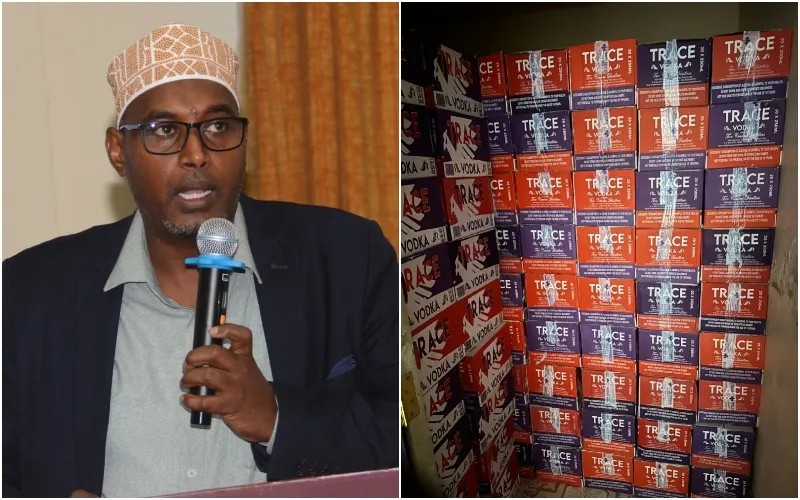
Although various government agencies conduct enforcement operations, the impact of these interventions is often insufficiently visible to the public. Raids, seizures and arrests continue, yet illicit alcohol remains deeply embedded in the market. The central question is therefore not whether Kenya has enough institutions and laws to address the problem, but whether the country has developed a sufficiently coordinated system to dismantle the illicit alcohol supply chain.
Recent findings from the Alcoholic Drinks in Kenya (Country Market Insight) study, commissioned by the Alcoholic Beverages Association of Kenya (ABAK) in conjunction with Euromonitor International and published in August 2026, paint a worrying picture. The study estimates that illegal alcohol accounts for approximately 60 per cent of all alcoholic beverages consumed in Kenya, representing a significant increase since 2022.
While such figures are market estimates and require continued validation through official research and government data, the message is clear: illicit alcohol has become a major part of Kenya’s alcohol market. This has enormous implications for the country.
Why illicit alcohol has enormous implications for Kenya
The first and most immediate concern is the health and safety of consumers. Alcohol manufactured or distributed outside the regulated system may escape the necessary quality, safety and standards controls. Consumers may not know the source of the product, its ingredients, manufacturing conditions or whether it has been adulterated. Kenya has previously witnessed tragic incidents in which consumption of unsafe alcohol resulted in serious injuries and loss of lives. The memory of such incidents should continue to remind the country that illicit alcohol is not merely an enforcement problem; it is a direct threat to human life.
The second concern is loss of government revenue. Every bottle of alcohol manufactured, smuggled or sold outside the legitimate supply chain potentially deprives the government of excise duty, Value Added Tax (VAT) and other statutory taxes. At a time when the country requires resources to finance health, education, infrastructure and other public services, illicit alcohol represents a significant form of economic leakage.
Thirdly, illicit alcohol undermines legitimate manufacturers and traders. Law-abiding businesses incur the cost of taxation, licensing, quality compliance, security features and distribution controls. Illicit traders, on the other hand, evade these obligations and can therefore sell products at artificially low prices. This creates unfair competition and rewards criminal enterprise at the expense of legitimate investment.
The problem also has a significant connection to the broader challenge of illicit trade. Alcohol may enter the market through smuggling, counterfeiting, illegal manufacturing, refilling of genuine bottles, tax evasion and diversion through unregulated distribution networks. It is therefore necessary to look beyond the individual bottle or retailer and investigate the entire supply chain.
Numbers paint a grim picture
Data from the Anti-Counterfeit Authority’s enforcement activities over the last three years, from 2024 to 2026, further demonstrates the significance of the problem. Out of approximately 1,200 counterfeiting complaints received, 124 related to alcoholic drinks, representing about 11 per cent of all complaints. This is a substantial proportion for a single product category and demonstrates that alcoholic beverages remain an important area of concern within the broader counterfeit and illicit trade environment.
The figures also show that alcohol-related counterfeiting cannot be treated as an isolated matter. It requires sustained attention comparable to other high-risk sectors such as apparel and clothing and electrical and electronic products. Kenya must therefore move from fragmented interventions towards a coordinated national response.
The starting point should be stronger collaboration among all relevant institutions. The Presidential Directive on illicit goods issued in 2017 remains an important foundation for the pooling of government resources and coordinated action. However, coordination must go beyond joint operations. It should involve real-time intelligence sharing, joint investigations, common databases, harmonised inspection procedures and coordinated prosecution of offenders.
Relevant institutions, including NACADA, the Anti-Counterfeit Authority, the Kenya Revenue Authority, the Kenya Bureau of Standards, the Directorate of Criminal Investigations, the National Police Service, county governments and other regulatory agencies, should establish a more structured mechanism for addressing illicit alcohol.
The ball is squarely in the manufacturers’ court
The manufacturers themselves also have a fundamental responsibility. Legitimate manufacturers must strengthen the security of their supply chains and ensure that their products are difficult to counterfeit, illegally refill or divert. Modern track-and-trace systems should progressively become an essential part of the alcohol industry.
Every legitimate product should, as far as possible, be traceable from the point of manufacture or importation to the distributor and eventually to the retail outlet. Secure authentication features would also assist consumers and enforcement officers to distinguish legitimate products from suspicious ones.
Kenya should, consequently, consider developing an Integrated Product Management and Authentication System for high-risk fast-moving consumer goods, including alcoholic beverages.
Such a system could bring together product authentication, track-and-trace, standards verification, and enforcement intelligence. The objective would be to ensure that products entering the market can be identified and their origin verified quickly.
Intelligence-led investigations must be embraced
Technology, however, cannot replace effective enforcement. Agencies require appropriate instruments, trained personnel and laboratory support to identify illicit products. Market surveillance must also become continuous rather than being limited to occasional crackdowns after public complaints or tragedies.
Enforcement should particularly shift towards intelligence-led investigations targeting the source of the illicit trade. Arresting a small retailer may remove a few bottles from the market, but it does not necessarily dismantle the criminal network supplying them. Investigations should therefore focus on illegal manufacturers, financiers, warehouses, transporters, import channels and organised distribution networks.
The methodology for combating illicit alcohol must be based on accurate and timely intelligence sharing among law enforcement and regulatory agencies. Information should flow quickly enough to enable agencies to identify emerging products, suspicious supply routes, repeat offenders and areas where illicit alcohol is concentrated.
NACADA’s continuing policy interventions on alcohol control are equally important. Measures intended to reduce harmful consumption, restrict access by minors and regulate the availability and promotion of alcohol form an essential part of the national response. However, alcohol-control measures must operate alongside strong action against illicit supply. Restricting the legitimate market without effectively controlling illegal production and distribution risks allowing the illicit market to exploit any resulting gaps.
No single intervention is sufficient
Kenya can also learn from regional and international experiences. Across East Africa, countries continue to struggle with informal alcohol markets, unsafe products and cross-border trade. The solution requires stronger regional cooperation, particularly in intelligence sharing, product testing, information on dangerous products and coordinated investigations.
Internationally, successful alcohol-control strategies demonstrate the importance of combining public health interventions, taxation, restrictions on harmful marketing, road safety measures and effective enforcement against illicit trade. No single intervention is sufficient.
Kenya’s approach should therefore be balanced. The objective should not merely be to increase arrests or conduct highly publicised raids. The ultimate objective must be to create a formalised, secure and regulated alcohol market where consumers can trust the products they purchase, legitimate businesses can compete fairly, and the government collects the revenue legally due to it.
The reported growth of the illicit alcohol market should serve as a national wake-up call. Kenya does not lack laws, institutions or enforcement agencies. What remains urgently necessary is a more decisive, integrated and technology-driven system capable of translating these resources into measurable results.
How Kenya can take the war on illicit alcohol forward
The country must move from sporadic crackdowns to permanent market surveillance, from isolated operations to coordinated intelligence, and from simply seizing illicit bottles to dismantling the criminal supply chains behind them.
The alcoholic drinks menace is ultimately a matter of public health, consumer protection, economic security and the rule of law. Kenya cannot afford to address it through fragmented interventions. A coordinated national response, supported by manufacturers, regulators, enforcement agencies and the public, is now essential.
The time has come to make illicit alcohol unprofitable, difficult to manufacture, impossible to move undetected and dangerous for criminal networks to trade in.
The author is Yussuf Osman Ahmed, Director of Enforcement at the Anti-Counterfeit Authority (ACA).
Views expressed in this article are solely those of the author and do not represent the editorial position of news9.africa.










Discussion about this post