


NAIROBI, Kenya – Plans by the Kenyan government to set up a multi-billion-dollar nuclear plant in the country lie in limbo after environmentalists joined forces with residents of Siaya County to oppose the project. The East African nation is seeking to construct a 1,000–3,000 megawatt nuclear power plant in Siaya County starting in March 2027 at an estimated cost of $5 billion (KSh 646 billion).
The county was selected in part because it is close to Lake Victoria, as the facility, one of its kind in the country, would need a lot of water for cooling operations.
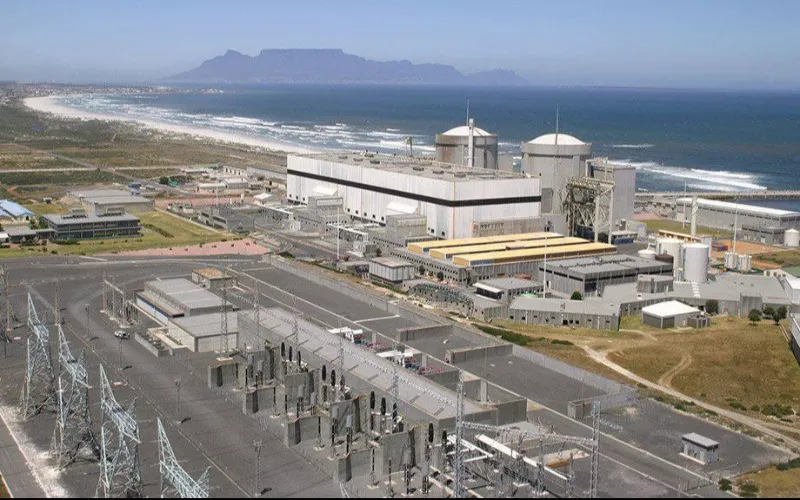
Nuclear reactors are a low-carbon climate solution since they produce electricity without emitting carbon dioxide or other air pollutants like sulphur dioxide. Zero greenhouse gas emissions, which means that running reactors doesn’t burn fossil fuels or release carbon dioxide, has a positive impact on the environment and helps fight climate change by lowering total air pollution. Compared to solar farms, wind farms, or hydroelectric dams, nuclear reactors require significantly less land per megawatt of electricity produced, which helps protect nearby natural habitats.
However, the activists argue that it is ‘ill-advised’ for the nuclear power plant to be established on the shores of Lake Victoria – the largest tropical freshwater lake on earth, shared by six nations, the lifeblood of 40 million people.
“Kenya’s own scientists said no. Politics overruled them. What will it take for them to listen? Nuclear waste does not stay where it is put. It seeps. It lingers. It outlives the promises made when the contracts were signed,” says Sherie Gakii, the communications manager at Greenpeace Africa.
The detrimental consequences of nuclear plants on the environment include: Thermal pollution, which occurs when plants take huge amounts of water from surrounding rivers, lakes, or seas for cooling and then release warmer water back out, which can damage local aquatic species and lower dissolved oxygen levels. The mining and refining of uranium ore, as well as the construction of the plant’s heavy concrete and metal infrastructure, are energy-intensive processes that have an indirect impact on the environment. Catastrophic radiation releases that contaminate surrounding land, water, and wildlife could result from severe natural disasters or system failures that cause core meltdowns.
The funding for the project is aimed at enabling screening and technical evaluation of possible sites found inside Siaya. According to the Nuclear Power and Energy Agency (NuPEA), it has found potential sites for the proposed facility and has finished the first round of regional investigation.
NuPEA, the agency tasked with implementing the country’s nuclear programme, is conducting further screening exercises on the shortlisted areas, which it has not disclosed, to determine which sites meet safety, environmental and engineering requirements.
“The best candidate sites will then be subjected to weighted analysis, and the best two will be designated as the Proposed Site and Alternate Site,” NuPEA states in documents.
Justus Walubayo, the agency’s CEO, said site-specific feasibility studies and additional technical assessments will follow once the preferred location is identified.
“Detailed engineering and scientific studies on the specific site will have to be carried out to confirm the suitability of the selected site,” Walubayo said.
Siaya residents reject the nuclear power plant
However, a fortnight ago, hundreds of people in Sakwa, Siaya County, Kenya, walked into a government forum and refused to sit down quietly. Their banners said two words: We Reject.
“We are opposing the establishment of the proposed nuclear plant in our Lenya village because we can’t allow ourselves to be displaced to pave the way for its implementation,” said Daniel Onaga, a youth leader, Central Sakwa. We also want to tell the government, together with our elected leaders, to intervene in this matter so that they can join us in opposing this project.”
On her part, Goretti Ogombe, a resident of Lenya village representing women, maintained that the locals were opposed to the project because they are afraid that they are likely to be forced to leave their ancestral homes and relocate elsewhere.
“We have a lot of economic activities that we are undertaking here, like fishing and mining. Even though they claim that the nuclear energy project will create about 700 jobs, the mining sector has created job opportunities for thousands of residents,” she explained.
NuPEA is set to establish the nuclear power plant in partnership with the Jaramogi Oginga Odinga University of Science and Technology (JOOST). This nuclear plant is expected to provide an adequate, affordable and reliable supply of energy to Kenyans. In addition, it is projected that as of 2037, nuclear energy will contribute a total of 6.638 megawatts to the national grid.
However, leaders from the region have lauded the project and called upon NuPEA to conduct thorough civic and public participation before kick-starting it officially to avoid misconceptions surrounding its initial plans to erect it in Kilifi County, which faced widespread rejection from locals.
“Negatives travel much faster. Information about nuclear energy – there is a lot of it that is good, but that which is good is not known. Unfortunately, there are so many negatives about it. So, I want to believe that it is wise we start going out to the communities, not with the issue of its advantages, but just understanding what it is and how it works for our people to understand,” Gideon Ochanda, MP for Bondo, advised.
President William Ruto indicated that a lot of research is going on on the development of the first nuclear plant. “With abundant energy, we shall power factories, light every home and drive Kenya to become the industrial hub of East Africa and the rest of the continent,” said the head of state.
Kenya’s first nuclear power plant lies in balance
However, the residents of Sakwa Central, like Humphrey Opondo Suwo, insist that the proposed nuclear energy plant project will not see the light of day.
“This idea of a nuclear power plant being established here is something that nobody has consulted us about at all. We only hear about it from different social media platforms; Lenya has been identified as a place for the establishment of a nuclear plant. So, we wonder who gave them the unanimous right to bring the nuclear power plant here,” said Opondo.
According to Opondo, the 2010 Kenyan Constitution demands that things be done in public.
“At no given time have we demanded a nuclear plant here in Lenya, so we wonder who this person is who has put us in this programme as the right place for it. The residents of Lenya have decided unanimously that they don’t want to hear anything to do with the nuclear power plant, and at no time shall we accept it. We are not ready to be displaced because we want to preserve and conserve our traditions as they were before; we want to maintain our economic setup as it was before, and as such, we have resolved that there is no nuclear here,” Opondo further explained.
Opondo drew a comparison between the U.S.-Israel conflict with Iran and the proposed project.
“As we are talking now, the U.S. is fighting Iran because of nuclear weapons. They want nuclear power to be a nuclear-free zone. Why must somebody bring nuclear material to Lenya? It means we are the downtrodden group that we can’t accept. We have to stand right and straight,” he explained.
James Aketch Aketch, chairman of the Central Sakwa Association, said:
“We have unanimously decided that we don’t want anything to do with nuclear because when the NuPEA officials came here, I was there, and depending on what they told us, it is the reason why we are opposed to the plant. First, they told us that we shall be evicted from our homes and be resettled elsewhere since they are going to hive off over 8 km² of land where they have established the plant.”
“They also said that if there is a country that wants to go to war with Kenya, they will just focus on where the nuclear plant is located and target it. Because of that, we have said no to that plan. As residents of Central Sakwa, we can’t allow the establishment of that project that will put millions of Kenyans at risk.”
NuPEA defends a plan to establish the nuclear power plant
Kilifi opposed plans to host Kenya’s first nuclear power plant, then the government moved the site. Now, residents in Siaya County are raising similar concerns about plans to build a plant on the shores of Lake Victoria, but the government pressed on.
Francis Agar, a board member of NuPEA, clarified that the agency had settled on Siaya due to favourable climate conditions, economic viability, and political support, which he observed had been notably stronger in Siaya compared to Kilifi.
Agar highlighted the limitations of traditional renewable energy sources like solar and wind, emphasising their intermittent nature and reliance on costly storage solutions. He pointed out that the Energy Act of 2019 categorises biomass as renewable, which he finds peculiar.
“The importance of ongoing engagement with the local community regarding the nuclear project is that the messaging is tailored to educate the community on the benefits of nuclear energy, aiming to alleviate fears related to radiation, which are largely unfounded,” Agar explained.
While addressing radiation concerns, Agar noted that radiation is a natural part of the environment, and he seeks to dispel the myth of “radiophobia” among the public.
“Kenya’s per capita electricity consumption is low at 190 kilowatts per year, which is below that of countries experiencing conflict. There is an acute energy shortage in Kenya, and the addition of nuclear energy is part of a broader strategy to address this issue without dismissing other energy sources,” Agar further said.
President Ruto encouraged the residents of Siaya to seek a deeper understanding of the immense economic benefits that the nuclear power project will bring, highlighting high-value jobs in infrastructure development.
“During the peak construction phase, the nuclear project will generate up to 10,000 jobs, ranging from high-skilled, highly specialised roles to roads across the board to all other available engagements,” explained the president.
Why is Kenya banking on the nuclear power plant?
Once operational, the head of state reiterated that the project will provide hundreds of permanent, well-paying technical positions; local technical and vocational education and training institutions will see increased investments to equip residents with the skills needed to take up all the opportunities that will be available.
“In addition, to support a facility of this magnitude, the government and developers will undertake significant upgrades to local infrastructure, including roads and other facilities. This will also include improved water supply systems, modern healthcare systems, new schools, community centers and enhanced telecommunication,” President Ruto further said.
Additionally, President Ruto indicated that with thousands of workers working in the area, the project will stimulate the local economy by increasing demand for housing, hospitality, retail and agricultural products while enabling local enterprises to grow on a large scale.
But Greenpeace Africa, alongside other partners, insists that they are not letting this conversation happen behind closed doors. The group has organised a Greenpeace Africa webinar titled Kenya’s Nuclear Gamble: Power, Risk, and the Future of Energy Justice, scheduled to take place on Wednesday, June 10, 2026, from 6pm.
Panellists will include Fred Njehu, Pan-African Political Strategist, Greenpeace Africa; Amos Wamenya, Senior Advisor, Renewable Energy and Just Transition at Power Shift Africa; and Andrean Ndebu from the Kenya Young Generation in Nuclear.
Other panellists in the webinar, to be moderated by Sherie Gakii, are Gwendolyn Hallsmith, the Executive Director at the Global Community Initiatives; Francesca De Gasparis, the Executive Director at the Southern African Faith Communities Environment Institute (SAFCEI); Peter Gichuki, the Program Coordinator at We Planet Africa; and Dickens Ochieng’, a Community Representative at the Linda Beach, Siaya County.
“Join us, register for our webinar today, where we’ll examine how nuclear projects like this one threaten the communities that call this region home. Ask the communities beside uranium mines in Niger and the DRC who were never consulted and are still living with the damage. Ask the families near Chornobyl and Fukushima who were told it was safe,” Gakii further says.
The National Treasury’s documents show the government is targeting a 55% acquisition of the nuclear plant site by June 2027. Should the project see the light of day, upon completion, Kenya will join the likes of South Africa, whose Koeberg Nuclear Power Station is the largest—and currently the only operational—commercial nuclear power plant in Africa.












Discussion about this post