


ATHI RIVER, Kenya – In a move that the government believes is essential to increasing the nation’s milk production, bolstering feed standards, and establishing Kenya as a regional livestock powerhouse, the country has today, Wednesday, February 18, 2026, commissioned one of the biggest animal feed manufacturing plants on the African continent.
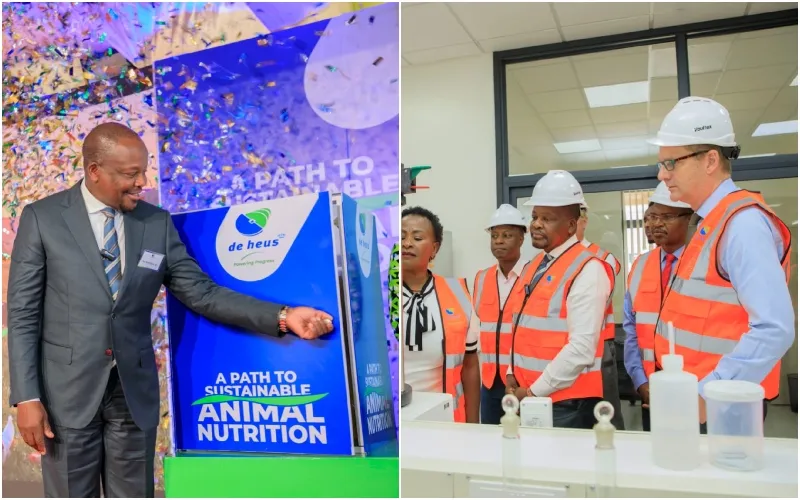
Cabinet Secretary for Agriculture and Livestock Development Mutahi Kagwe led a high-powered government delegation in officially opening the Sh 3 billion De Heus Animal Nutrition facility in Athi River, framing the investment as a component of a larger structural transformation in Kenya’s livestock economy.
“Today is not just about commissioning a factory. It is about transforming Kenya’s livestock economy,” said CS Kagwe. “We will not achieve this by merely increasing the number of cows. We will achieve it by increasing productivity per cow. The future of Kenya’s dairy and meat sector lies in efficiency, nutrition, genetics, animal health, and most critically, quality feed.”
Kenya aims to double its annual milk production from 5.2 billion litres to 10 billion litres, and it is also setting itself up to become a net exporter of meat and live animals.
According to officials, this will necessitate a change from volume-based growth to productivity per animal, supported by more stringent regulatory enforcement and science-based nutrition.
Industry Under Examination
The commissioning takes place as the feed business in Kenya is under more scrutiny than ever before.
Concerns have been raised by farmers over uneven feed formulations, batch-to-batch performance variations, and overly diluted products that reduce output. Since feed can make up as much as 60–70% of the expenses associated with raising livestock, consistency and quality are essential to farm profitability.
To shield farmers from inferior formulations, CS Kagwe declared that the government will bolster enforcement and establish a feed quality index.
“We will not accept too diluted feed or inferior formulations intended to increase revenues at the price of production. He added that export markets have high criteria and that feed quality and animal health will be crucial to Kenya’s competitiveness in exporting meat, milk powder, and live animals. Farmers must get value for their money,” he stated.
A Science-Based Manufacturing Model
With an annual production capacity of 240,000 metric tonnes, the Athi River factory is an investment of Sh 3 billion.
To guarantee consistency, it incorporates automated manufacturing processes, standardised recipe formulation, laboratory testing of raw components, and batch-to-batch verification.
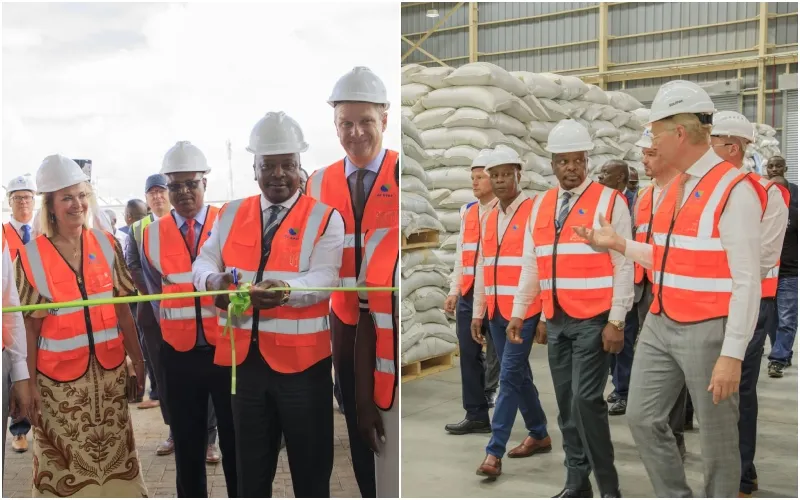
In contrast to integrated agribusiness approaches, De Heus solely concentrates on animal nutrition, presenting farmers as autonomous customers assisted by technical assistance and knowledge sharing.
“Our investment philosophy is not merely about building factories, but about building capabilities,” said Co de Heus, Chairman of the Board. “By working closely with farmers and local partners, we share technical expertise, management insights and practical solutions, helping to unlock the full potential of Kenyan agriculture.”
He pointed out that De Heus currently produces over 16 million tonnes of feed a year in more than 100 factories worldwide, bringing technical know-how and well-established quality control systems to the Kenyan market.
According to Wiehan Visagie, Managing Director of De Heus Kenya, the choice to build locally was motivated by ongoing industry gaps in feed reliability and farmer confidence, particularly among those who deal with pigs, cattle, and poultry.
“For too long, feed has felt like a gamble for many farmers,” he said. “Our commitment is to deliver consistent, batch-to-batch nutrition backed by laboratory testing and strict quality controls. But food alone is not enough. We pair quality production with technical advisory services, nutrition planning, and on-farm support because real productivity happens when good feed meets good knowledge.”
According to Visagie, the factory is more than just a piece of infrastructure.
“This is about restoring confidence. Have faith that farmers can rely on the quality of the products they purchase, and have faith that Kenya can use locally available raw materials to create its own food systems.”
Linking Feed Security to National Reform
Private sector investment is occurring together with government reforms. Through the Land Commercialisation Initiative, Kenya is integrating small-scale farmers through contract farming models and releasing government land for the organised commercial cultivation of soybeans and yellow maize, two essential ingredients in the production of feed.
In addition, structured feed reserves are being planned to support farmers during droughts, and the development of 50 dams is anticipated to increase irrigation and lessen reliance on rain-fed crops.
“Food security must be localised. Kenya must reduce dependence on imports of key feed ingredients,” CS Kagwe said.
Jobs, Local Impact and Regional Ambition
About 280 direct jobs are created by the plant, in addition to more indirect opportunities in supply chains and logistics.
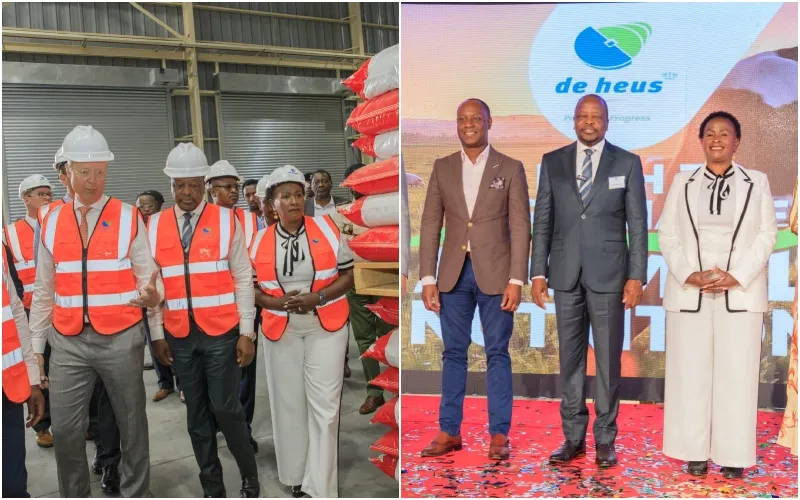
Machakos Governor Wavinya Ndeti said the factory will help agro-industrial growth and create jobs for young people.
“Quality feed is the backbone of productive livestock,” she said. “When our poultry farmers get better feed, they get better yields. When our dairy farmers get better nutrition solutions, milk production increases.”
The project’s wider collaboration component was emphasised by the ambassador of the Kingdom of the Netherlands.
“This new De Heus animal feed facility reflects confidence—confidence in Kenyan farmers, confidence in the future of agriculture, and confidence in the economy of Kenya,” he said.
The corporation views the Athi River factory as a component of a larger initiative to position Kenya as a regional center for livestock feed production, with 35 locations around Kenya and plans to serve regional markets, including Uganda and Tanzania.
A Structural Shift
Despite accounting for almost 12% of Kenya’s GDP, the cattle industry still experiences productivity gaps, according to industry observers. A structural movement toward efficiency and quality-driven growth is indicated by the joint push for stronger feed standards, localised raw material production, consistency supported by laboratories, and farmer advisory support.
“Facilities like this create jobs, stimulate demand for raw materials, empower youth in agribusiness, strengthen rural economies, and build investor confidence in Kenya,” added CS Kagwe at the plant commissioning event.
Therefore, in addition to being a new factory, the Athi River facility is the result of a convergence of science-based production, private investment, and policy change to modernise Kenya’s cattle value chain and secure its place in the regional agricultural trade.










Discussion about this post