


ATHI RIVER, Kenya – Kenyan livestock farmers have a reason to smile after global animal nutrition company De Heus Kenya announced that it would officially open a Sh 3 billion (USD 23 million) state-of-the-art animal feed manufacturing facility in the country.
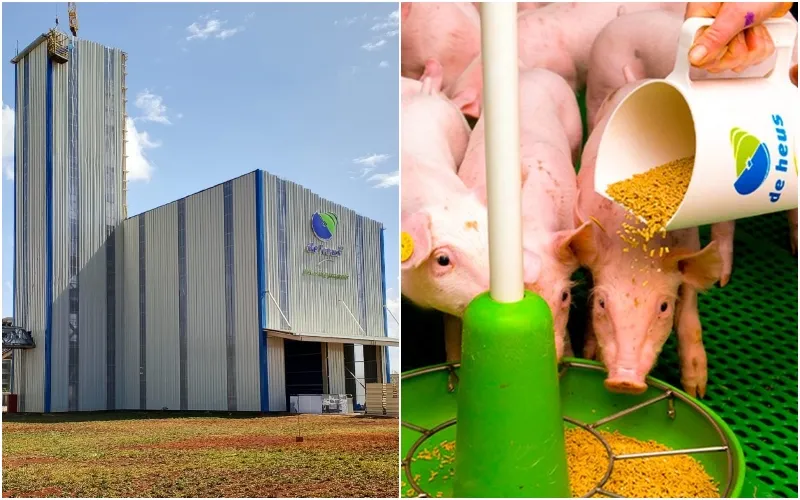
The factory located in Athi River on the outskirts of the Nairobi Central Business District (CBD) will open its doors to the public on Wednesday, February 18, 2026, in one of the largest private-sector investments in Kenya’s livestock and agribusiness sector in recent years.
It is anticipated that the new facility will boost the local feed supply, enhance uniformity and quality, generate employment, and aid in the country’s attempts to increase industrialisation and ensure food security.
Along with other top government officials, business players, farmers, and development partners, the launch ceremony will be attended by the Cabinet Secretary for Agriculture and Livestock Development, Mutahi Kagwe, and the Principal Secretary for Industry, Dr. Juma Mukhwana.
The facility represents a long-term commitment to Kenya’s agricultural development, according to Wiehan Visagie, Managing Director of De Heus Kenya, who made this statement before the launch.
“This factory is about building reliable systems for farmers,” said Mr Visagie. “By manufacturing feed locally, we are addressing long-standing challenges such as inconsistent quality and dependence on imports, while supporting farmers to improve productivity and profitability.”
What is the potential of the Athi River plant?
news9.africa has established that the Athi River plant will rank among the biggest feed mills in East Africa with an annual output capacity of 200,000 metric tonnes and a future expandable capacity of 260,000 metric tonnes.
Additionally, it will manufacture a variety of animal nutrition products, such as compound feeds, concentrates, premixes, and specialised feeds for ruminants, pigs, poultry, and aquaculture.
Although the cattle industry in Kenya sustains millions of livelihoods and accounts for an estimated 12% of the country’s GDP, productivity is still below potential.
Because feed expenditures can make up as much as 70% of all livestock production costs, news9.africa knows that feed availability and quality are crucial factors in determining farm performance.
De Heus Kenya hopes to reduce supply chains, enhance traceability, and customise nutrition for Kenyan farming systems by making feed locally. This will help farmers attain more reliable results and lessen their exposure to supply interruptions worldwide.
Impact on the economy and employment
It is anticipated that the Athi River factory will generate up to 1,000 indirect jobs and about 250 direct jobs in the transportation, logistics, packaging, distribution, and raw material supply chains.
In order to support regional grain markets and rural livelihoods, the company also intends to purchase essential raw materials from Kenyan farmers, such as maize and soybeans.
De Heus Kenya offers farmers technical advising services in addition to manufacturing, with an emphasis on animal nutrition management, ration formulation, and feed utilisation. The goal of these services is to assist farmers in converting feed quality into quantifiable increases in productivity.
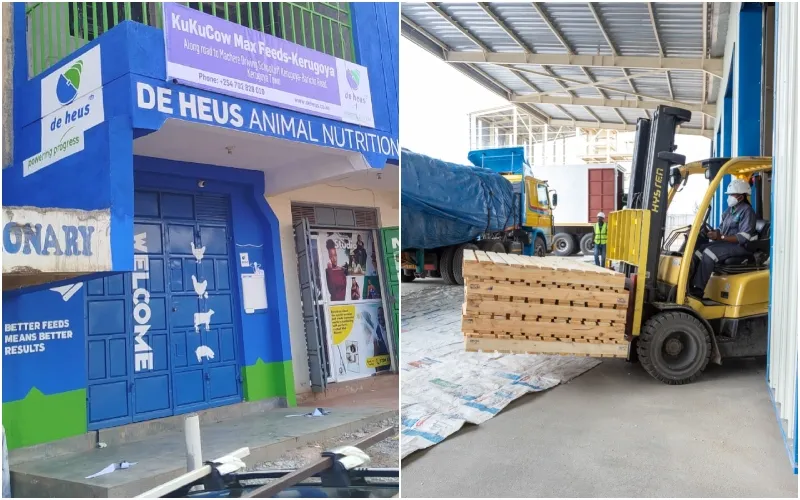
news9.africa understands that De Heus Animal Nutrition, which was established in the Netherlands in 1911, specialises in animal nutrition and runs over 86 production facilities globally. To improve cattle value chains, the company integrates local production, testing, and farmer assistance with international research.
The Athi River factory’s establishment demonstrates the expanding role of private sector investment working with the government to further Kenya’s industrialisation objectives, livestock sector growth, and food security agenda.












Discussion about this post