


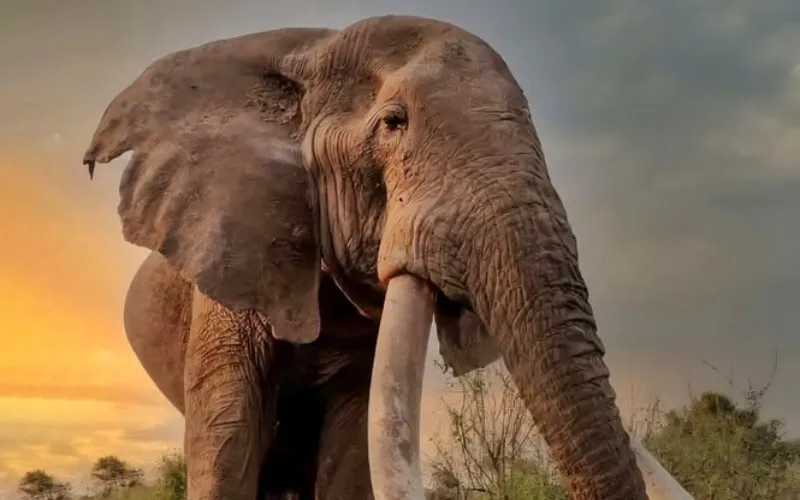
A super tusker by the name Craig has died in Amboseli National Park at the age of 54, reportedly due to natural causes.
According to Big Life Foundation, Craig is suspected to have died due to digestive problems. However, the organization is waiting on post-mortem details.
“Craig would collapse intermittently then stand and move short distances. Big Life rangers stayed with him through the night. Nonetheless, he lay down at 3:32 am and did not get up again and nothing could be done to assist him,” the foundation explained.
Craig was a global attraction to tourists and famed for his immense, ground-sweeping tusks and calm. In a statement announcing his demise, the Kenya Wildlife Service (KWS) recognized the elephant as a legendary icon in the wildlife world.
“Beyond its extraordinary tusks, Craig was deeply loved for its remarkably calm nature. He appeared to understand its place in the world – often pausing patiently as visitors photographed and filmed him,” it read in part.
Additionally, KWS pinpointed the vital role Craig played in fostering the tourism industry in Kenya.
“Widely documented and admired globally, he became a true ambassador of Amboseli and a symbol of what successful conservation looks like.”
Who is super tusker Craig?
Craig was born in January 1972 to the great matriarch Cassandra of the CB family. He was one of the last remaining super tuskers in Africa – a rare class of bull elephants whose two tusks weigh over 45 kilograms (100 pounds) each.
Fewer than a handful remain today, making him a living monument to Africa’s natural heritage. Furthermore, he fathered a number of calves, ensuring that his powerful bloodline and gentle character live on across generations.
In 2021, East African Breweries Limited (EABL) adopted Craig through its Tusker brand, reflecting his appeal to the world, including business organizations.
KWS added that him living to 54 years was thanks to the protection the service offered him through its collaboration with the local community and conservation partners.
“Continuous monitoring, anti-poaching efforts, habitat protection, and community stewardship ensured that Craig lived freely and safely – demonstrating what collective commitment to wildlife conservation can achieve,” it explained.
Celebrating Craig in death
Upon Craig’s demise, KWS urged wildlife enthusiasts to share memories of him online in celebration of his remarkable legacy.
One social media user praised Craig for his calm demeanor and majestic presence.
“In 2020, I was on a big mission to search for the Big Tuskers. I had searched for four days, and once we found them I didn’t want to leave. I was mesmerized by his great, calm demeanor and his wonderful, majestic presence. My enthusiasm acquired me the name Mama Tembo.”
Another user recognized the elephant’s popularity.
“Oh noo! Gentle giant Craig. Probably the most well-known and photographed elephant. Heartbreaking.”
One more user commented on the animal’s contribution to the Kenyan economy.
“Rest in peace to the iconic. Considering how much income this elephant has brought to our country. Maybe he should be given a head of state commendation posthumously.”
However, another user expressed concerns of extinction in the animal kingdom.
“Fare the well Craig. I don’t want to imagine that one day these wonderful creatures could become extinct if we don’t protect and breed them.”
Another wildlife enthusiast implored that a museum should be set up to honor Craig in his full stature and gentleness even in death.
Kenya is known world over for its great wildlife, including elephants like Craig, lions, flamingos, giraffes, rhinos, buffaloes, and antelopes, which play a crucial role in attracting tourists to the country.







Discussion about this post