


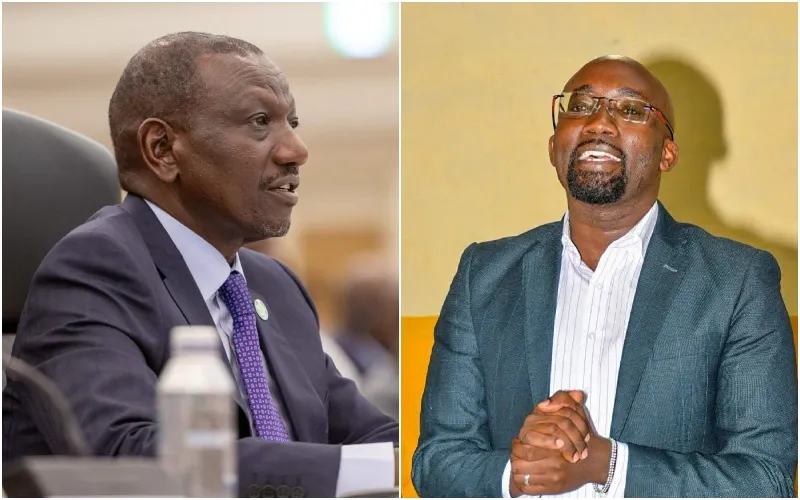
ELGEYO MARAKWET, Kenya – Marakwet West MP Timothy Kipchumba has strongly come to the defence of President William Ruto after he accused Parliament of bribery.
According to the legislator elected on an independent ticket, the head of state was not wrong in his remarks.
“I don’t think the president was wrong on the allegations made against Parliament. He is the first consumer of National Intelligence. His allegations against parliament must have been well-founded and backed up by intelligence reports from the relevant state agencies,” said the MP.
His remarks come when the Ethics and Anti-Corruption Commission (EACC) says it has launched investigations into MPs accused of demanding bribes after President Ruto accused lawmakers of turning Parliament into a “marketplace for extortion.”
Through its chairperson, David Oginde, the commission says it is already tracking several MPs implicated, warning that no one will be spared once evidence is gathered.
“We are actually doing active investigations on several individuals, and you’ll soon see the consequences across various levels of the leadership system,” said Oginde.
The probe spans allegations ranging from bribery to influence legislation, inflated allowances, misuse of Constituency Development Funds, and claims that senior officials are coerced into paying protection fees.
“We expect Parliament to make laws that serve us better. But the reality is alleged bribery, inflated allowances, and protection rackets,” the chairperson added.
How EACC plans to pin down the specific individuals
The commission says it has previously met the Speakers of the National Assembly and Senate, and will consult them again, stressing that Parliament is a privileged institution where cooperation is vital for the investigations to succeed.
“It’s one rotten potato that spoils the whole bag. We want to know: are there specific individuals, and what can be done — not only to punish them, but to end the whole thing?” Oginde posed.
Civil society organisations have also weighed in, urging the President to substantiate his remarks by presenting evidence to investigative agencies.
“If the president is serious, he should present evidence to investigating authorities so that thorough investigations are done,” Transparency International Kenya Executive Director Sheila Masinde stated.
President Ruto last week accused members of parliament of breeding corruption in demanding bribes from cabinet secretaries and governors, a statement that has seemingly created a clash between the Executive and the Legislature.
While addressing the Devolution Conference in Homa Bay County, he called out MPs who, he said, had turned house committees into money-minting rings instead of exercising oversight responsibilities, labelling the House a den of graft.
“Something is happening in parliament that must be called out. There is money being demanded from executives, from governors, from people in executive especially those who are for accountability.”
What President William Ruto wants the EACC to do
President Ruto, who veered off from his speech, pointed directly to unnamed committees of parliament that he says have turned to extortion rings.
“It cannot continue to be business as usual. It cannot be that committees of parliament demand to be paid for them to write reports or look the other way,” said Ruto.
The head of state again at the same time, turned his salvos on the Ethics and Anti-Corruption Commission and demanded a crackdown.
“I have made it clear to EACC that there will be no sacred cows. There will be no phone calls from below or above to stop anyone from being prosecuted,” said Ruto.
Meanwhile, MP Kipchumba indicated that the time had come for Parliament to re-focus and exercise the Constitutional role of Oversight without being subservient to the executive.
“In any case, the best way to assist the president deliver is through a strong Parliamentary oversight,” added the lawmaker.




Discussion about this post