


The Principal Secretary for Internal Security and National Administration Raymond Omollo has lauded President William Ruto’s move to open an immigration office in Garissa in February 2025.
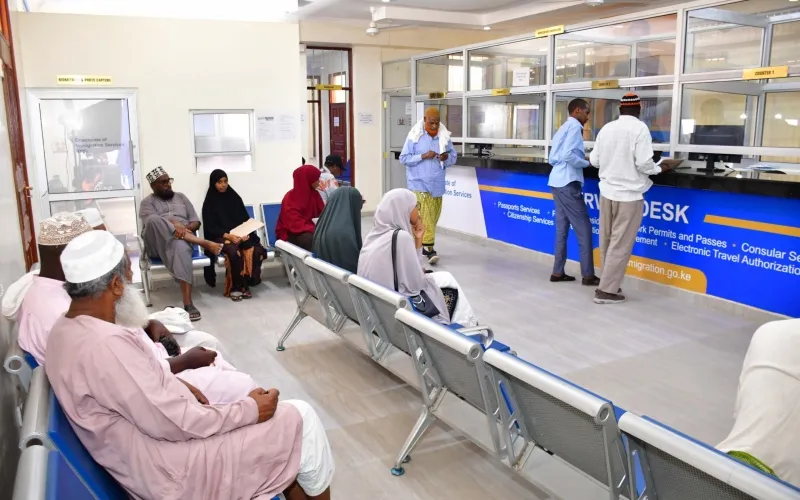
In a statement, Omollo disclosed that since its commissioning, the office has served close to 9,000 applicants, an achievement that has transformed the experience of passport processing in the region.
“President William Ruto’s administration has anchored its policies on tangible, physical infrastructure to ensure full and equitable implementation across the country. The opening of the Garissa Immigration Office by the President stands as a practical expression of his commitment,” he stated.
He added that the office’s location brought services closer to those in need, fostering convenience for them and eliminating transport costs.
“Previously, residents were forced to travel long distances to Nairobi, Embu, or Nakuru to access these services, incurring significant transport costs and enduring long waiting times,” he elaborated.
How many passports are delivered to Garissa?
Additionally, the Principal Secretary explained that currently, passports printed in Nairobi, about 200 per week, are dispatched to Garrissa and applicants receive prompt notification once their documents arrive, therefore easing the entire process.
Apart from enhancing convenience for those seeking passport processing services, the decentralisation of immigration services comes with other benefits, including strengthening security in the country.
“The decentralisation of immigration services has also reduced the financial burden on families, strengthened security through better local coordination and brought government services closer to the people,” he added.
Garissa is the 10th passport application centre in Kenya. The others are Nairobi, Mombasa, Kericho, Bungoma, Kisumu, Nakuru, Embu, Eldoret, and Kisii.
According to the State Department of Immigration and Citizen Services, the Garissa Immigration Office also offers convenience for residents in Mandera, Wajir, and parts of Tana River, Lamu, Kitui, and Isiolo counties, saving applicants expenses in transport and time that would have been spent seeking services in Nairobi and other regional offices.
Improving the decentralisation of services
Appreciating the government’s policy shifts, Omollo lauded President Ruto’s administration for removing the vetting process for Kenyans seeking national identification cards, especially Kenyan Somalis.
He remarked that the change played a vital role in lowering the feeling of marginalization and unfair scrutiny in the Somali community, thus fostering national cohesion.
The north-eastern and some eastern areas of Kenya have for decades been among the marginalized areas of the country, with residents grappling with poor infrastructure, insecurity, drought, and food shortages.
Garissa and other regional offices ceased issuing passports in 2014 to comply with the International Civil Aviation Organization (ICAO) recommendations for centralized printing of passports and other travel documents to reinforce their security from forgery and other manipulations.
Nonetheless, investments in a modern and integrated e-Passport Management System has enabled the Directorate of Immigration to decentralise passport application process while adhering to ICAO and other global passport security guidelines.








Discussion about this post