


The launch of the dualling of the Rironi–Mau Summit highway has stirred a blend of excitement and unease across Nakuru, Kericho and parts of Nyanza, where residents say the project carries both promise and uncertainty for the region’s future.
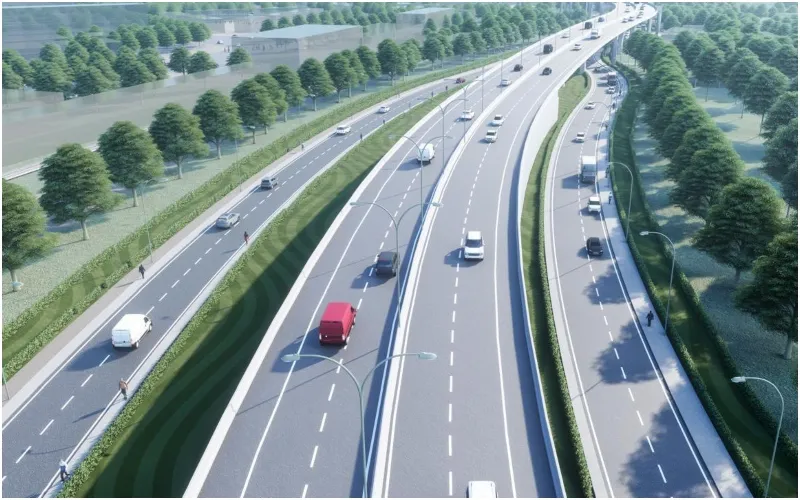
For many communities that have long relied on the busy Nairobi–Nakuru–Kericho corridor, the road is more than tarmac and markings; it is a lifeline that feeds local economies, connects families, and supports thousands of livelihoods.
The plan to expand the route into a modern dual carriageway has therefore been met with hope, but also anxiety about what may be lost in the transition.
Gateway to growth
The multibillion-shilling project, part of a Public-Private Partnership between China Road and Bridge Corporation (CRBC) and the National Social Security Fund (NSSF), will cost USD 863 million (KSh 111.7 billion) and is expected to be completed in two years.
It will include a four-lane dual carriageway from Rironi to Naivasha and a six-lane section from Naivasha to Nakuru, followed by a 28-year operation and maintenance phase.
Residents say the benefits could be enormous.
“This road opens our region to the opportunity we have waited for all our lives,” said Peter Maina, a businessman in Nakuru. “If travel becomes faster and safer, everyone, from farmers to traders, will feel the change.”
Long-distance drivers who ferry goods to Uganda, Rwanda, DRC and Tanzania through Busia and Isebania say the new highway could finally end the marathon journeys and bottlenecks that have become a trademark of the route.
Voices from an overlooked region
For years, the Nairobi–Nakuru highway has been synonymous with heavy traffic, accidents and long nights spent in roadside towns by exhausted motorists. Residents who live along the corridor describe it as a symbol of neglect.
“We have slept in our trucks many times because the road was simply not built for this level of traffic,” said Daniel Obote, a trailer driver who frequently stops in Salgaa. “If the new road is done well, our struggles will reduce.”
Pro-government blogger Gordon Opiyo echoed the sentiment, saying the Western region has endured decades of infrastructural inequality.
Hopes for jobs
While speaking at the Mau Summit, the President directed that residents be prioritised for employment has sparked cautious optimism. Locals of towns along towns such as Londiani, Mau Summit, Kikopey and Total have expressed hopes of getting employment.
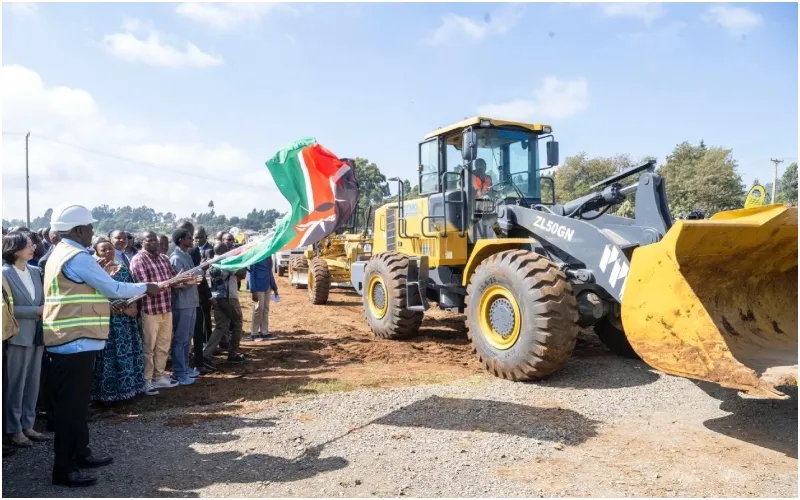
“We want this project to lift our young people,” said Rose Laboso of Londiani. “Most of them are educated but jobless. If these jobs go to outsiders, it will break our hearts.”
At the launch, Trade Cabinet Secretary Lee Kinyanjui assured locals that the region would benefit from rising land values, improved businesses, and increased investment once the highway is operational.
Kipkelion West MP Hillary Koskei said the road is not just a local project but a regional artery that will connect Kenya more effectively with neighbouring economies.
“Farmers will access new markets, businesses will expand, and essential services will become easier to reach,” he said. “It shows the President’s commitment to strengthening Kenya’s position as a key trade and transport hub.”
Small towns fear being left behind
Amid the optimism, towns built around highway traffic fear they may be bypassed and forgotten once interchanges divert vehicles away from traditional stopover points.
One such town is Londiani Junction, where roadside trade sustains hundreds of households.
“We have lived off this road,” said Joshua Koech, a hawker who has worked at the junction for 12 years. “If the interchange sends traffic away, this town will die as Total did after the Eldoret bypass. We support development, but not at the cost of our survival.”
Business owners worry that fewer vehicles stopping could mean shuttered shops, disappearing jobs and weakened local economies.
With construction now underway, communities along the corridor are navigating a complex mix of hope and anxiety.
While many welcome the long-overdue modernisation, others brace for the possibility of change that could sideline small towns and the people who depend on them.
For now, the region stands on the edge of transformation, its residents watching closely, hopeful that the new highway will usher in growth while preserving the livelihoods woven into the old one.










Discussion about this post