


The Speaker of the Senate of Kenya Amason Kingi has emphasized that the institution will continue to carry out its oversight mandate over public funds allocated to county governments in a robust, objective, and timely manner.
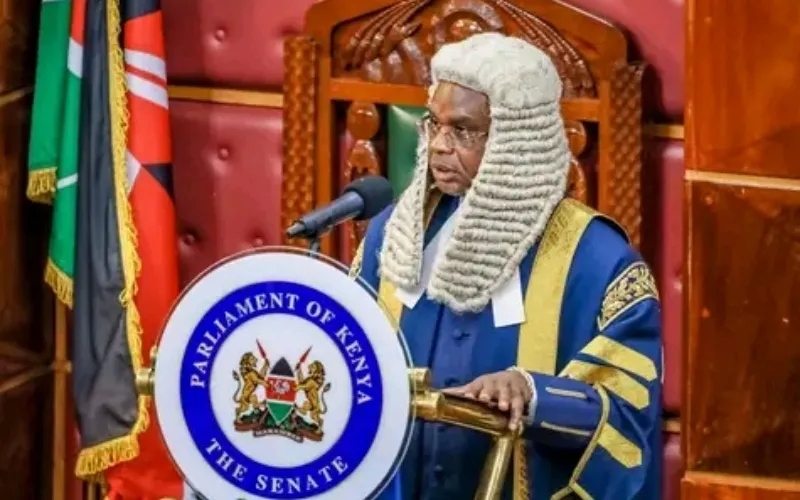
This comes after the Chairperson of the Council of Governors Ahmed Abdulahi alleged that governors were being harassed and intimidated by four unnamed members of the Senate’s County Public Accounts Committee (CPAC).
The involved senators are also accused of extortion, political witch-hunt, and humiliation of governors who appear before the committee.
Kingi elaborated that the Senate’s oversight role is firmly anchored in Kenya’s 2010 Constitution and it remains committed to fulfilling its role.
“Article 96(3) of the Constitution of Kenya, 2010 provides that “the Senate determines the allocation of national revenue among counties, as provided in Article 217, and exercises oversight over national revenue allocated to the county governments. Further, Article 96(1) states that “the Senate represents the counties and serves to protect the interests of the counties and their governments.”
Governors appearing before the Senate
In a statement, the Council of Governors’ Chairperson explained that governors have had to appear before the Senate committee several times, adding that they will limit appearances before the County Public Investments and Special Funds Committee to once per audit cycle.
The Council also stated that it had suspended governors appearing in Senate to answer questions until their concerns were addressed.
“The Council has resolved that governors will not appear before the Senate County Public Accounts Committee (CPAC) until these concerns are addressed through a structured engagement between the leadership of the Senate and the Council of Governors,” Abdulahi explained.
On his part, Kingi urged the Council of Governors to convey any concerns it may have regarding the conduct of Senate Committees through established channels to have them resolved.
“While the Senate remains open to structured and constructive dialogue with devolution actors, recourse to public mudslinging and unsubstantiated allegations in the media, unsupported by evidence, is neither appropriate nor conducive to intergovernmental cooperation.”
Senate’s dedication to its mandate
Kingi expressed the Senate’s commitment to accountability, safeguarding the promise of devolution, and discharging its constitutional responsibilities in the interest of Kenyans.
“In executing this mandate, Senate audit committees are guided by Article 229 of the Constitution, which requires Parliament to consider and dispose of audit reports within three months of their receipt from the Auditor-General-by March 31 of each year. Compliance with this constitutional timeline is not optional, and any actions that impede the audit process undermine accountability and prudent use of public resources.”
It remains to be seen how the allegations of harassment and intimidation of governors will be handled by the Senate as it strives to uphold its oversight mandate.







Discussion about this post