


Nairobi, Kenya – Rising fuel prices in April have negatively impacted the operating conditions of many businesses in the country.
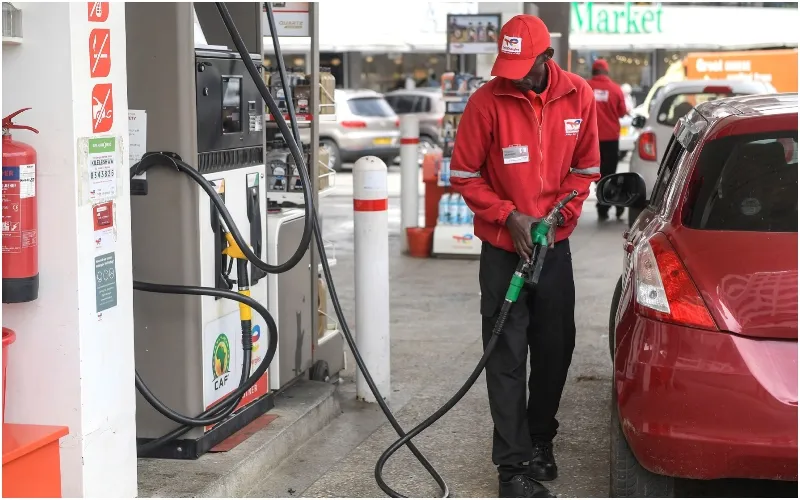
According to the Stanbic Bank Kenya Purchasing Managers Index (PMI) report April 2026, business activity subsequently contracted.
The report also showed that confidence also softened, with the PMI index reading 49.4 in April, up from 47.7 in March, but remained below the 50.0 neutral threshold for the second month running.
This was still below the headline 50.0, indicating deteriorating business conditions.
“While declines in output and new business kept the index in contraction territory, the respective rates of decrease softened from March, whilst there was a renewed uplift in stocks of purchases. Lower levels of new business were often associated with a tapering of customer spending due to rising prices, which was mostly driven by increased fuel costs linked to the conflict in the Middle East,” read a stamen seen by News Nine in part.
Christopher Legilisho, Economist at Standard Bank said that the Stanbic Kenya PMI signalled a contraction in operating conditions for a second month in April due to firms’ apprehension about the Middle East war’s impact on domestic activity.
“Concerns about rising costs, tied to higher transport costs, and the ability to secure supplies, especially from the Middle East and Asia, weighed on output and new orders in sectors such as wholesale and retail trade, agriculture, and services.
“Further, confidence about future business expectations was down m/m, although some firms remain optimistic about their expansion plans and the increased diversification of products and services,” said Legilisho.
The overall rate of decline in sales eased markedly from March and was only marginal, as some companies reportedly benefitted from greater client interest, product innovations and marketing initiatives.
In response, firms in Kenya reduced their output to a lesser extent compared to the previous month. Higher costs and broader economic instabilities constrained activity, but the softer fall in new orders alleviated some of these pressures.
Meanwhile, April survey data signalled a rapid intensification of input cost pressures across the Kenyan private sector. The overall rate of cost inflation soared to its highest level since December 2023, with around 18% of survey respondents reporting a month-on-month rise in expenses.
This was attributed to increasing fuel prices, while some firms also commented on higher delivery charges and material shortages.
Elevated costs were typically passed on to clients through increased output charges, with the overall pace of inflation also climbing to its highest since late-2023.
The mark up contrasted with a relatively subdued increase in March as attempts to absorb the impact of the conflict on margins waned.
Purchasing activity continued to increase in April, but the latest expansion was modest and the softest in the current seven month run of growth. Nevertheless, after falling in March, inventory levels rose to the greatest extent in 2026 so far.
Anecdotal evidence indicated that some companies feared an increase in shortages and further price rises, resulting in greater efforts to build input reserves. After a sharp drop in March, Kenyan firms signalled a more stable level of backlogs in April.
Staff numbers meanwhile increased for the fifteenth consecutive month, with survey members often citing casual hires to support ongoing projects and business expansion efforts.
Finally, business confidence slipped for the third month in a row, but remained positive overall, with approximately 18% of panellists forecasting an expansion in output over the next 12 months.
Firms looked to development plans, diversification efforts and marketing spending as drivers of optimism.













Discussion about this post