


Editor’s note: In this opinion piece, Lilian Simiyu argues that Africa’s SME financing gap goes beyond access to capital, with businesses also requiring stronger operational capabilities, market access, skills and support systems to translate investment into sustainable growth and employment. Simiyu also draws on lessons from the Mastercard Foundation Africa Growth Fund, calling for an integrated investment approach that prioritises enterprise development, job preservation, decent work and stronger partnerships to ensure capital delivers lasting economic and social impact.
Africa’s small and medium-sized enterprises (SMEs) are important drivers of economic growth, innovation and employment. Yet many businesses with the potential to scale, access new markets, and create jobs still face significant financing barriers.
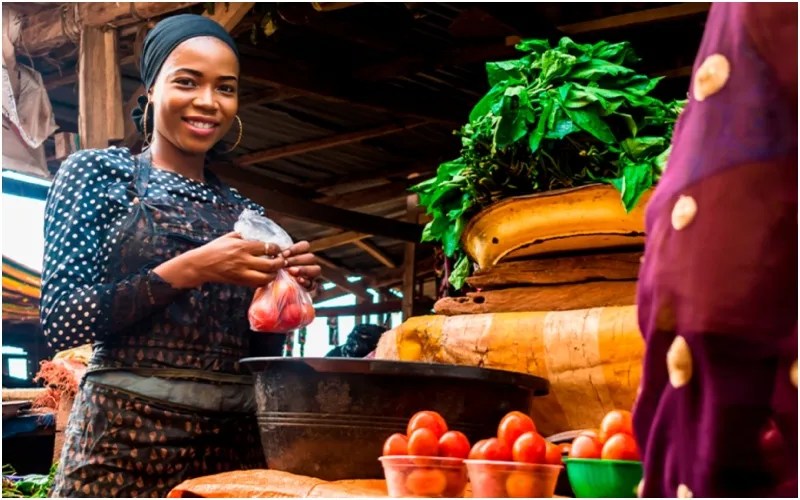
The instinctive response is to call for more capital, more investment and more investors willing to take risks on African businesses. But what if the financing gap is only part of the problem?
The challenge is not simply getting capital into businesses. It is ensuring that enterprises have the capabilities, operational systems, market access and support structures to turn that capital into sustainable growth and meaningful employment.
This is one of the central lessons emerging from the Mastercard Foundation Africa Growth Fund’s third learning book, From Capital to Jobs: The Job Creation Pathway. Drawing on four years of implementation experience, the publication examines the relationship between investment, enterprise development and employment, challenging the assumption that capital automatically translates into jobs.
The journey from capital to jobs is not linear
The conventional investment logic appears straightforward: capital flows to investment vehicles, investment vehicles finance businesses, businesses grow, and growth creates jobs.
In practice, the journey is considerably more complex.
Investment vehicles do not create jobs directly. Their contribution is largely indirect, through enabling businesses to access financing, strengthen their operations and pursue growth opportunities.
Between receiving investment and creating jobs, enterprises must navigate challenges such as operational inefficiencies, limited market access, skills shortages, weak management systems and supply-chain constraints.
A business may receive financing but still struggle to expand if its internal systems cannot support growth. Another may need to stabilise its operations before considering additional recruitment.
This requires a broader understanding of investment impact. Rather than focusing exclusively on capital deployed or jobs reported within a particular period, investors must pay closer attention to the conditions that enable employment to emerge and endure.
Sometimes, preserving jobs is as important as creating them
One important lesson from the Fund’s experience is that enterprise stabilisation must often precede expansion.
The pressure to demonstrate growth can result in job preservation receiving less attention than new job creation. Yet keeping a business operational, protecting livelihoods and retaining institutional knowledge can be equally significant outcomes.
One West African company, for example, underwent a difficult restructuring process but managed to retain 99% of its workforce.
Viewed narrowly, restructuring might suggest limited progress. However, retaining almost the entire workforce tells a different story. It demonstrates that stabilising an enterprise can protect livelihoods and preserve the foundations upon which future growth can be built.
Investors should therefore consider whether their impact measurement frameworks adequately recognise jobs preserved alongside jobs created.
Capacity is capital too
Access to financing is only one part of the equation. Businesses must also be equipped to use that financing effectively.
SMEs often require more than funding to grow. They need support to strengthen financial management, improve governance, refine business models, access markets and develop operational systems that can accommodate expansion.
The experience of a Nigerian furniture manufacturer, highlighted in the Fund’s learning, illustrates this point. The business had accumulated a significant order backlog, but faced a disconnect between sales and production.
Support focused on improving the relationship between these functions. Better coordination helped improve customer satisfaction and revenue, with employment growth following later.
The lesson is significant: businesses do not always need more capital first. Sometimes, they need to address the operational constraints preventing them from making the most of existing opportunities.
Business development support and enterprise capacity building should therefore not be treated as optional additions to investment. They are essential components of the investment process.
Capital provides resources. Capacity enables businesses to deploy those resources productively.
Growth must translate into decent work
Another important learning is that job creation does not necessarily follow investment or reporting cycles. Businesses may need time to strengthen operations, improve productivity and increase revenue before they are ready to employ additional workers.
Investors must therefore recognise that employment growth is not always immediate or linear. This calls for a more nuanced understanding of how jobs emerge, without compromising accountability or measurable outcomes.
Equally important is the quality of employment created.
Jobs should provide stability, safety, dignity and meaningful economic participation, particularly for young people and women.
The Fund’s learning highlights that women can reinvest up to 90% of their earnings into areas such as health and education, demonstrating the wider social value of economic participation.
The success of an investment should therefore be assessed not only by whether a business has increased its workforce, but also by who benefits and whether the opportunities created contribute to longer-term economic security.
The ecosystem cannot be an afterthought
Perhaps the most important implication of these lessons is that capital cannot compensate for missing ecosystem functions.
Businesses operate within interconnected environments shaped by investors, financial institutions, business development service providers, suppliers, customers, policymakers and regulators.
When these actors operate in isolation, enterprises can struggle to access the complementary support they need to grow.
Investment vehicles are therefore ecosystem actors, whether they initially recognise that responsibility or not. Their investment decisions influence which businesses receive opportunities and which enterprise capabilities receive attention.
Addressing these challenges requires stronger collaboration between capital providers, development organisations, governments and private-sector partners. No single institution can address all the constraints affecting enterprise growth and employment.
Moving from capital deployment to systemic impact
Africa’s employment ambitions cannot be achieved through isolated investments or individual success stories alone. They require a more connected approach to financing, enterprise development and ecosystem building.
This means supporting African investment leaders, including women-led and first-time fund managers, while ensuring that the enterprises they finance receive appropriate business development support.
It also means recognising different forms of progress: businesses stabilising, existing jobs being preserved, productivity improving, revenues growing and, ultimately, new employment opportunities emerging.
For development finance institutions, foundations and impact investors, this calls for a shift in how investment strategies are designed, implemented and evaluated.
Capital remains essential. But it must be accompanied by patience, appropriate risk appetite, enterprise-level support and a willingness to engage with the broader systems that influence business performance.
The Mastercard Foundation Africa Growth Fund’s experience reinforces the importance of this integrated approach. Moving capital differently is an important starting point, but the ultimate ambition is to strengthen the conditions under which African enterprises can grow, create sustainable employment and contribute to more inclusive economies.
Africa does not simply need more capital flowing into its businesses. It needs capital connected to capability, opportunity and the systems that enable businesses to succeed.
Because the journey from capital to jobs is not automatic. It is built through stronger enterprises, effective support systems and coordinated investment ecosystems. Ultimately, it happens enterprise by enterprise, and job by job.
The author is Lilian Simiyu, Deputy Managing Director, Mastercard Foundation Africa Growth Fund
Views expressed in this article are solely those of the author and do not represent the editorial position of news9.africa.









Discussion about this post