


The African Union (AU) Commission has urged parties involved in the United States of America (USA), Israel, and Iran military escalation to prioritise diplomatic engagement and uphold the international law to prevent further deterioration.
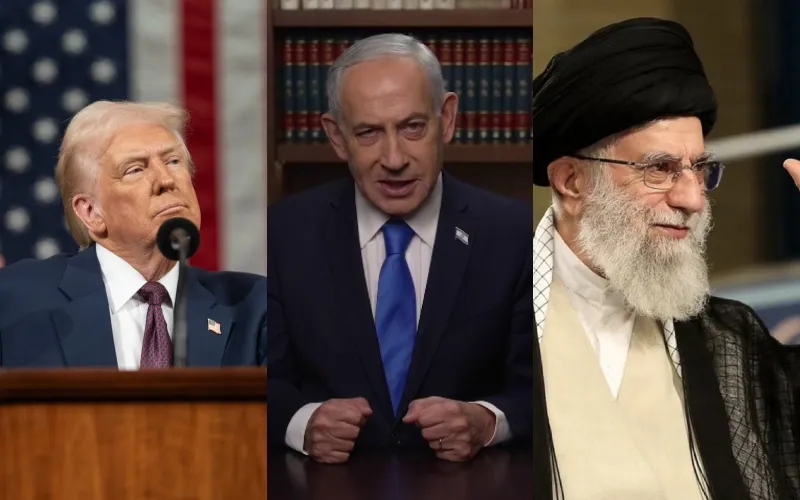
This comes after the USA, in collaboration with Israel, launched military strikes against targets inside the Islamic Republic of Iran. The move caused retaliation from the Iranian side that saw it attack American and Israeli-linked locations in the Middle East.
In a statement, the AU Commission Chairperson Mahmoud Ali Youssouf expressed concern over the unfolding events in the Middle East, calling for restraint, urgent de-escalation, and sustained dialogue.
“We call for restraint, urgent de-escalation, and sustained dialogue. All parties must act fully in accordance with international law and the United Nations Charter to safeguard international peace and security,” the statement read in part.
Youssouf termed the USA attacks in Iran a serious intensification of hostilities in the Middle East, warning that any further escalation could worsen global instability with serious implications on the African continent.
“Further escalation threatens to worsen global instability, with serious implications for energy markets, food security, and economic resilience, particularly in Africa, where conflict and economic pressures remain acute,” he explained.
Strengthening diplomatic efforts
Additionally, the Chairperson called on all concerned actors to prioritise diplomatic engagement, including ongoing international mediation efforts facilitated by the Sultanate of Oman, to prevent further deterioration and uphold the international rules-based order.
“Sustainable peace can only be achieved through diplomacy, not through force,” he added.
On February 28, 2026, the world woke up to reports of military strikes in Iran by the United States of America, attracting mixed reactions.
The attacks in Iran came even as the country was negotiating with the USA on its nuclear enrichment activities and ballistic missiles programme.
In retaliation, the Islamic Republic of Iran targeted USA and Israel military assets across Qatar, Bahrain, the UAE, and Kuwait. It remains to be seen how the military escalation in the region unfolds as world leaders call for diplomatic negotiations between America and Iran.
The USA-Iran situation
Relations between the two nations are strained, with the USA against Iran having nuclear weapons. In June 2025, the USA attacked Iran’s key nuclear enrichment facilities with President Donald Trump stating that they were “obliterated”.
In his State of the Union address on February 24, 2026 in the chamber of the United States House of Representatives, Trump Stated that he would not allow Iran to have a nuclear weapon, considering its hand in sponsoring terrorist groups.
Some experts have explained that the current American actions in Iran are geared towards a regime change in the Middle Eastern country.
In a video message on the Truth Social platform following the USA strikes in Iran, Trump called the Iranian regime a “vicious group of very hard, terrible people”.
“Our objective is to defend the American people by eliminating imminent threats from the Iranian regime, a vicious group of very hard, terrible people. Its menacing activities directly endanger the United States, our troops, our bases overseas, and our allies throughout the world,” he stated.
Furthermore, Trump urged Iran’s military forces and police to lay down their weapons or face death. He also encouraged Iranians to seize control of their government when the US military operations conclude.
In late December 2025 to early January 2026, Iranians went to the streets to protest against high prices of commodities and the harsh regime. Their efforts were met with brutal force that saw thousands of protestors killed and others wounded or detained.
President Trump had at the time expressed support for Iranians saying his remarks saw the government hold back on executing its own people.











Discussion about this post