


DAKAR, Senegal – For millions of Africans, human rights are not experienced only in courtrooms, through elections or in debates about freedom of expression. They are also experienced in the quality of the water they drink, the air they breathe, the land on which they depend for survival and their ability to live free from the harmful consequences of industrial activities and environmental degradation.
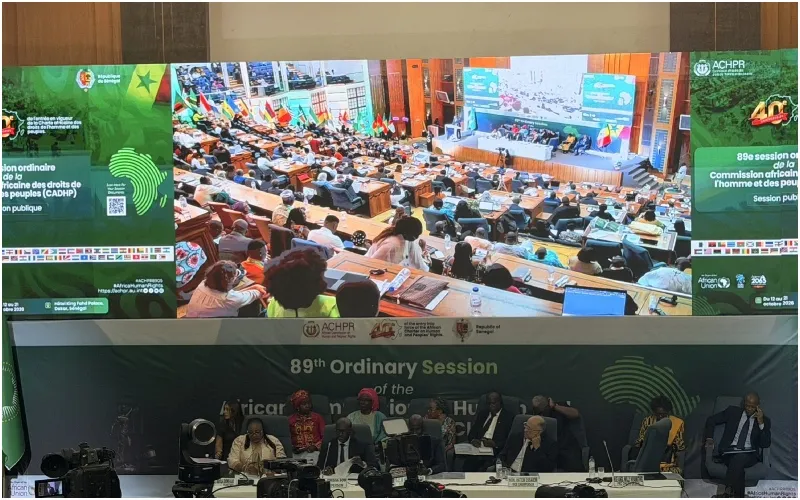
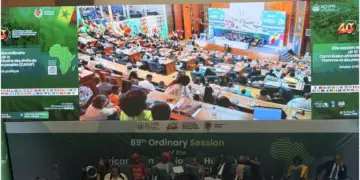
These interconnected challenges featured prominently during the 89th Ordinary Session of the African Commission on Human and Peoples’ Rights (ACHPR), which concluded in Dakar, Senegal, on October 21, 2026.
Among the important outcomes was the renewal of the mandate of the Working Group on Extractive Industries, the Environment and Human Rights Violations in Africa, reinforcing the continent’s continuing need to examine the relationship between natural resource exploitation, environmental protection and the rights of affected communities.
The decision is particularly significant for resource-rich African countries, where mining, oil and gas investments are often presented as essential drivers of economic growth, employment creation and national development.
However, the benefits of extractive industries do not always reach the communities living closest to mining operations. In some areas, communities continue to raise concerns about pollution, displacement, inadequate compensation, environmental damage and the impact of industrial activities on their health and livelihoods.
For countries such as Zambia, where copper mining remains central to the economy, these concerns are particularly relevant.
The Copperbelt, Zambia’s principal mining region, has experienced decades of mineral extraction, with communities living alongside large-scale mining operations and associated industrial infrastructure.
Environmental concerns, including air pollution, water contamination and the management of mining waste, have repeatedly placed questions of corporate accountability and environmental protection at the centre of public debate.
The renewed mandate of the African Commission’s Working Group provides an important continental human rights framework through which such challenges can continue to receive attention.
It is, however, important to distinguish between the renewal of the mandate and a specific finding against any mining company or government. The communiqué does not identify particular companies or pronounce new findings on individual pollution incidents.
Climate change increasingly recognised as a human rights issue
Beyond extractive industries, the Commission’s 89th Session also placed climate change firmly within the broader human rights conversation.
The Commission launched a study on the impact of climate change on human and peoples’ rights in Africa, an important contribution to discussions about how environmental changes affect the enjoyment of fundamental rights across the continent.
Climate change is increasingly affecting the conditions necessary for people to enjoy basic rights, including access to food, water, adequate housing, health and a sustainable livelihood.
Across Africa, changing rainfall patterns, prolonged droughts, flooding and extreme weather events are placing pressure on agricultural production, water resources, infrastructure and public health systems.
For rural communities that depend heavily on rain-fed agriculture, climate variability can translate into reduced harvests, food insecurity and declining household incomes.
The consequences are not evenly distributed. Women, children, indigenous populations, persons with disabilities and economically vulnerable communities often face greater difficulties adapting to environmental shocks.
The Commission’s decision to launch the climate change study signals the importance of examining these challenges not merely as environmental or economic concerns, but also through the lens of human rights.
This approach also raises questions about the responsibilities of governments and other actors in protecting communities from environmental harm, ensuring access to information and providing effective remedies where rights are affected.
Accountability must accompany economic development
One of the broader questions emerging from the Dakar meeting is how African countries can pursue economic transformation while ensuring that development does not come at the expense of human dignity.
Natural resources remain an important source of revenue for many African economies. Mining, petroleum and other extractive activities provide employment, attract investment and contribute to national development programmes.
Yet economic growth alone cannot be the only measure of success.
The quality of development must also be assessed through its impact on communities, the sustainability of natural resources and the extent to which citizens enjoy the benefits of economic activity without being exposed to avoidable harm.
A rights-based approach to development requires effective environmental regulation, transparent decision-making, meaningful community participation and accessible mechanisms for seeking justice.
It also requires stronger implementation of existing laws and regional human rights commitments.
The Commission’s renewal of the mandate of the Working Group on Extractive Industries is therefore an important opportunity to sustain continental attention on these issues.
Zambia’s human rights obligations under regional scrutiny
Zambia was among the countries whose human rights reporting featured during the session.
The Commission considered the country’s eighth periodic report covering 2020–2025 under the African Charter on Human and Peoples’ Rights, its first periodic report under the Protocol on the Rights of Women in Africa, commonly known as the Maputo Protocol, and its initial report under the African Union Convention for the Protection and Assistance of Internally Displaced Persons in Africa.
The consideration of these reports provides an opportunity to examine the country’s progress, challenges and obligations across several areas of human rights protection.
For Zambia, the process is particularly important given the intersection of economic development, environmental protection, gender equality and the rights of communities affected by displacement.
The country’s mining-dependent economy makes the protection of environmental and community rights an important part of its wider human rights obligations.
However, the final communiqué does not provide the Commission’s detailed observations or recommendations arising from the examination of Zambia’s reports. Those findings should therefore be distinguished from the fact that the reports were considered.
The session also highlighted wider accountability gaps across the continent.
According to the Commission, only eight countries were up to date with their periodic reporting obligations under Article 62 of the African Charter.
Eighteen countries had more than three reports overdue, while five had not submitted their initial reports.
These figures point to a persistent challenge in regional human rights oversight: the effectiveness of continental accountability mechanisms depends partly on the willingness and capacity of governments to regularly report on their human rights obligations and implement recommendations.
Protecting those who speak out
The Commission also renewed the mandate of the Special Rapporteur on Human Rights Defenders and the Focal Point on Reprisals in Africa.
This is significant in a region where journalists, environmental activists, community organisers and civil society organisations play an important role in exposing abuses, documenting violations and demanding accountability.
Environmental defenders, in particular, can face difficult circumstances when challenging powerful economic interests or raising concerns about activities affecting land, water and natural resources.
Their protection is essential to ensuring that communities can freely express concerns, access information and participate in decisions affecting their environment and livelihoods.
The Commission also renewed the mandate of the Special Rapporteur on Freedom of Expression and Access to Information in Africa, reinforcing the importance of protecting civic space and the free flow of information.
For journalists reporting on extractive industries, climate change and governance, access to information and the safety of sources remain critical to public-interest reporting.
Turning resolutions into meaningful change
The Dakar session brought together 1,662 participants, including representatives from 39 African Union member states, national human rights institutions, international organisations, civil society groups and the media.
It also addressed women’s and girls’ rights, statelessness, conditions in African prisons, the prevention of torture and the human rights situation across the continent.
While these deliberations reflect the breadth of Africa’s human rights agenda, their lasting significance will ultimately depend on what happens after the meetings conclude.
The renewal of mandates, adoption of resolutions and publication of studies provide important institutional foundations. However, affected communities need more than declarations of commitment.
They need effective protection, transparent investigations, accountability for violations and meaningful access to remedies.
For communities living near mines, this means being able to raise environmental concerns without intimidation and having confidence that complaints will be investigated.
For farmers facing increasingly unpredictable weather, it means policies that protect livelihoods and strengthen resilience.
For women and girls, it means moving beyond formal commitments towards practical protection, equality and access to justice.
The 89th Ordinary Session has reinforced an important message: Africa’s human rights agenda cannot be separated from the continent’s development choices.
As African governments pursue industrialisation, energy transition and economic growth, the challenge will be to ensure that development is measured not only by investment figures and production targets, but also by the dignity, safety and wellbeing of the people whose lives are directly affected.
Ultimately, the test of Africa’s human rights commitments will not be how many resolutions are adopted in conference halls, but whether those commitments translate into safer environments, stronger protections and better lives for ordinary citizens.








Discussion about this post