


MOMBASA, Kenya – The Ministry of Agriculture and Livestock Development has introduced the Orthodox Tea Trading Window at the Mombasa Tea Auction today, Wednesday, September 24, 2025 demonstrating the government’s commitment to increasing speciality tea production and exports.
The 2,925 bundles, equivalent to 91,798 kilos of Orthodox tea, are the first of many that will see tea producers charge greater prices for their produce as they try to meet the expanding global demand for speciality teas.
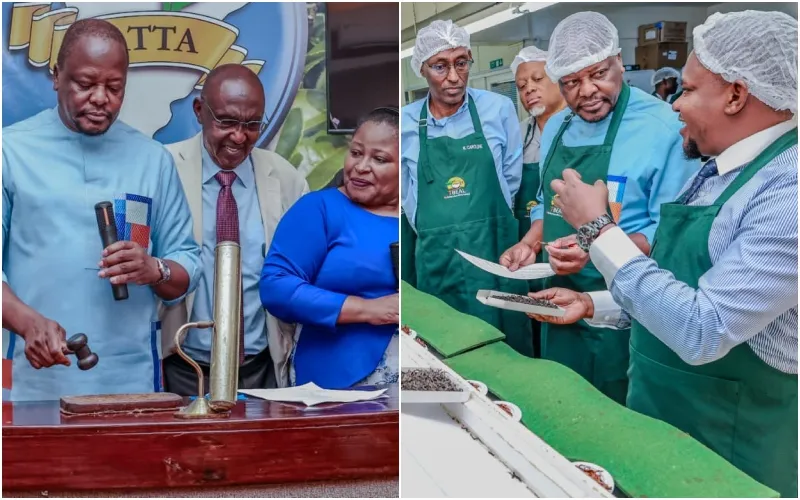
Speaking at the ceremony, Agriculture and Livestock Development Cabinet Secretary Mutahi Kagwe stated that the establishment of the speciality tea auction window was critical to improving Kenya’s reputation in global speciality markets, not just as a producer but also as an exporter.
“Kenya has an excellent profile for being a lead producer of CTC teas. But it is high time we diversified our markets by increasing our capacity to produce orthodox teas in order to capture the ever-changing global market and raising demand for specialty teas which will enable our farmers to tap into the premium market. This diversification will mean more money in their pockets, greater resilience and new revenue streams as consumers,” he said.
The launch of Orthodox Tea Auction offers farmers and producers a structured, transparent marketplace that extends their reach beyond conventional purchasers.
How KTDA Orthodox prices varied in 2024
For 2024, KTDA Orthodox prices varied from $3.40 (Sh439) to $4.16 (Sh537) per kilo, with an average of $3.70 (Sh478). Compare this to the Mombasa Auction’s current average of $2.28 per kilo for bulk CTC tea.
Last year, total orthodox production was 7.51 million kilos, with 5 million kilos exported. This was lower than the 12.34 million kilos produced in 2023, owing to difficulties with the Iranian market.
However, the CS said the Ministry was in consultations with the Iranian government to restore teas business between the two nations.
How many Orthodox manufacturers are licensed in Kenya
The Tea Board of Kenya (TBK) has licensed 22 Orthodox manufacturers and hoped to double this to 42 by 2027.
“Our target is ambitious but achievable. We aim to grow installed Orthodox capacity from 15 million kilos in 2024 to 200 million kilos by 2030,” he added.
TBK has also developed a Tea Quality Assurance Laboratory in Mombasa, which provides real-time quality advice, product testing, and food safety certification.
To boost transparency, improve farmer returns, and ensure Kenya’s worldwide competitiveness, the Mombasa Tea Auction is going online.
This digital transformation will enable buyers from all over the world to engage in real time, improve price discovery, minimise cartels, and establish Kenya as a contemporary, efficient tea trading hub.








Discussion about this post